
Last Updated on October 12, 2026 by African Travel Hub Editorial
You have probably already noticed the problem. Every safari website says its country is the best. Every lodge photo looks like a magazine cover. And the group tours you have found are either too rushed, too crowded or built around someone else’s idea of a safari holiday. You want something designed around you: your dates, your budget, the animals you most want to see, how active you want to be, and whether your partner, parents or children are coming along.
That is exactly what a tailor-made safari is for. But before anyone can build your trip, you need to answer the big question: which country, or which combination of countries?
This guide compares nine of Africa’s best wildlife destinations across East and Southern Africa, honestly and side by side. We cover the parks, how to get there from the main international hubs, how easy the wildlife is to see, what it really costs in dollars, euros and pounds, how fit you need to be, the best time to travel and the altitude questions most guides skip.
What Makes a Safari “Tailor-Made” or “Customised?
Table of Contents
A tailor-made or customised safari is a private itinerary built from scratch for you, rather than a fixed departure you join with strangers. In practice it usually means your own vehicle and guide, lodges chosen to match your budget and style, a pace you set, and the flexibility to mix countries, add a beach or city stop, or include activities like gorilla trekking or walking safaris.
Obviously, it does cost more per person than a shared group tour, mainly because you are not splitting the vehicle and guide with other travellers. The return is huge: you stop at a leopard sighting for as long as you like, start early if you are a photographer, rest in the afternoon if you are travelling with young children, and never sit through a schedule built for someone else.
Africa’s Top Safari Countries at a Glance
| Country | Signature parks | Best known for | Typical style |
| Kenya | Masai Mara, Amboseli, Samburu, Laikipia | Great Migration river crossings, big cats, Kilimanjaro views | Road and fly-in; private conservancies |
| Tanzania | Serengeti, Ngorongoro Crater, Tarangire, Ruaha | Migration year-round, huge wilderness, Crater density | Road “northern circuit” or fly-in |
| Uganda | Bwindi, Queen Elizabeth, Murchison Falls, Kibale | Gorillas and chimpanzees plus savannah | Long road journeys; great value |
| Rwanda | Volcanoes, Akagera, Nyungwe | Gorillas, golden monkeys, easy logistics | Short, polished, high-end |
| Botswana | Okavango Delta, Chobe, Moremi, Kalahari | Wild, exclusive, water-based safaris | Fly-in camps; low-volume tourism |
| South Africa | Kruger and Sabi Sand, Madikwe, Addo | Leopards, reliable Big Five, family-friendly | Self-drive or private reserves |
| Zambia | South Luangwa, Lower Zambezi, Kafue | Walking safaris, leopards, canoeing | Fly-in; specialist guiding |
| Zimbabwe | Hwange, Mana Pools, Victoria Falls | Walking with expert guides, elephants | Fly-in or road; excellent value |
| Namibia | Etosha, Damaraland, Sossusvlei | Desert landscapes, desert-adapted wildlife | Self-drive or fly-in |
The Safari Countries Compared
Kenya
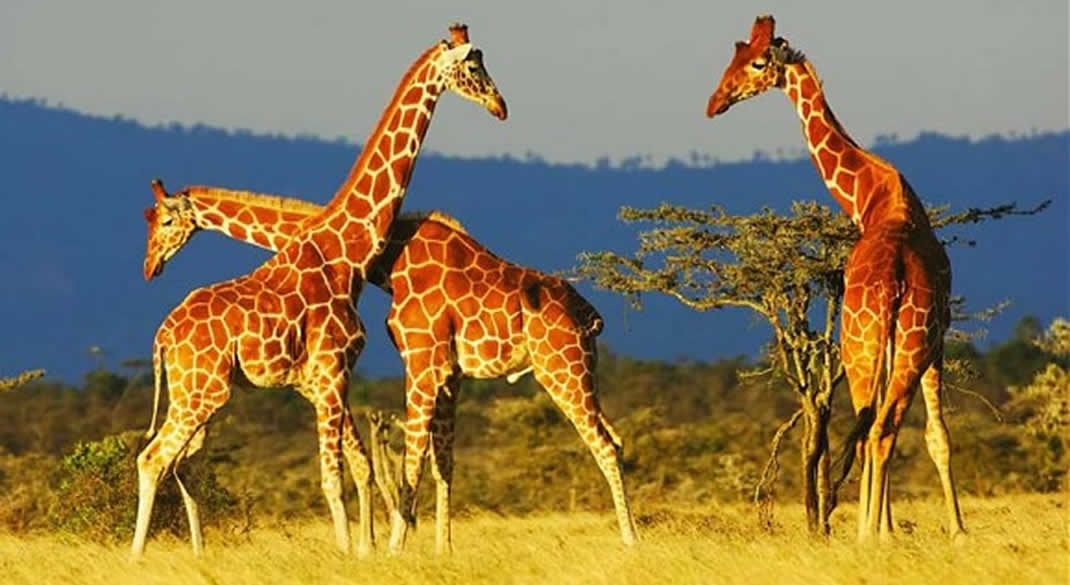
Kenya is the classic first safari for good reason. The Masai Mara has some of the highest densities of lions, cheetahs and leopards in Africa, and from roughly July to October it hosts the Great Migration’s dramatic river crossings. The private conservancies bordering the reserve limit vehicle numbers, allow night drives and walking, and give a more exclusive experience. Add Amboseli for elephants under Kilimanjaro, Samburu for rare northern species such as Grevy’s zebra and reticulated giraffe, and Laikipia for rhinos and wild dogs.
Tanzania
Tanzania offers scale. The Serengeti is vast, and the migration moves through different parts of it all year, which makes it more flexible than the Mara for seeing the herds. The Ngorongoro Crater packs an extraordinary concentration of wildlife, including black rhino, into a single volcanic bowl. Tarangire is superb for elephants in the dry season, while remote Ruaha and Nyerere (formerly Selous) in the south feel truly wild. Zanzibar makes an easy beach finish.
Uganda
Uganda is the best-value way to combine primates and savannah. Track mountain gorillas in Bwindi, chimpanzees in Kibale, then look for tree-climbing lions in Queen Elizabeth National Park and see the Nile thunder through Murchison Falls. Savannah game densities are lower than in Kenya or Tanzania, and drives are long, but the variety is unmatched.
Rwanda
Rwanda is compact, safe, well organised and focused on quality. Volcanoes National Park offers gorilla trekking just 2.5 hours from Kigali, Nyungwe has chimpanzees and a canopy walk, and Akagera has quietly rebuilt its Big Five. It is pricier than Uganda but ideal for short trips or as an add-on to a Kenya or Tanzania safari.
Botswana
Botswana deliberately limits tourism numbers, so you share sightings with very few vehicles. The Okavango Delta offers game drives, mokoro (dugout canoe) excursions and walking among flooded channels; Chobe has one of Africa’s largest elephant populations; and the Kalahari offers meerkats and huge skies. It is one of the most expensive safari countries, and that cost buys genuine exclusivity.
South Africa
South Africa is the easiest safari for first-timers, families and anyone short on time. Private reserves such as Sabi Sand, bordering Kruger National Park, offer some of the most reliable leopard viewing on the continent, with off-road driving and expert trackers. Malaria-free reserves such as Madikwe in the North West and the Eastern Cape suit families with young children. Infrastructure is excellent, and Cape Town and the Winelands combine easily.
Zambia
Zambia is where the walking safari was born. South Luangwa is famous for its guides and leopards, the Lower Zambezi offers canoeing beside elephants, and huge Kafue remains wonderfully quiet. It suits travellers who have already done a “classic” safari and want something more immersive.
Zimbabwe
Zimbabwe’s guides are widely regarded as among the best trained in Africa. Hwange has huge elephant herds, Mana Pools offers walking safaris along the Zambezi, and Victoria Falls is an obvious highlight. It pairs naturally with Botswana’s Chobe, just over an hour away.
Namibia
Namibia is about landscape first and wildlife second. Etosha National Park has excellent waterhole viewing in the dry season, while Damaraland has desert-adapted elephants and rhinos, and Sossusvlei has the world-famous red dunes. Good roads make it one of Africa’s best self-drive countries.
Getting There: Access From Major International Hubs
Most travellers reach Africa through a handful of hubs. Choosing the right gateway can save you a day of travel and a lot of money.
| Gateway hub | Best for | Onward connections |
| Nairobi (NBO), Kenya | Kenya, Tanzania, Uganda, Rwanda | Direct flights from London, Amsterdam, Paris, Doha, Dubai, Istanbul and more. Short flights to Kilimanjaro, Entebbe, Kigali and Zanzibar; 45-minute bush flights to the Mara. |
| Johannesburg (JNB), South Africa | South Africa, Botswana, Zambia, Zimbabwe, Namibia | Direct flights from London, Frankfurt, Amsterdam, Doha, Dubai and others. Same-day connections to Kruger, Maun, Victoria Falls, Livingstone and Windhoek. |
| Addis Ababa (ADD), Ethiopia | Almost anywhere in Africa | Ethiopian Airlines connects Europe, the Middle East, Asia and the Americas with nearly every safari gateway, often at competitive fares. |
| Kilimanjaro (JRO), Tanzania | Northern Tanzania | Some direct flights from Europe and the Gulf; most connect through Nairobi, Addis, Doha or Dar es Salaam. |
| Cape Town (CPT), South Africa | South Africa, Namibia | Direct flights from London and other European cities in season; easy domestic connections. |
As a rule of thumb, East Africa flows through Nairobi, and Southern Africa flows through Johannesburg. Combining the two regions in one trip is possible, for example a Kenya safari followed by Victoria Falls and Botswana, using a single connecting flight between Nairobi and Johannesburg or Victoria Falls.
How Easy Is It to Spot Wildlife?
Wildlife is never guaranteed, but some places make it much easier. This table reflects what our travellers and guides consistently report.
| Country | Big Five chances | Game density | Crowds at sightings |
| Kenya | Excellent (rhino best in conservancies or Lake Nakuru) | Very high in the Mara | Busy in the main reserve; quiet in conservancies |
| Tanzania | Excellent (rhino mainly in Ngorongoro) | Very high in Serengeti and Crater | Busy around the Crater and central Serengeti |
| Uganda | Good (rhino at Ziwa sanctuary) | Moderate | Low |
| Rwanda | Good in Akagera | Moderate | Low |
| Botswana | Very good (rhino limited) | High in dry season | Very low |
| South Africa | Outstanding in private reserves | High | Low in private reserves; busier in Kruger public areas |
| Zambia | Good (rhino limited) | High in South Luangwa | Low |
| Zimbabwe | Good | High in Hwange in dry season | Low |
| Namibia | Fair to good (rhino in Etosha) | Concentrated at waterholes | Moderate in Etosha |
If seeing the Big Five quickly is your top priority, South Africa’s private reserves and Kenya’s or Tanzania’s classic parks give you the best odds. If you would rather see fewer animals with no one else around, Botswana, Zambia and Zimbabwe are hard to beat.
Scenery: What Each Country Looks Like
Kenya and Tanzania give you the golden, endless savannah most people picture, with acacia trees, kopjes and Kilimanjaro on the horizon. Uganda and Rwanda are lush and green, with volcanoes, rainforest and crater lakes. Botswana’s Okavango is a maze of papyrus channels, lily-covered lagoons and palm islands. South Africa’s Lowveld is thick bushveld, while Zambia and Zimbabwe centre on great rivers, especially the Zambezi. Namibia is something else entirely: red dunes, canyons and stark desert plains, with spectacular night skies.
What a Tailor-Made Safari Costs
Typical Daily Costs Per Person in 2026 – 2027
The figures below are per person per day, sharing, and usually include accommodation, meals, a private or shared vehicle with guide, activities and park fees. International flights are extra.
| Country | Budget (USD) | Mid-range (USD) | Luxury (USD) |
| Kenya | $250–350 | $400–700 | $900–2,000+ |
| Tanzania | $250–350 | $450–750 | $1,000–2,000+ |
| Uganda | $200–300 | $350–550 | $800–1,500 |
| Rwanda | $350–450 | $500–900 | $1,500–3,500 |
| Botswana | $400–600 | $700–1,200 | $1,500–4,000+ |
| South Africa | $150–250 | $300–600 | $800–2,500 |
| Zambia | $300–450 | $600–1,000 | $1,000–2,000 |
| Zimbabwe | $250–400 | $500–900 | $900–2,000 |
| Namibia | $150–250 | $350–600 | $800–2,000 |
Gorilla permits are on top: $800 in Uganda (reported $600 in April, May and November) and $1,500 in Rwanda. Budget figures for South Africa and Namibia assume self-drive.
Park Fees to Know About
Park fees can add up quickly on a multi-park trip. In Kenya’s Masai Mara, non-resident adults pay $100 per day from January to June and $200 per day from July to December, which covers the peak migration months. Tickets are valid for 12 hours. Tanzania’s Serengeti charges roughly $80 per adult per day including VAT, and the Ngorongoro Crater adds a per-vehicle descent fee. In Botswana and many private reserves elsewhere, fees are usually built into the camp rate. A good tailor-made quote should list every fee clearly.
Sample 10-Day Tailor-Made Safaris
| Itinerary (10 days, mid-range, per person sharing) | USD | EUR (approx.) | GBP (approx.) |
| Kenya: Nairobi, Samburu, Laikipia, Masai Mara (fly-in) | $5,500–7,500 | €4,730–6,450 | £4,125–5,625 |
| Tanzania: Tarangire, Ngorongoro, Serengeti, Zanzibar | $5,000–7,000 | €4,300–6,020 | £3,750–5,250 |
| Uganda: gorillas, chimps, Queen Elizabeth, Murchison | $4,000–5,500 | €3,440–4,730 | £3,000–4,125 |
| Botswana and Victoria Falls: Okavango, Chobe, Falls | $9,000–14,000 | €7,740–12,040 | £6,750–10,500 |
| South Africa: Sabi Sand private reserve and Cape Town | $4,500–7,000 | €3,870–6,020 | £3,375–5,250 |
| Zambia and Zimbabwe: South Luangwa, Mana Pools, Falls | $7,000–10,000 | €6,020–8,600 | £5,250–7,500 |
| Namibia: guided fly-in or semi-guided drive | $4,500–8,000 | €3,870–6,880 | £3,375–6,000 |
These ranges exclude international flights, travel insurance, visas and tips. Solo travellers usually pay a single supplement. Prices are lower in the green or shoulder seasons and higher in peak months, especially July to October.
How Fit Do You Need to Be?
For a classic game-drive safari, you need very little fitness. Most of your day is spent sitting in a vehicle, and the main physical demands are climbing in and out, sitting through bumpy roads and early starts. If you can manage a full day of sightseeing on holiday, you can manage a game-drive safari. Long, rough drives can be tiring if you have back problems, so tell your planner; flying between parks reduces road time considerably.
Fitness becomes important with certain activities:
- Gorilla trekking (Uganda, Rwanda): steep, muddy, sometimes at altitude, lasting from under an hour to six hours or more. Moderate fitness is needed; porters help a great deal.
- Chimpanzee tracking (Uganda, Rwanda): usually easier than gorillas, but you may move quickly through forest.
- Walking safaris (Zambia, Zimbabwe, Kenya conservancies): typically 2 to 4 hours at a gentle pace in the heat. You need to be comfortable walking on uneven ground and staying quiet and alert.
- Canoeing (Lower Zambezi, Mana Pools) and mokoro trips (Okavango): some paddling, but guides do most of the work on mokoros.
- Climbing Kilimanjaro or Mount Kenya as an add-on: demanding and high altitude; it needs proper training and a dedicated plan.
Travellers with limited mobility can still enjoy a wonderful safari. South Africa and Kenya have the widest choice of accessible lodges and vehicles; let us know your needs at the start so we can plan around them.
Best Season for a Tailor-MadeWildlife Safari
The dry season is generally best for game viewing across Africa: vegetation thins, animals gather at water, and roads are easier. But each region has its own rhythm.
| Country | Peak game viewing | Good-value months | Things to know |
| Kenya | July – October; January – February | April – June (green season; Mara fee $100) | Migration river crossings usually July to October. |
| Tanzania | June – October; January – February (calving) | April – May | Serengeti calving season in the south around February. |
| Uganda and Rwanda | June – September; December – February | March – May; October – November | Primates all year; wetter trails in the rains. |
| Botswana | June – October | November – March (green season) | Okavango flood peaks around June to August. |
| South Africa | May – October | November – April | Private reserves are good all year. |
| Zambia | June – October | April – May; November | Many bush camps close in the rainy season. |
| Zimbabwe | July – October | November – April | Victoria Falls at full flow around March to May. |
| Namibia | June – October | November – April | Very hot in October; cool desert nights in winter. |
The green season, roughly November to April in Southern Africa and March to May in East Africa, brings lower prices, fewer vehicles, newborn animals and dramatic skies. Some travellers prefer it, especially photographers and birders.
Altitude Sickness: Is It a Safari Risk?
For most safaris, altitude is not a concern. The Masai Mara sits at around 1,500 to 2,100 m, Nairobi at about 1,800 m and most Southern African reserves much lower. A few places, however, are high enough to cause symptoms in some travellers:
- Ngorongoro Crater rim, Tanzania: about 2,300 m, where many lodges are located. Cold nights and occasional mild headaches are common.
- Volcanoes National Park, Rwanda, and Mgahinga, Uganda: treks start around 2,400 to 2,500 m and can climb above 3,000 m.
- Bwindi southern and eastern sectors, Uganda: about 2,000 to 2,300 m.
- Kenya’s Aberdares and Laikipia highlands: roughly 1,800 to 3,000 m in places.
- Kilimanjaro (5,895 m) and Mount Kenya (4,985 m): serious altitude requiring a dedicated climbing itinerary.
Symptoms and Prevention
Mild symptoms include headache, breathlessness on exertion, poor sleep, nausea and tiredness. Severe headache, confusion, loss of coordination or breathlessness at rest are warning signs that require descent and medical attention.
- Avoid flying in and trekking the next morning at high altitude. Spend a night at a lower elevation first.
- Drink plenty of water and go easy on alcohol, particularly on your first night.
- Take it slowly on any walk or trek above 2,000 m.
- Talk to your doctor before travelling if you have had altitude sickness before, have heart or lung conditions, or are planning a mountain climb. They can advise on whether preventive medication is suitable for you.
Suggested Acclimatization Schedule
If your tailor-made safari includes higher-altitude stops, building them into the right order makes the trip more comfortable. Here is an example for a 10-day East African itinerary combining gorillas and the savannah.
| Day | Location and altitude | Activity |
| Day 1 | Nairobi (about 1,800 m) | Arrive and rest. Optional giraffe centre or elephant orphanage visit. |
| Days 2–4 | Masai Mara (about 1,500–2,100 m) | Game drives at a relaxed pace while your body adjusts. |
| Day 5 | Fly to Kigali (about 1,560 m) | Easy afternoon in the city. |
| Day 6 | Volcanoes NP area (about 2,400 m) | Arrive at the lodge; short village or nature walk. |
| Day 7 | Volcanoes NP (2,500–3,000 m+) | Gorilla trek, then rest. |
| Day 8 | Volcanoes NP | Golden monkeys or a gentle hike, or a rest day. |
| Days 9–10 | Kigali, then depart | Return to lower altitude and fly home. |
For a Tanzania trip, the same principle applies: start with Tarangire or the Serengeti, which are lower, and spend your Ngorongoro night later in the itinerary.
Which Country Is Right for You?
| If you want… | Consider |
| Your first safari with the best chance of the Big Five | Kenya, Tanzania or South Africa |
| The Great Migration | Kenya (July–October) or Tanzania (year-round, by area) |
| Gorillas plus a classic savannah safari | Uganda or Rwanda combined with Kenya or Tanzania |
| Exclusivity and wilderness, with budget to match | Botswana |
| A family safari, possibly malaria-free | South Africa |
| Walking safaris and expert guiding | Zambia or Zimbabwe |
| Dramatic landscapes and self-driving | Namibia |
| The best value | Uganda, Zimbabwe, or green-season Kenya and Tanzania |
Frequently Asked Questions About Tailor-made safaris
Which African country is best for a tailor-made wildlife safari?
There is no single best country. Kenya and Tanzania are ideal for a classic first safari and the Great Migration, South Africa suits families and shorter trips, Botswana offers exclusive wilderness, and Uganda and Rwanda are best for gorillas. A tailor-made safari lets you combine countries to match your priorities.
How much does a tailor-made safari in Africa cost?
A mid-range tailor-made safari typically costs $350 to $1,200 per person per day (about €300 to €1,030 or £260 to £900), depending on the country and season. Budget options start around $150 to $250 per day, and luxury safaris can exceed $2,000 per day.
How many days do I need for a safari in Africa?
Seven to ten days is ideal for most travellers, allowing two or three parks without rushing. A short three- or four-day safari works well as an add-on to a business trip or beach holiday.
When is the best time to go on safari in Africa?
The dry season, roughly June to October across most of East and Southern Africa, offers the easiest game viewing. The green season brings lower prices, fewer visitors and newborn animals.
Do I need to be fit to go on safari?
Not for a game-drive safari, which is mostly spent in a vehicle. Gorilla trekking, walking safaris and mountain climbs need moderate to good fitness.
Can I combine East and Southern Africa on one safari?
Yes. A popular combination is a Kenya or Tanzania safari followed by Victoria Falls and Botswana, connected by a short flight from Nairobi.
EDITOR NOTE: Format each FAQ question as an H3 so Rank Math’s FAQ block or schema can pick them up.
Ready to Design Your Tailor-Made Safari?
The best safari is the one built around you: the animals you dream of seeing, the way you like to travel and the budget you are comfortable with. Our team in Nairobi has been planning East and Southern African journeys since 2006. Tell us what matters to you and we will suggest the right country or combination, check lodge and permit availability, and handle every flight, transfer and park fee so you can simply enjoy the wildlife.
Share your dates, interests and budget, and we’ll send you a tailor-made safari proposal
About the Author

Leave a Reply