
Last Updated on June 27, 2026 by African Travel Hub Editorial
Open Safari Jeeps Africa: The Definitive Guide
What Is an Open Safari Jeep?
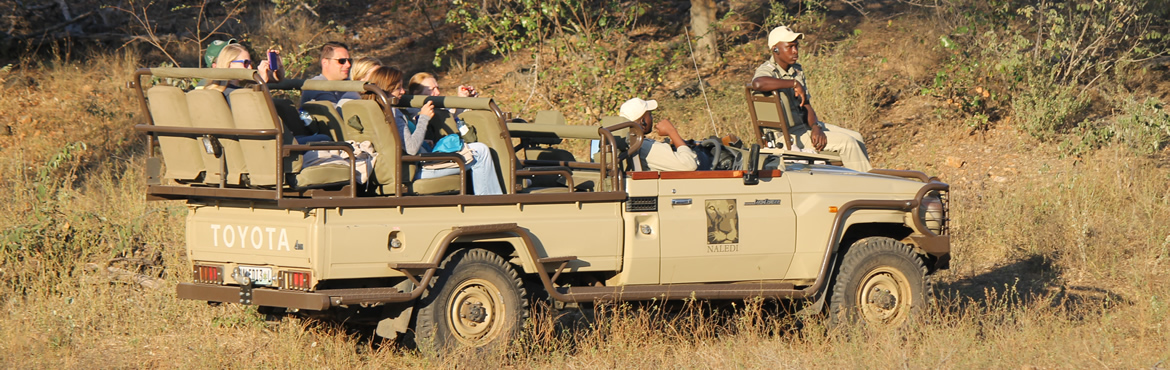
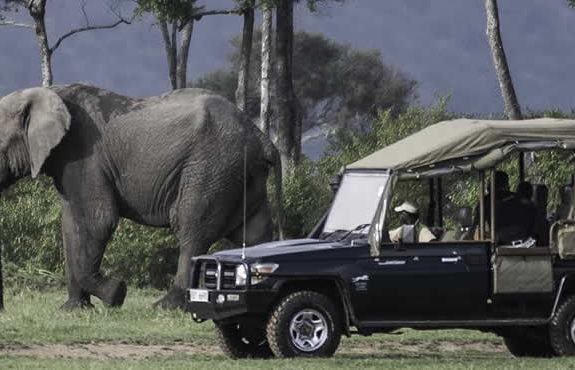
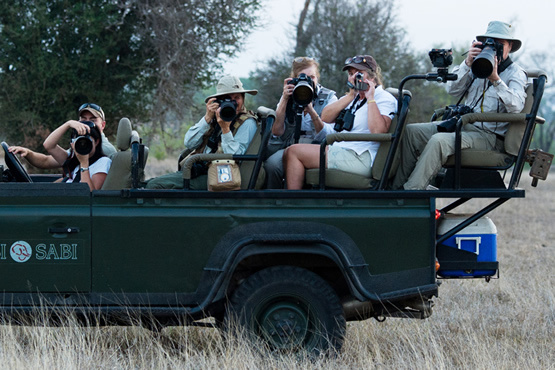
An open safari jeep is a purpose-modified 4-wheel-drive vehicle — almost always a Toyota Land Cruiser (70 or 78 Series) or a Land Rover Defender — stripped of its side doors and windows to create an entirely open-air passenger compartment. The roof is either completely absent or fitted with a retractable canvas canopy. Seating is arranged in tiered rows (typically 2–3 rows of 2–3 seats each), elevated progressively from front to back so that every passenger has an unobstructed forward view.
|
Quick Facts on open side safari jeeps Open safari jeeps — fully open-sided 4WD Land Cruisers or Land Rovers — are the gold standard for African wildlife viewing. They dominate Southern Africa (Botswana, South Africa, Zimbabwe, Zambia, Namibia) and are standard in private conservancies across East Africa (Kenya, Tanzania). They deliver 360-degree sightlines, full sensory immersion, and unrestricted photography angles. They are not suited for long road transfers but are unrivalled for in-reserve game drives. |
Standard seating capacity is 6–8 passengers plus a professional driver-guide, and in many premium conservancies a trained tracker occupies a dedicated seat on the front bonnet tracker seat — a platform bolted to the vehicle’s hood — to follow animal spoor at close range. The vehicles run on diesel, are typically fitted with a roof-mounted spotlight for night drives, and carry a high-lift jack, recovery straps, a first-aid kit, and a fire extinguisher as standard safety equipment.
Types of Open Safari Jeeps
Fully Open — No Canopy
The most immersive format. Used primarily in dry-season destinations and arid environments (Namibia, Botswana’s dry season, Laikipia). Maximum wildlife interaction but zero protection from rain. Not suitable during peak wet season unless passengers are equipped with full waterproof gear.
Open-Sided with Retractable Canvas Canopy
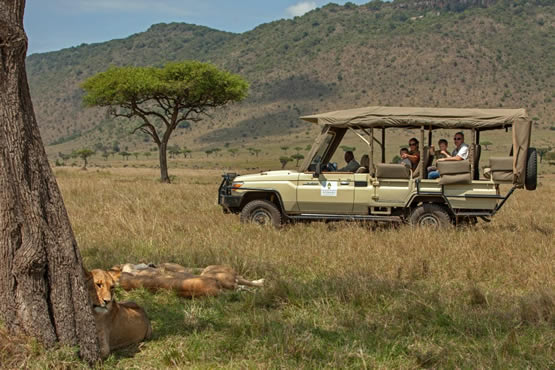
The most common format across both Southern and East Africa. The canvas roof deploys in minutes during unexpected showers and rolls back immediately when conditions improve. The sides remain fully open. This is the practical choice for year-round destinations and offers the best balance between immersion and weather contingency.
Open-Sided with Roll-Up Canvas Sides
A hybrid format more common in East Africa, particularly in Kenya. The canvas side panels roll down to create a near-closed cabin during highway transfers and roll up completely for game drives, providing an experience close to a fully open vehicle. These are relatively rare compared to the two types above.
Where Are Open Safari Jeeps Used?
Southern Africa — The Heartland of the Open Jeep
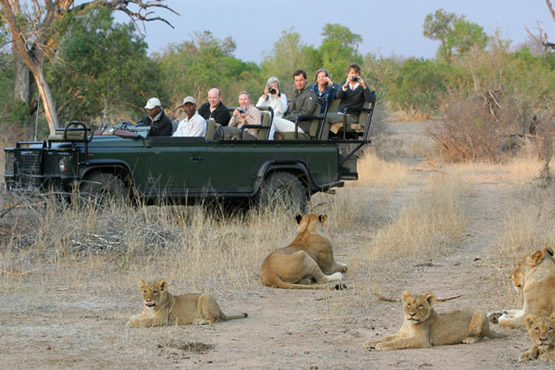
Open safari jeeps are the default and near-universal game drive vehicle across Southern Africa’s premium wildlife destinations. In Botswana’s Okavango Delta and Chobe National Park, virtually all licensed safari camps operate exclusively with open vehicles — the flat, open terrain and high concentration of big game make them the obvious choice. The same is true of South Africa’s Sabi Sands Private Game Reserve (adjacent to Kruger National Park), Zimbabwe’s Hwange and Mana Pools, Zambia’s South Luangwa, and Namibia’s private conservancies.
East Africa — Private Conservancies and Fly-In Camps
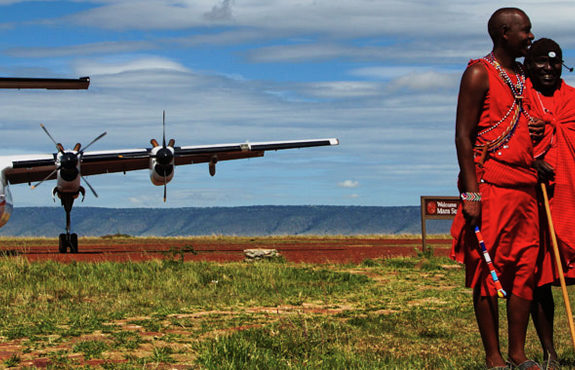
In East Africa, the picture is more varied. Kenya’s national parks and reserves (Amboseli, Tsavo, Samburu) are predominantly served by closed hatch-top Land Cruisers or safari vans. However, the private conservancies surrounding the Masai Mara — including Olare Motorogi, Naboisho, Ol Kinyei, and Mara North — have adopted open jeeps as their standard vehicle, and a significant number have banned all other vehicle types from operating within their boundaries. Tanzania’s high-end fly-in camps in Ruaha, Katavi, and the Southern Circuit similarly favour open vehicles for day and night drives.
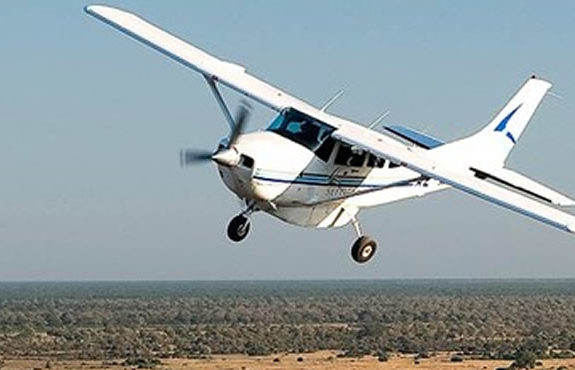
This is an important planning consideration: travellers who fly into a private Mara conservancy will almost always ride in an open jeep. Those who self-drive or join a group road safari from Nairobi will typically use a closed 4×4 or van. If a fully open vehicle is a priority, choose fly-in camps or lodges in private conservancies explicitly and confirm vehicle type at booking.
Open Jeep vs. Closed 4×4 vs. Safari Van: Key Differences
| FEATURE | OPEN SAFARI JEEP | CLOSED (HATCH-TOP) | SAFARI VAN |
|---|---|---|---|
| Visibility | 360° unobstructed | Roof hatch only | Roof Hatch and Windows |
| Photography | Optimal — all angles | Limited to hatch & Windows | Roof Hatch and Windows |
| Sensory Experience | Full — sights, sounds, smells | Muted by steel body | Muted by steel body |
| Weather Protection | Minimal (canopy optional) | Full protection | Full Protection |
| Long Road Transfers | Not suitable | Ideal | Ideal |
| Night Drives | Yes — spotlight fitted | Rare | Not equipped |
| Typical Regions used | Southern Africa; private conservancies | East Africa | Kenya (Budget options) |
| Cost Tier | Luxury to Premium | Mid to Luxury | Budget to Mid |
Sample Open Safari Jeep Packages from Hallmark Travel Planners
Why Open Jeeps Deliver a Superior Game-Viewing Experience
360-Degree Sightlines
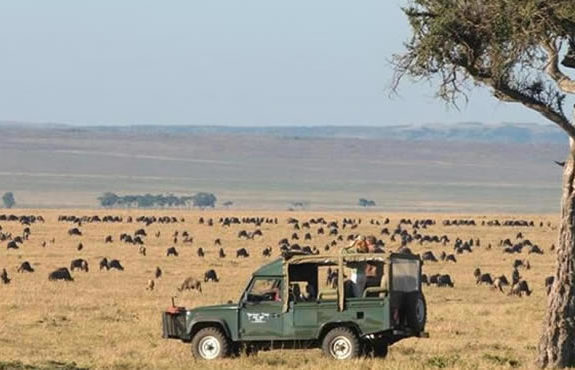
There is no metal body or window frame to obstruct your view. You can scan the full horizon — left, right, forward, back, and skyward for raptors — simultaneously. In a closed vehicle, spotting a cheetah on a termite mound 200 metres to the right requires occupants to crane around each other or wait for the driver to reposition.
Unrestricted Photography
Wildlife photographers consistently rate open jeeps as the only vehicle type that allows a telephoto lens to track a moving subject without hitting glass, a roof edge, or another passenger’s head. Long lenses (400mm+), wide-angle environmental shots, and video panning all work without compromise. Tiered seating ensures that even the back row has a clear line of sight over the heads of the row in front.
Full Sensory Immersion
African wildlife viewing is not purely visual. The musty scent of elephant dung tells a tracker the herd passed within the last two hours. The specific alarm call of a vervet monkey overhead signals a leopard nearby. Hearing a lion roar across open grassland at dusk — and feeling the resonance in your chest — is a fundamentally different experience from hearing it through a partially cracked window. Open jeeps deliver all of these cues unfiltered.
Night Drives
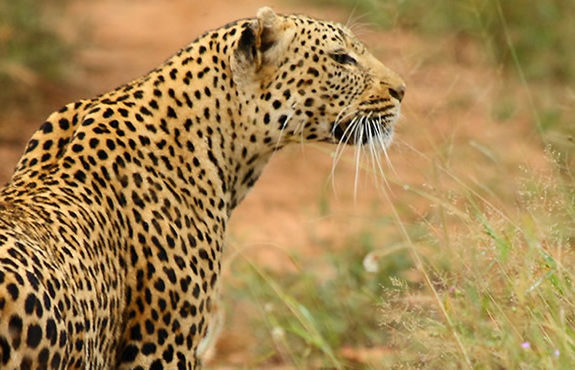
In most national parks, night drives are not permitted. In private conservancies, they are one of the defining experiences — and they are almost exclusively conducted in open vehicles fitted with a handheld or roof-mounted spotlight. Night drives reveal nocturnal species invisible on daytime game drives: African civets, servals, aardvarks, African wild cats, and hunting leopards. This is another compelling reason to choose a camp in a private conservancy over a national park lodge.
Photography and Game Viewing While Using the Open Jeep For Safaris
When on safari in an open vehicle, there is nothing between Africa’s wilderness and the occupants. It is easier to look at the wild animals surrounding you and take photos. Not to mention, smells are easier to pick up and sounds are more easily heard. Whether you are using the completely open safari jeep or the one with the canopy, there is ample space for photography and wildlife viewing.
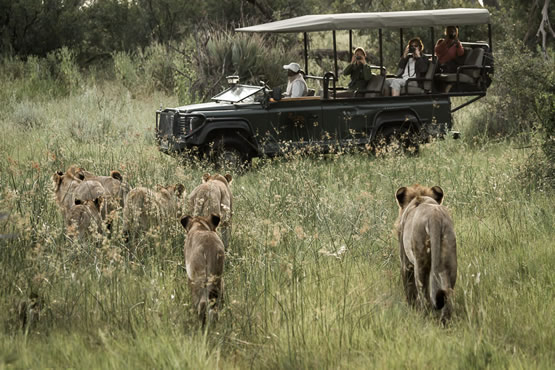
Seating Arrangement On the Open Safari Jeep
As the name suggests, they are open on both sides, making them ideal for game viewing, photography, bird-watching while offering an intimate and real connection with the African wilderness.
It is important to note that since these vehicles are mostly stationed in the safari camps and lodge – and so there are fewer them stationed there. That means one will almost always have to content with sharing with other guests from the camp or lodge where they are staying. If you prefer to have exclusive use of an open vehicle this needs to be arranged, at extra cost, in advance.
Some open safari jeeps are designed with tiered seating, so that nobody’s view is blocked by the person in front of them.
Protection from the Weather Elements
Due to their being open, there is obviously limited protection from the the elements, it is therefore vital that you protect yourself against the sun. Hats, scarves and windbreakers are all excellent shields from fierce and hot Ultra Violet rays. Some of these vehicles do have canvas/plastic canopies that can be closed, if the weather becomes un co-operative. Thunderstorms in Africa can be wild, and come on within minutes!
Are Open Safari Jeeps Safe?
Yes — with the understanding that safety relies on behaviour, not physical barriers. Africa’s wildlife has co-evolved alongside vehicles for decades. A lion, leopard, or elephant perceives the vehicle and its occupants as a single, non-threatening entity, provided certain rules are observed. The moment a passenger stands up, leans out, or makes sudden movements, that unity is broken — which is why guides enforce a strict seated and quiet protocol when in close proximity to dangerous game.
Key safety rules in an open vehicle:
- Always remain seated when wildlife is within 50 metres of the vehicle.
- Keep arms, hands, and camera lenses inside the vehicle profile unless the guide gives explicit clearance.
- No flash photography — sudden light startles animals and provokes defensive responses.
- Follow the guide’s verbal and non-verbal instructions immediately and without debate.
- Do not eat, drink loudly, or make unnecessary noise during a sighting.
- Wear neutral, muted colours (khaki, olive, beige) — bright colours attract insect attention and can unsettle some animals.
What Are The Limitations of Open Safari Jeeps?
Understanding these constraints helps set correct expectations and plan a realistic itinerary:
- Not for long road transfers: Driving 3–5 hours on open highways in a doorless jeep exposes occupants to sustained dust, wind, insects, and UV radiation. Transfers between destinations are always done in a separate, enclosed vehicle — the open jeep stays at the lodge.
- Limited luggage space: Open vehicles carry very limited baggage. Most fly-in safaris using open jeeps restrict soft-bag allowances to 15 kg (33 lbs) total, as gear is stowed in a small rear compartment or strapped externally.
- Cold mornings: Dawn game drives in the Okavango, high-altitude Kenya conservancies, and the South African highveld can be extremely cold (5–10°C / 41–50°F). Layering is essential — a fleece mid-layer and a windproof outer shell are non-negotiable.
- Shared vehicle by default: Open jeeps in most camps seat 6–8 guests, and the default is to share with other camp guests. Private vehicle hire (sole use) is available at most camps for an additional fee — typically USD 100–300 per drive — and is strongly recommended for families with young children, serious photographers, and guests with mobility limitations.
- Not suitable for toddlers: Most private conservancies require a minimum age of 6–8 years for open-vehicle game drives due to the absence of restraint systems and proximity to dangerous animals.