

Last Updated on April 27, 2026 by African Travel Hub Editorial
Seychelles Islands | Pre-Travel Information for 2026-2027
What Makes the Seychelles the Indian Ocean’s Premier Island Destination?
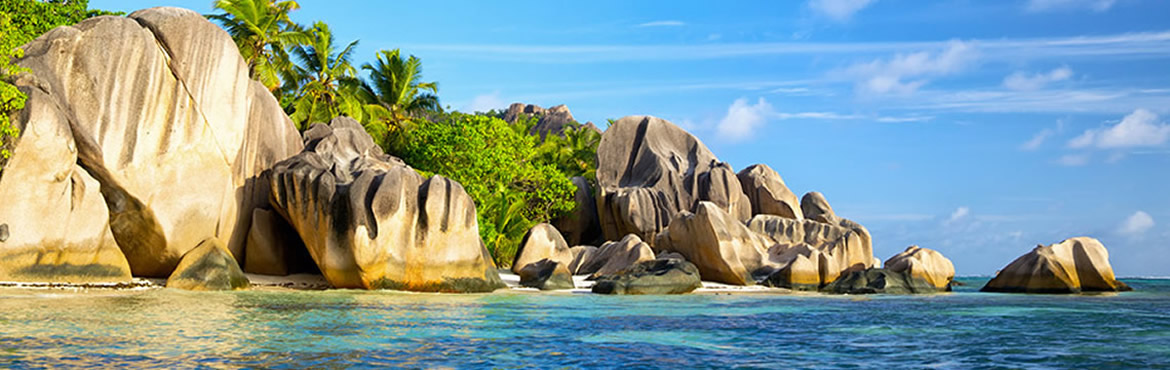
The Seychelles is the only mid-ocean archipelago on Earth built on ancient Precambrian granite — making its islands geologically unique among all tropical destinations. Situated in the western Indian Ocean, approximately 1,600 km east of the Kenyan coast at latitude 4°S, the 115-island archipelago offers year-round warmth (average 27°C), no malaria risk, no venomous land animals, and some of the world’s highest-rated beaches. Anse Lazio on Pras¸lin and Anse Source d’Argent on La Digue consistently rank in global top-ten beach lists.
For travellers combining an East Africa safari with a beach extension, the Seychelles is the logical finale: direct or one-stop flights from Nairobi (NBO) to Mahe (SEZ) take under 3 hours, and no visa is required in advance — a Visitor’s Permit is issued free on arrival.
Seychelles: Quick Facts for Trip Planners
| Location | Indian Ocean, ~1,600 km east of Kenya; 4°S latitude |
|---|---|
| Total Islands | 115 islands: 42 granitic, 73 coralline atolls & sand cays |
| Capital / Entry Point | Victoria, Mahe Island; Seychelles International Airport (SEZ) |
| Best Season | April–May & October–November (calm seas, light winds) |
| Currency | Seychellois Rupee (SCR); USD widely accepted at resorts |
| Time Zone | UTC+4 (no daylight saving) |
| Visa | Visitor’s Permit on arrival; valid for 30 days, extendable to 3 months |
| Malaria Risk | None — no prophylaxis required |
| Language | Seychellois Creole, English, French (all official) |
| Combine | Kenya Safari, Tanzania Serengeti, Uganda Gorilla Trekking |
Island-by-Island Guide: Which Island Suits Your Holiday Style?
Mahe Island — The Gateway Hub
Mahe is the largest island (154 km²) and home to the capital Victoria — the smallest capital city in Africa — as well as Seychelles International Airport (SEZ). It holds over 65 beaches, the Morne Seychellois National Park (covering 20% of the island), and the widest range of accommodation from budget guesthouses to six-star resorts.
Best for: First-time visitors, short stays of 3–5 nights, travellers arriving late or departing early, diving at Beau Vallon Bay.
- Top beaches: Beau Vallon (watersports hub), Anse Intendance (surf), Anse Royale (calm snorkelling).
- Don’t miss: Victoria Market for Creole spices, tea plantation at Morne Blanc, diving Shark Bank for nurse sharks and rays.
Praslin Island — The Coco de Mer Heartland
Praslin (38 km²) is the second-largest island, a 15-minute flight or 1-hour catamaran ferry from Mahe. It is home to the Valleé de Mai Nature Reserve, a UNESCO World Heritage Site and one of only two places on Earth where the endemic Coco de Mer palm (Lodoicea maldivica) grows wild. The Coco de Mer produces the world’s largest seed, weighing up to 25 kg.
Best for: Couples, honeymooners, birdwatchers, beach connoisseurs.
- Anse Lazio: Consistently rated among the top 3 beaches globally — granite boulders, turquoise water, and fine white sand.
- Wildlife: The critically endangered Seychelles Black Parrot (Coracopsis barklyi) is found only here.
La Digue Island — Timeless & Unhurried
La Digue (10 km²) is reached by a 15-minute ferry from Praslin. With a permanent population of around 3,000, its roads are primarily traversed by bicycle and ox cart — a pace of life unchanged for generations. The island’s Anse Source d’Argent beach is arguably the most photographed beach in the world, characterised by enormous sculpted granite boulders against shallow pink-tinged sand.
Best for: Slow-travel seekers, photographers, cyclists, honeymooners wanting seclusion.
- Wildlife highlight: The Veuve Nature Reserve protects the Paradise Flycatcher (Terpsiphone corvina), one of the rarest birds on Earth.
Bird Island — Wildlife Spectacle of the Northern Atolls
Bird Island is a tiny (100 hectares) coralline island 100 km north of Mahe, reachable only by a 30-minute light aircraft flight. From April to October, over one million sooty terns (Onychoprion fuscatus) nest here — one of the largest single-species seabird colonies on the planet. Visitors staying at the single lodge on the island routinely encounter nesting noddy terns, white fairy terns, and greater crested terns that show no fear of humans, allowing photography at arm’s length.
Bird Island is also a critical nesting site for hawksbill and green sea turtles (Chelonia mydas), with turtle monitoring active from October to February. The surrounding reef offers excellent snorkelling and glass-bottomed kayaking over pristine coral.
Best for: Wildlife photographers, birders, turtle conservation enthusiasts, guests seeking total seclusion.
Denis Island, Silhouette & The Outer Islands
Denis Island (privately managed) and Silhouette Island (the third-largest at 20 km²) offer ultra-exclusive, all-inclusive retreats with near-virgin reef systems. The outer coralline islands — Alphonse, Farquhar, Cosmoledo, and Aldabra Atoll — are for advanced divers, sport fishermen, and guests seeking absolute remoteness. Aldabra, a UNESCO World Heritage Site, hosts the world’s largest population of giant Aldabra tortoises (Aldabrachelys gigantea), numbering over 100,000.
Best Time to Visit the Seychelles: Month-by-Month Breakdown
The Seychelles lies outside the cyclone belt and is a year-round destination. However, two trade wind seasons drive distinct conditions:
- April–May (Shoulder / Best All-Round): Transition between trade winds. Seas are calm across all islands, ideal for inter-island ferries and snorkelling. Lush green landscapes from recent rains.
- May–October (South-East Trades / Cooler): Winds bring swell to south-facing beaches (Mahe’s Anse Intendance). North-facing beaches (Beau Vallon, Anse Lazio) remain calm and excellent. Peak bird nesting season on Bird Island.
- October–November (Second Shoulder / Best All-Round): Winds abate; transition to north-west monsoon. Seas calm, water visibility peaks for diving (30+ metres). Turtle nesting begins.
- December–March (North-West Monsoon / Warm & Wet): Warmer seas (29°C), occasional heavy showers, but rarely all-day rain. South-facing beaches become sheltered and swimmable. Peak holiday season — book 9–12 months ahead.
How to Combine a Seychelles Holiday with an East Africa Safari
African Travel Hub specialises in seamlessly combining Indian Ocean beach extensions with East Africa safari programmes. The Seychelles is positioned as the optimal “bush-and-beach” finale because of flight logistics, zero-malaria status, and the dramatic contrast it provides after game-rich savannah experiences.
Recommended Combination Itineraries
- 12 Days — Kenya (Masai Mara) + Seychelles: 5 nights Masai Mara for the Big Five and Great Migration, then 7 nights split across Mahe and Praslin. Nairobi to Seychelles direct via Kenya Airways.
- 14 Days — Kenya Safari + Seychelles Beach Vacation: Amboseli (elephant herds with Kilimanjaro backdrop) + Tsavo + Mahe + La Digue. Ideal for families.
- 14 Days — Masai Mara + Serengeti + Seychelles: Cross-border Kenya-Tanzania migration safari ending with 5 nights on Praslin and La Digue. Best June–September.
- 14 Days — Uganda Gorillas + Masai Mara + Seychelles: Mountain gorilla trekking in Bwindi Impenetrable Forest (Uganda), Big Five game drives in the Mara, beach recovery in the Seychelles. Triple-country immersion.
- 12 Days — Masai Mara + Seychelles + Dubai: Safari, beach, and city in one trip. Popular with travellers routing through Emirates or FlyDubai.
Seychelles for Birdwatchers: A Globally Significant Destination
The Seychelles hosts 14 bird species found nowhere else on Earth (endemics), making it one of the most important avian destinations in the Indian Ocean region. Key endemic species and their locations:
- Seychelles Warbler (Acrocephalus sechellensis): Once critically endangered (down to 26 individuals on Cousin Island in 1968), now recovered to several thousand across four islands following one of conservation’s great success stories.
- Seychelles Magpie-Robin (Copsychus sechellarum): One of the world’s rarest birds; found on Fregate, Cousine, Denis, and Aride islands.
- Seychelles Black Parrot (Praslin only): National bird; endemic to Valleé de Mai.
- Fairy Tern (Gygis alba): Nests in trees without building a nest — one of nature’s most improbable balancing acts, visible island-wide.
- Sooty Tern colony (Bird Island, Apr–Oct): Over 1 million birds. The noise is audible 2 km offshore.
Planning Your Seychelles Holiday: What to Expect from African Travel Hub
African Travel Hub is a Nairobi-based specialist operator with over a decade’s experience planning bespoke trips across East Africa and the Indian Ocean islands. All Seychelles itineraries are fully tailor-made, price-matched to current accommodation rates, and supported by 24/7 in-destination assistance.
Our Seychelles packages range from a 5-night honeymoon escape at Cerf Island (from USD 1,860 per couple) to a 14-day island-hopping circuit combining Mahe, Praslin, and La Digue (from USD 8,180 per couple, including safari). Every package includes return airport transfers, inter-island flights or ferries, accommodation, and selected activities.
Why Book with African Travel Hub?
- Nairobi-based team with first-hand island knowledge and supplier relationships
- End-to-end itinerary management — one contact for safari and beach
- Toll-free lines: +1 888 885 4580 (USA/Canada) | 0800 051 4252 (UK) | +254 795 891 706 (Kenya)
- No hidden costs: all quotes itemised by accommodation, transfers, and activities