
Last Updated on April 27, 2026 by African Travel Hub Editorial
Primate Safaris in Africa: The Expert Planning Guide
What Are Primate Safaris?
A primate safari is a guided wildlife experience focused on encountering Africa’s great apes and monkeys in their natural forest habitats — most notably mountain gorillas, chimpanzees, bonobos, and golden monkeys. The best destinations are concentrated in East and Central Africa, with Uganda, Rwanda, and the Democratic Republic of Congo forming the core “gorilla triangle,” while Tanzania, Ethiopia, and Madagascar extend the primate safari circuit considerably.
Why Primate Safaris Belong on Your Africa Itinerary
No other wildlife experience on the continent compares. Coming face-to-face with a mountain gorilla — a critically endangered species with fewer than 1,063 individuals remaining in the wild as of the most recent census — is a profoundly human encounter. These great apes share over 98% of their DNA with us. Their social behaviour, parental bonds, and quiet intelligence make an hour in their company unlike any savanna game drive. For travellers who have already done the Big Five, a primate safari is the logical and deeply rewarding next chapter.
Africa’s Key Primate Species and Where to Find Them
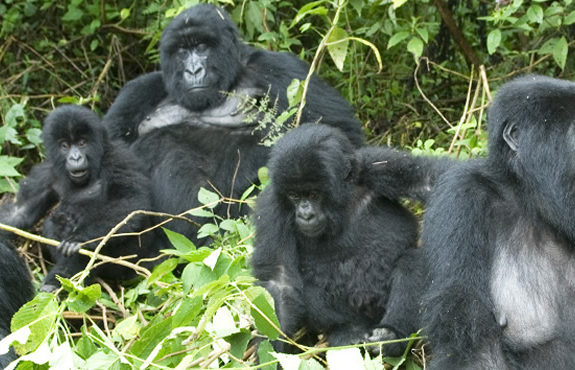
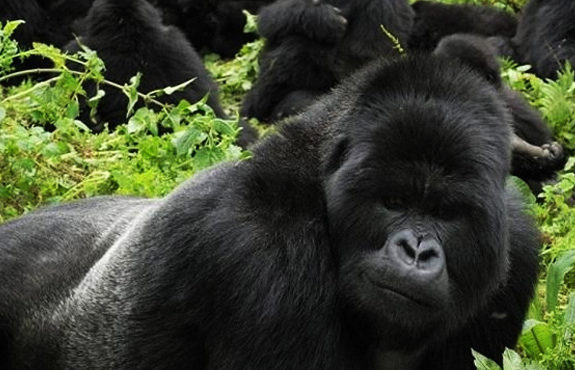
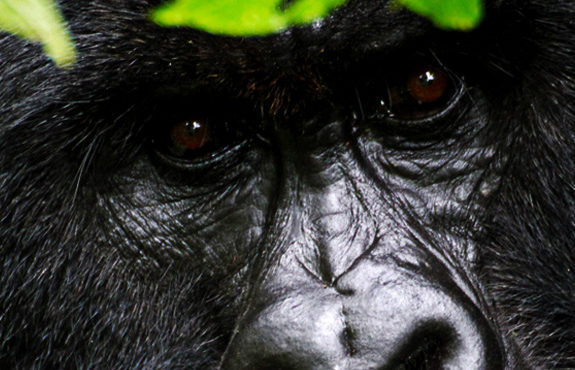
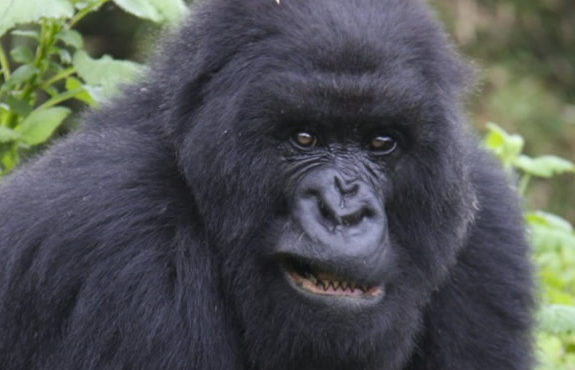
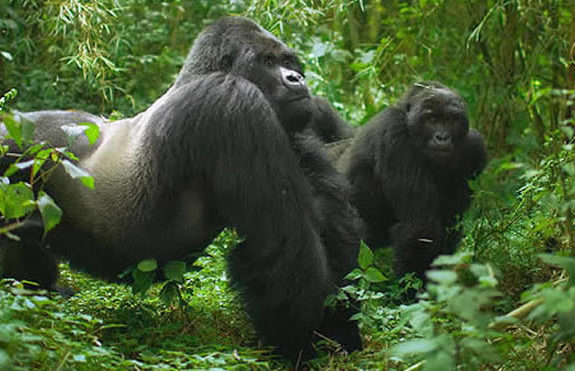
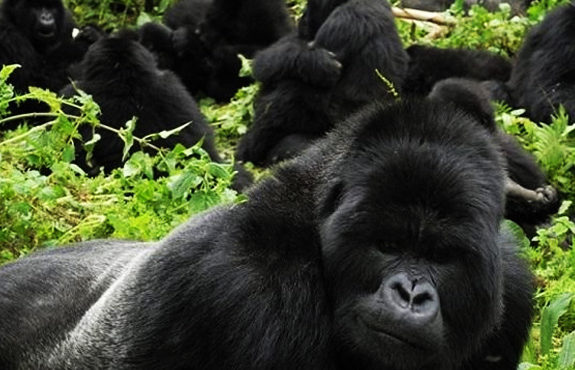
Mountain Gorillas exist in only three countries: Uganda (Bwindi Impenetrable National Park and Mgahinga Gorilla National Park), Rwanda (Volcanoes National Park), and the DRC (Virunga National Park). Rwanda hosts roughly 10 habituated gorilla families open to trekking. Bwindi hosts the largest number of habituated families in the world, spread across four trekking sectors — Buhoma, Ruhija, Nkuringo, and Rushaga.
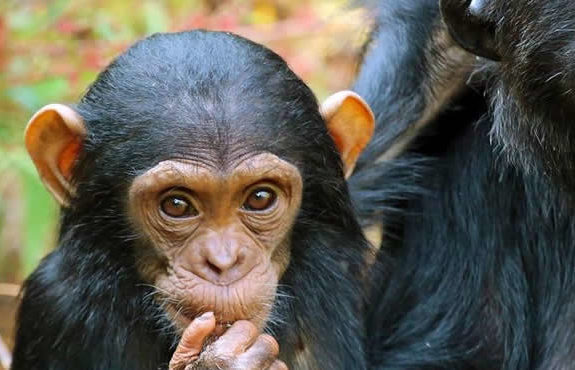
Chimpanzees are far more numerous — an estimated 250,000 remaining across sub-Saharan Africa — but wild, habituated chimps accessible on foot are a different matter. Uganda’s Kibale Forest National Park is the world’s premier chimpanzee trekking destination, with over 1,500 individuals and 13 primate species in a single park. Tanzania’s Gombe Stream (made famous by Jane Goodall’s research) and Mahale Mountains National Park, both on the shores of Lake Tanganyika, offer extraordinary chimp encounters in some of Africa’s most remote and scenic settings.
Bonobos are found exclusively in the DRC, primarily in Lola ya Bonobo Sanctuary near Kinshasa and in the wild within the Congo Basin rainforest. They remain the least-visited of the great apes due to DRC’s logistical complexity.
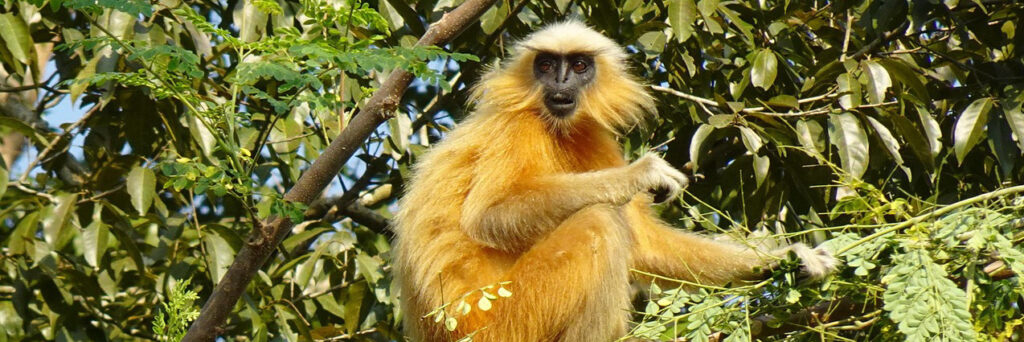
Golden Monkeys inhabit the bamboo forests of the Virunga Volcanoes and can be tracked in Volcanoes National Park, Rwanda, and Mgahinga National Park, Uganda — often combined with gorilla trekking in a single trip.
Gelada Baboons are found nowhere else on Earth but the highlands of Ethiopia. The Simien Mountains National Park holds the largest population; groups of several hundred are commonly encountered on plateau walks, making this one of Africa’s most underrated wildlife spectacles.
Lemurs — of which over 100 species exist — are endemic to Madagascar. Andasibe-Mantadia, Ranomafana, and Kirindy are the primary national parks for lemur viewing, ranging from the iconic ring-tailed lemur to the nocturnal aye-aye.
Nyungwe Forest in Rwanda deserves special mention: it hosts 13 primate species including chimpanzees, L’Hoest’s monkeys, black-and-white colobus, and grey-cheeked mangabeys, along with a canopy walkway offering a remarkable elevated perspective on forest wildlife.
Gorilla Trekking Permits: Costs and Booking Rules
Gorilla permits are government-issued and strictly limited. Book 6 to 12 months in advance, especially for Rwanda.
| Country | Permit Cost (2025) | Minimum Age | Max Group Size |
|---|---|---|---|
| Rwanda | USD 1,500 | 15 years | 8 persons |
| Uganda | USD 700 | 15 years | 8 persons |
| DRC (Virunga) | ~USD 400 | 15 years | 8 persons |
Once a gorilla family is located, time with the group is limited to one hour. Trek duration varies from 2 to 8 hours depending on where the gorillas rested the previous night. Guides and rangers move at the pace of the slowest trekker. The probability of a gorilla encounter in both Bwindi and Volcanoes National Park is approximately 98%.
Chimpanzee trekking permits in Kibale Forest, Uganda cost approximately USD 200 per person and are also limited to one hour once the chimps are located, with a maximum of 6 visitors per group.
Best Time for a Primate Safari
The two optimal windows are:
- June to September — the long dry season. Forest trails are firmer, vegetation is less dense (improving visibility), and river crossings are safer. This is peak season; permits book out fastest.
- December to February — the short dry season. Gorillas and chimps descend to lower elevations, sometimes shortening trek times considerably. Visitor numbers are lower and prices may be more flexible.
The rainy seasons (March–May and October–November) are not impossible — gorillas and chimps are present year-round — but trails become muddy and steep terrain more demanding.
How to Build a Primate Safari Itinerary
The classic 7–10 day Uganda circuit combines Kibale Forest (chimp trekking), Queen Elizabeth National Park (game drives and tree-climbing lions in Ishasha), and Bwindi (gorilla trekking). This delivers both great apes plus savanna wildlife in a single trip.
The Rwanda-Uganda combination pairs Volcanoes National Park gorilla trekking with Bwindi for a second permit, effectively doubling the encounter opportunities. Travelling via Kigali Airport for Bwindi reduces driving time to approximately 5–6 hours versus 8–10 hours from Entebbe — a meaningful difference on rough roads.
The Tanzania primate extension adds Gombe Stream or Mahale to an existing Serengeti itinerary. Mahale is accessed by charter flight and lake boat — the combination of chimp trekking and swimming in the clear waters of Lake Tanganyika is uniquely compelling.
The multi-country East Africa visa (Uganda, Rwanda, Kenya) costs USD 100 and simplifies border crossings considerably for combination itineraries.
Planning Your Primate Safari with African Travel Hub
Hallmark Travel Planners — the Nairobi-based team behind African Travel Hub — has been designing tailor-made African safaris since 2006. We secure gorilla and chimpanzee permits on your behalf, arrange specialist guides with deep knowledge of primate behaviour, and combine your forest experiences with savanna wildlife, cultural visits, and beach finishes according to your interests and travel dates. Contact us to begin building your primate safari itinerary.