
Last Updated on April 18, 2026 by African Travel Hub Editorial
Kenya and Tanzania Combined Safaris
The Complete Planning Guide |2026 – 2027
Kenya and Tanzania together protect over 150,000 km² of savanna, wetland, and montane habitat. No other two-country pairing on the continent matches this breadth of wildlife density, landscape diversity, and logistical convenience. Both countries share a land border crossed daily by safari vehicles, making a seamless combined circuit straightforward to plan.
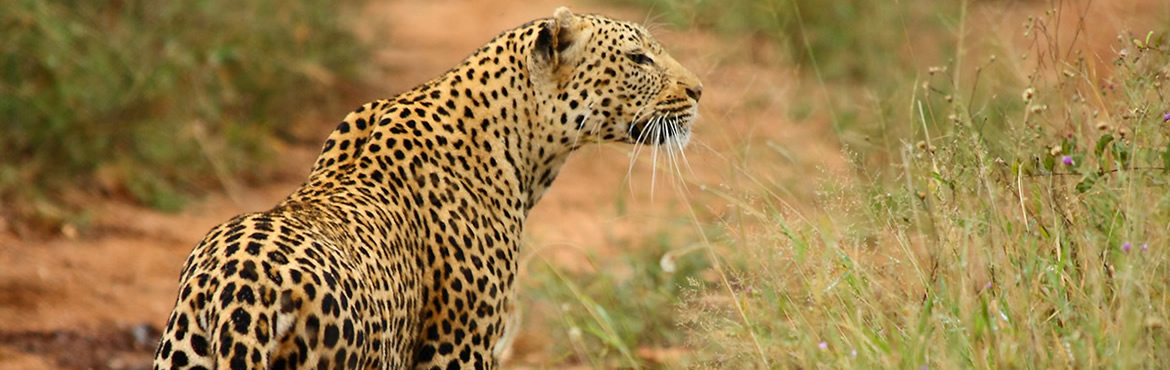
A Kenya–Tanzania combined safari is the single most wildlife-rich itinerary in Africa. Across 7–14 days you access more than 12 major ecosystems, witness the Great Wildebeest Migration, and encounter all of the Big Five — often multiple times.
Why Combine Kenya and Tanzania?
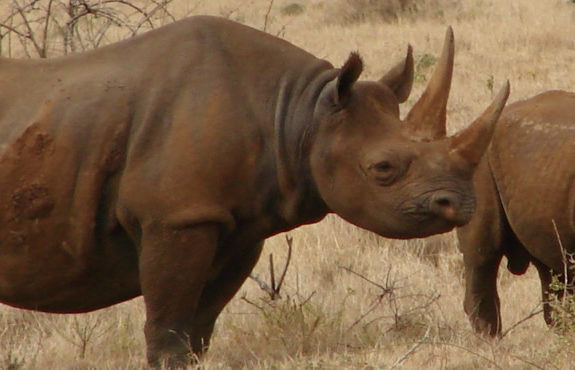
Each country compensates for the other’s gaps. Kenya’s Masai Mara delivers the most dramatic wildebeest river crossings (July–October); Tanzania’s Serengeti holds the largest resident lion population in Africa (~3,000 individuals). Ngorongoro Crater offers the continent’s highest density of black rhino — a species rare in Kenya. Amboseli gives unrivalled views of elephant herds against Kilimanjaro’s snow-capped peak. No single-country itinerary replicates this combination.
Kenya’s Core Safari Circuits
Masai Mara National Reserve
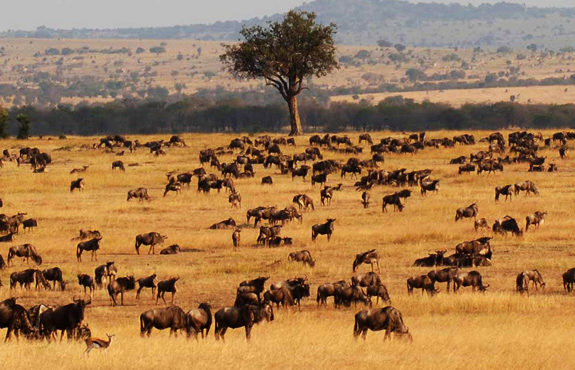
Surface area: 1,510 km². The Mara forms the northern extension of the 30,000 km² Serengeti–Mara ecosystem. From July to October, an estimated 1.5 million wildebeest, 200,000 zebra, and 300,000 Thomson’s gazelle cross into the Mara from Tanzania — the largest overland animal movement on Earth. Year-round, the Mara supports Africa’s highest density of lion (roughly one per 5 km²), alongside leopard, cheetah, elephant, and hippo. Multiple crossings of the Mara River can occur daily during peak season.
Amboseli National Park
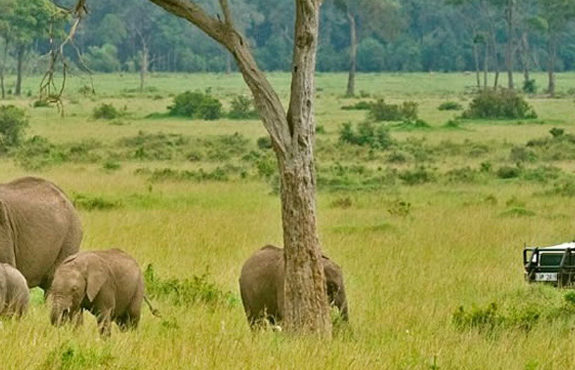
Surface area: 392 km². Amboseli hosts Kenya’s largest free-roaming elephant herds — groups of 50–100 individuals observed regularly. The park sits at the foot of Mount Kilimanjaro (5,895 m), creating Kenya’s most iconic photography backdrop. Ancient underground springs fed by Kilimanjaro glaciers sustain year-round swamps that attract buffalo, giraffe, and over 400 bird species including the saddle-billed stork.
Lake Nakuru National Park
Surface area: 188 km². A soda lake in the Great Rift Valley, Lake Nakuru is one of Africa’s most important white and black rhino sanctuaries following intensive conservation since the 1990s. The alkaline waters seasonally host hundreds of thousands of lesser flamingos. Rothschild’s giraffe — one of Africa’s rarest subspecies — was successfully reintroduced here and is now well established.
Aberdare National Park & Mount Kenya
The Aberdare massif (3,999 m peak) and Mount Kenya (5,199 m, Africa’s second-highest mountain) form Kenya’s Central Highlands. These montane forests shelter elephant, buffalo, and the elusive bongo antelope. Tree lodges — platforms built over floodlit waterholes — provide nocturnal game-viewing experiences unavailable elsewhere in East Africa.
Tanzania’s Core Safari Circuits
Serengeti National Park
Surface area: 14,763 km² — Tanzania’s largest national park and a UNESCO World Heritage Site. The Serengeti supports Africa’s most diverse predator community: lion, leopard, cheetah, wild dog, spotted hyena, and serval are all present. The central Seronera Valley offers year-round game-viewing; the northern Mara triangle and western Grumeti corridor host river crossings June–July. An estimated 3,000 lions, 1,000 leopards, and 500 cheetahs reside within park boundaries.
Ngorongoro Conservation Area
The Ngorongoro Crater is the world’s largest intact volcanic caldera: 260 km² floor, 600 m walls, supporting approximately 25,000 large mammals in a self-contained ecosystem. It holds one of Africa’s highest concentrations of lion (around 60–70 adults) and the densest population of spotted hyena on the continent. Critically, Ngorongoro is one of the few places in East Africa where both black rhino and lion are reliably encountered in the same game drive. Olduvai Gorge, 45 km west, yielded Homo habilis fossils dating to 1.8 million years ago, earning Tanzania the title ‘Cradle of Mankind’.
Tarangire National Park
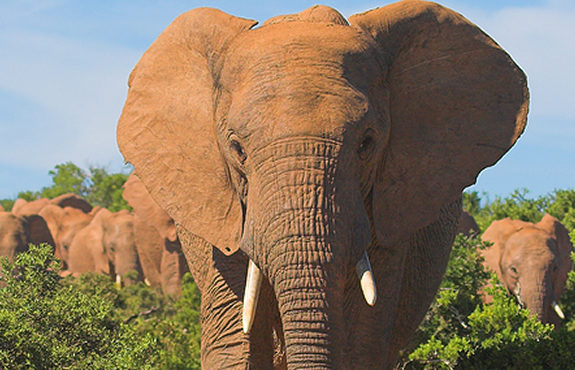
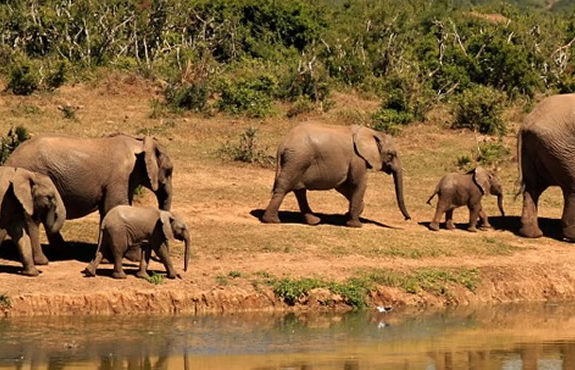
Surface area: 2,850 km². Tarangire is Tanzania’s elephant capital — dry-season concentrations of 3,000+ elephants converge on the Tarangire River from July to October, among the largest elephant gatherings in Africa. The park’s ancient baobab-dotted landscape also supports high densities of buffalo, oryx, and eland, plus over 550 bird species including the yellow-collared lovebird endemic to northern Tanzania.
Lake Manyara National Park
Surface area: 330 km² (75% lake). Manyara is famous for its tree-climbing lions — a rare behaviour documented nowhere else in Tanzania with such consistency. The alkaline lake supports up to 75,000 flamingos at peak season, and the groundwater forest edge harbours the highest density of baboons recorded in Africa (~200 per km²). Hippo pools adjacent to the park entrance offer close-range sightings year-round.
Top Selling Kenya and Tanzania Safari Packages for 2026 and 2027
Get inspired with our sample trips below. You can have any trip tailor made for your private travel. Any number of days. Any departure date. Any experience you wish for.
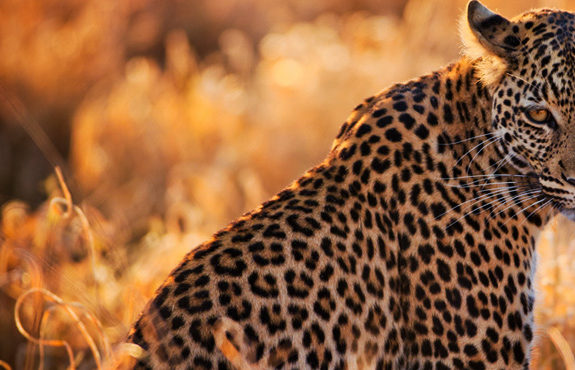
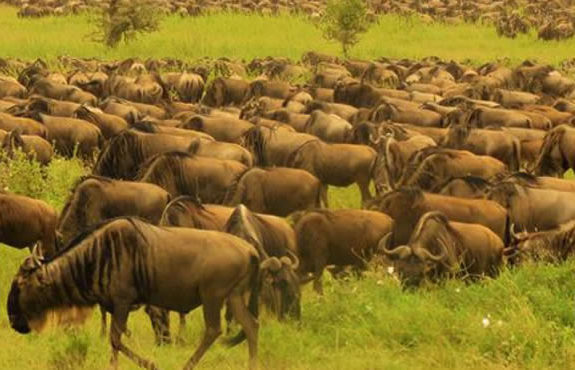
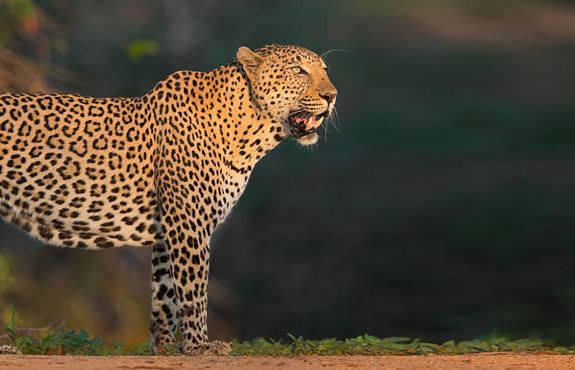
The Great Wildebeest Migration: Month-by-Month
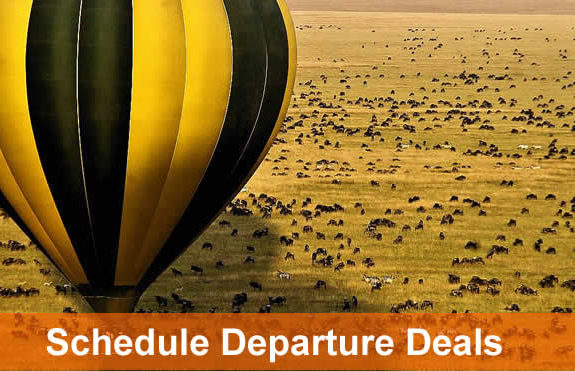
The migration is a continuous 3,000 km circular journey — there is no single starting point. Below is the optimal viewing guide:
| Month | Location | Key Wildlife Event |
|---|---|---|
| January - March | Southern Serengeti + Ndutu | Calving season: ~500,000 calves born; cheetah & lion peak activity |
| April - May | Central Serengeti | Northward movement begins; lush green plains |
| June - July | Western Serengeti (Grumeti) | First river crossings at Grumeti; crocodile predation |
| July - October | Northern Serengeti & Masai Mara (Kenya) | Peak Mara River crossings; highest predator activity of the year |
| November - December | Eastern Serengeti (Loliondo) | Short rains; herds move south; quiet, uncrowded season |
Best Time to Visit
Kenya and Tanzania are year-round destinations. Both countries straddle the equator, maintaining temperatures of 20–28°C across most safari zones throughout the year. Two distinct dry seasons (January–February and June–October) offer the best game-viewing as animals concentrate around permanent water sources.
- July–October (Peak Season): Migration river crossings at their most dramatic; clear skies; peak predator activity in the Mara
- January–February: Calving season in the Serengeti; excellent predator viewing; fewer visitors and lower lodge rates
- March–May (Green Season): Green landscapes and dramatic skies; excellent bird-watching; long rains may limit some road access
Sample Safari Packages & Prices (2026–2027)
| Package | Duration | Highlights | From: USD |
|---|---|---|---|
| Masai Mara & Serengeti Safari | 7 Days | Masai Mara, Serengeti, Ngorongoro Crater | $1,880 |
| Mara–Serengeti–Ngorongoro | 10 Days | Masai Mara, Serengeti, Ngorongoro Crater | $2,817 |
| East Africa Triple (Uganda + Kenya + Tanzania) | 12 Days | Gorilla trekking, Masai Mara, Serengeti | $5,050 |
| Trailing the Great Migration | 12 Days | Full Serengeti to Masai Mara migration trail | $3,690 |
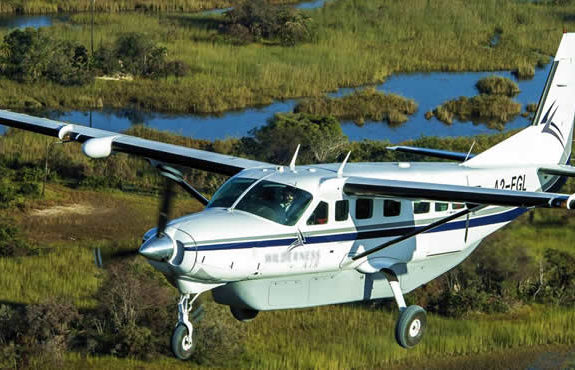
| Wings Over Kenya & Tanzania | 12 Days | Fly-in safari: all major parks, no road drives | $6,670 |
| Rhino Safari | 12 Days | Ngorongoro, Lake Nakuru, Ol Pejeta rhino focus | $4,582 |
| Best of Kenya & Tanzania Wildlife Parks | 14 Days | All major parks: comprehensive Big Five circuit | $12,097 |
| Big 5 + Gorillas (Kenya–Tanzania–Rwanda) | 14 Days | Masai Mara, Serengeti, Ngorongoro, Rwanda gorillas | $7,220 |
| Vic Falls + Masai Mara + Serengeti | 14 Days | Zimbabwe, Kenya, Tanzania multi-country safari | $6,917 |
Prices are per person sharing, land only, and include park fees, game drives, full-board accommodation, and a dedicated English-speaking guide. International flights are not included. Every itinerary is fully customisable: departure date, duration, accommodation category, and add-on experiences can be tailored to your requirements.
Ready to plan your Kenya–Tanzania safari? Contact African Travel Hub for a free, no-obligation custom itinerary. USA & Canada: 1.888.885.4580 | UK: 0.800.051.4252 | Kenya: +254 795 891 706