
Last Updated on May 2, 2026 by African Travel Hub Editorial
Fly-In Air Safaris Africa – Expert Guide
| BOTTOM LINE UP FRONT
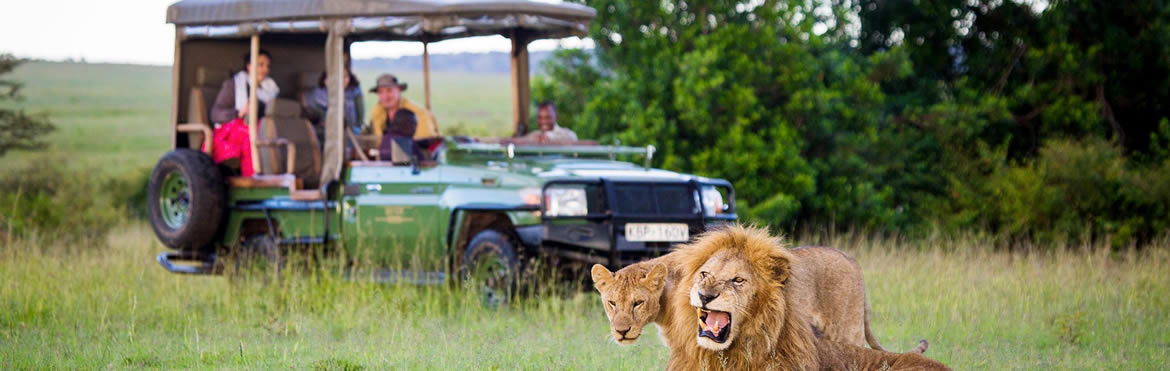
A fly-in safari is the fastest, most immersive way to experience Africa’s greatest wildlife destinations. By eliminating long overland drives, you spend up to 70% more time on game activities. Packages start from USD 1,760 per person for 4 days in Tanzania and scale to USD 14,560+ for South Africa’s elite private reserves. African Travel Hub designs fully customised and guaranteed-departure fly-in itineraries across East Africa, Southern Africa, and beyond. |
What Is a Fly-In Safari?
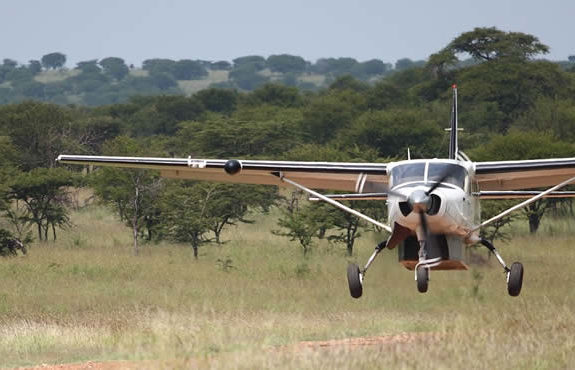
A fly-in safari uses light charter aircraft to transfer travellers between wildlife destinations, replacing multi-hour road journeys with short flights of 30–90 minutes. Instead of spending half a day on a dust road, you land directly at a bush airstrip, step into a waiting 4WD, and drive straight into a game area. The time saved is redirected entirely to game drives, bush walks, boat safaris, and sundowner experiences.
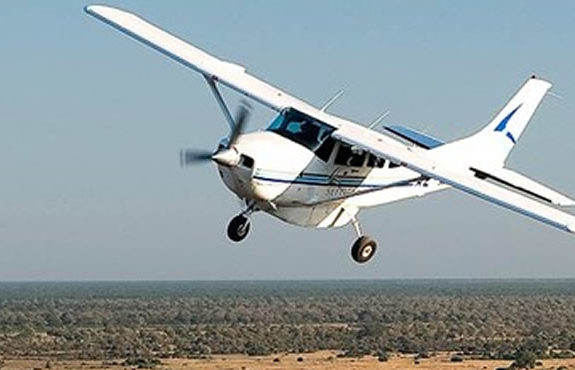
Aircraft used on fly-in safaris are typically Cessna Caravan 208s (9–12 seats), Cessna 172 and 182 singles (3–4 seats), or Pilatus PC-12 turboprops for longer routes. Bush airstrips are often unpaved laterite or grass strips maintained by the lodges themselves. For travellers comfortable with small aircraft, the flights are themselves a highlight — offering aerial views of wildebeest herds, river systems, and landscapes impossible to appreciate from the ground.
Who Should Book a Fly-In Safari?
Fly-in safaris are optimal for:
- Time-constrained travellers with 3–7 days who want maximum wildlife exposure per day.
- Couples and honeymooners seeking exclusive, remote camps with no road traffic.
- Photographers and naturalists targeting specific ecosystems — Okavango Delta, Selous wetlands, Namibian desert — inaccessible by road within a standard itinerary.
- Returning Africa visitors ready to go beyond the classic parks and explore private concessions.
- Multi-destination travellers combining two or three countries in one trip (e.g., Kenya + Tanzania + Botswana).
Fly-in safaris are not recommended for travellers on a tight budget or those with a fear of small aircraft. Road safaris remain an excellent and more affordable alternative, and African Travel Hub offers both.
Fly-In vs Road Safari: Key Differences
The table below compares the two formats on the factors that matter most to travellers:
| Factor | Fly-In Safari | Road Safari |
|---|---|---|
| Time efficiency | High — 45–90 min flights | Low — 4–10 hrs driving |
| Typical daily game-drive hours | 6–8 hrs | 4–6 hrs (after travel) |
| Cost per person (7 days) | USD 4,500–15,000+ | USD 1,200–4,000 |
| Destinations reachable | Remote, exclusive conservancies | Established parks & reserves |
| Scenic value | Aerial panoramas + ground views | Ground-level only |
| Group size | 2–6 per aircraft | 6–7 per vehicle |
| Luggage allowance | 15 kg soft bag | No strict limit |
The fundamental trade-off is time versus cost. A fly-in traveller who spends USD 5,000 for 4 days in the Masai Mara typically logs 6–8 hours of game drives per day. A road traveller spending USD 800 for the same 4 days may spend up to 10 hours driving between Nairobi and the Mara, leaving only 2 full days on the ground.
Top Fly-In Safari Destinations in Africa
Masai Mara, Kenya
The Masai Mara National Reserve and its surrounding private conservancies — Olare Motorogi, Naboisho, Mara North, and Ol Kinyei — cover approximately 1,510 km². Fly-in access via Wilson Airport in Nairobi takes 45 minutes to the main Keekorok airstrip or 55 minutes to the remote Salas airstrip in the south. The private conservancy airstrips allow access to areas entirely closed to non-resident vehicles, delivering exclusive, crowd-free game drives unavailable to road-based safari guests.
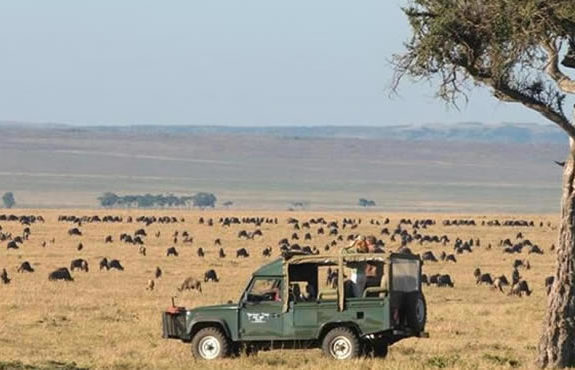
The Great Wildebeest Migration — 1.5 million wildebeest and 250,000 zebra moving between Tanzania and Kenya — peaks in the Mara from July to October. A fly-in safari during this period, positioned at a conservancy camp south of the Mara River, places guests directly in the path of the crossing action.
Serengeti & Northern Tanzania
The Serengeti ecosystem spans 30,000 km² across Tanzania. Fly-in itineraries use Kilimanjaro International Airport or Arusha as the hub, then charter to Seronera, Grumeti, Lobo, or Kogatende airstrips depending on the season. The Ngorongoro Crater — a UNESCO World Heritage Site containing 25,000 large mammals in a 260 km² caldera — pairs naturally with a Serengeti fly-in, adding only 35 minutes of flight time.
Kruger & Sabi Sand, South Africa
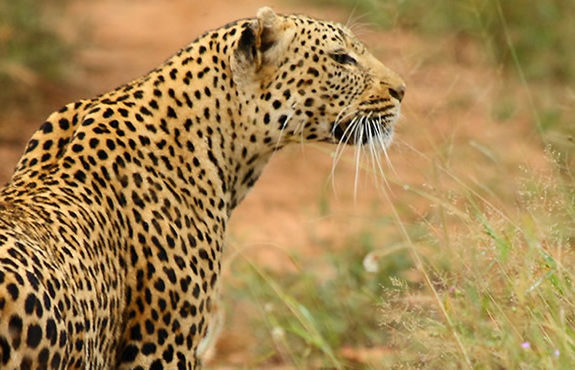
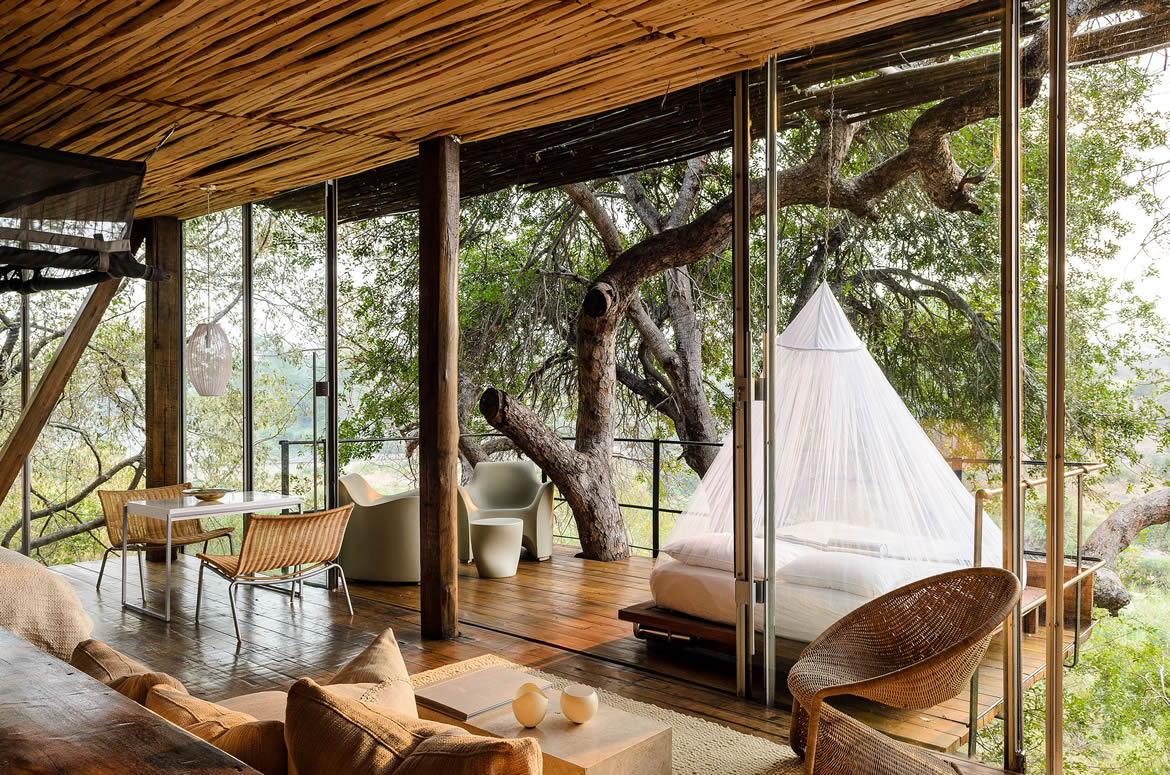
Sabi Sand Game Reserve adjoins Kruger National Park along a fully open western boundary, creating a Big Five traversal area of over 65,000 km². Fly-in access from Johannesburg (OR Tambo) or Cape Town connects to Skukuza, Hoedspruit (Eastgate), or Phalaborwa airports in 60–90 minutes. Sabi Sand is home to Singita, Lion Sands, Londolozi, and MalaMala — lodges that routinely achieve the highest wildlife sighting rates of any reserve in Africa. Leopard sightings here are almost guaranteed.
Okavango Delta & Chobe, Botswana
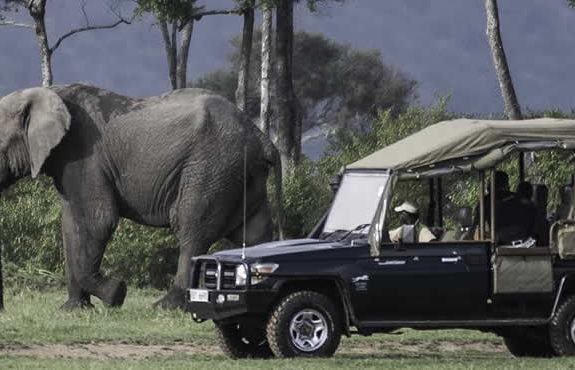
Botswana’s model of high-value, low-volume conservation means that most camps in the Okavango Delta are only accessible by small aircraft. The Delta — a 15,000 km² inland water system — hosts 20,000 elephants, 130,000 buffalo, and exceptional populations of wild dogs and sitatunga. A fly-in from Maun connects to private island camps in under 30 minutes. Combining the Delta with Chobe National Park (the highest elephant density in Africa at roughly 120,000 individuals) creates a 7–10 day itinerary of extraordinary breadth.
Namibia
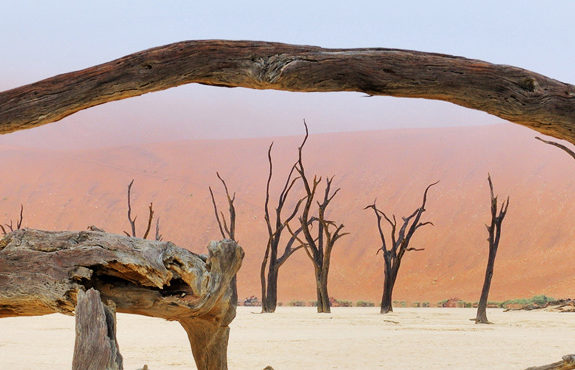
Namibia’s fly-in circuit is the most geographically diverse safari experience in Africa. A standard 8-day itinerary covers Sossusvlei (the world’s highest sand dunes at 325 m), Damaraland (desert-adapted elephant and black rhino), Etosha National Park (500 lions, 2,500 zebra, and the famous floodlit waterholes), and the Skeleton Coast. All transfers are by light aircraft, as road distances between these regions exceed 1,000 km.
Selous / Nyerere, Tanzania
The Nyerere National Park (formerly Selous Game Reserve) is Africa’s largest protected area at 50,000 km², yet one of its least visited. Fly-in access from Dar es Salaam takes 45 minutes. The Rufiji River system enables boat safaris and walking safaris unavailable in northern Tanzania’s vehicle-only parks. Wild dog packs are larger and more frequently seen here than anywhere else on the continent.
Ready- Made Fly-In Safari Packages
All packages below are available as guaranteed departures (minimum 2 persons) or as fully private bespoke itineraries. Prices are per person sharing and include all internal flights, full-board accommodation, game activities, and park fees unless stated. International flights are excluded.
All itineraries can be extended, shortened, or combined. Contact African Travel Hub to design a bespoke fly-in itinerary on any departure date with any lodge category, from comfortable tented camps to ultra-luxury private suites.
How to Plan a Fly-In Safari: Practical Essentials
Best Time to Visit
- Kenya & Tanzania (Migration): July–October for Mara River crossings; January–February for Serengeti calving season.
- South Africa (Kruger/Sabi Sand): May–September (dry season) for best game visibility and Big 5 sightings.
- Botswana (Okavango Delta): June–October when the annual flood peaks, concentrating wildlife on dry islands.
- Namibia: Year-round; May–October for clearest skies and desert wildlife activity around waterholes.
- Tanzania (Selous/Nyerere): June–October (dry season) for boat safaris and concentrated wildlife at the Rufiji.
What to Pack
Weight limits on bush aircraft are strict — typically 15 kg in a soft-sided bag (no hard suitcases). Pack neutral colours (khaki, olive, beige, grey). Binoculars (8×42 minimum), wide-brimmed hats, and SPF 50+ sunscreen are essential. High-quality lodges provide laundry service, eliminating the need for large wardrobes.
Booking Lead Times
Peak season camps in the Masai Mara conservancies, Okavango Delta, and Sabi Sand lodges typically sell out 9–18 months in advance. For 2026 travel, booking between January–April 2026 is recommended. For 2027, advance planning in mid-2026 secures the best camp locations at each destination.
Health & Vaccinations
- Yellow fever vaccination required for entry to Kenya, Tanzania, and Uganda if arriving from a yellow fever-endemic country.
- Malaria prophylaxis (atovaquone-proguanil or doxycycline) recommended for all East African and Botswana destinations.
- South Africa’s Kruger region is malarial; Johannesburg and Cape Town are malaria-free.
- Comprehensive travel insurance with emergency evacuation cover is strongly advised for all fly-in safari guests.
| PLAN YOUR FLY-IN SAFARI WITH AFRICAN TRAVEL HUB
African Travel Hub has been designing fly-in safaris across East and Southern Africa for over 15 years. We offer guaranteed-departure group safaris and fully bespoke private itineraries — any destination, any lodge, any date. |