Last Updated on April 22, 2026 by African Travel Hub Editorial
Uganda: The Complete Safari & Gorilla Trekking Guide for 2026–2027
Home to more than half the world’s mountain gorillas, 1,063 bird species, and some of East Africa’s most diverse national parks — Uganda consistently over-delivers for travellers who make it their destination.
Uganda is the single best destination in Africa for gorilla trekking. With permits priced at USD 800 — roughly half the cost of Rwanda — and more than 25 habituated gorilla families across Bwindi Impenetrable National Park and Mgahinga Gorilla National Park, it offers the most accessible route to a face-to-face encounter with endangered mountain gorillas. Beyond gorillas, Uganda also hosts chimpanzee tracking in Kibale Forest, the tree-climbing lions of Ishasha, the Nile’s most dramatic waterfall at Murchison Falls, and the finest shoebill spotting on the continent. The dry-season windows of June–September and December–February deliver the most reliable conditions. Book gorilla permits at least 3–6 months ahead during peak season — they sell out.
- Mountain Gorilla Trekking — Permits, Parks & Planning
- Uganda’s National Parks — A Park-by-Park Guide
- Chimpanzee Trekking in Kibale Forest
- Birdwatching — 1,063 Species & the Shoebill
- Whitewater Rafting & the Nile at Jinja
- Kampala — Uganda’s Vibrant Capital
- Best Time to Visit Uganda
- Visas, Entry Requirements & Health
- Practical Travel Information
- Suggested Itineraries
1. Mountain Gorilla Trekking — Uganda’s Signature Experience
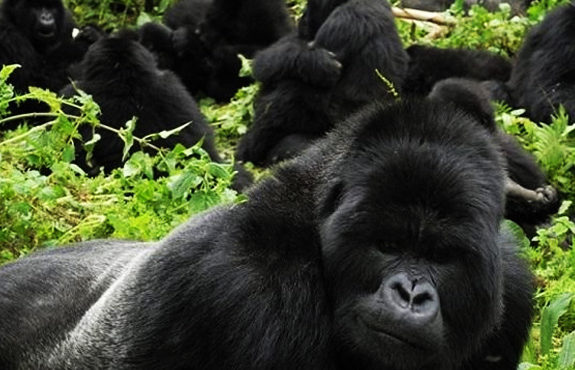
There is no wildlife encounter on earth quite like spending an hour with a wild mountain gorilla family. Uganda is ground zero for this experience: it harbours more than half the world’s remaining mountain gorillas, spread across two protected areas in the country’s southwestern corner.
Sources: Dian Fossey Gorilla Fund · Greater Virunga Transboundary Collaboration, 2025 · Uganda Wildlife Authority
Where You Go to Trek Gorillas in Uganda
Uganda has two gorilla trekking parks, both managed by the Uganda Wildlife Authority (UWA):
Bwindi Impenetrable National Park
A UNESCO World Heritage Site covering 321 km² in southwestern Uganda, Bwindi is the world’s most significant gorilla habitat. It currently hosts more than 25 habituated gorilla families across four trekking sectors: Buhoma (the original sector, easiest road access), Ruhija (high altitude, excellent birding alongside gorillas), Rushaga (largest number of habituated families, including the Gorilla Habituation Experience), and Nkuringo (dramatic ridgeline setting, more challenging terrain). Beyond gorillas, Bwindi is home to 120 mammal species and 350 bird species, including 23 Albertine Rift endemics. Trekking difficulty varies: some groups are located close to the park boundary; others require 2–7 hours of hiking through dense forest.
Mgahinga Gorilla National Park
Nestled among the Virunga volcanoes at 1,800–4,127 metres in altitude, Mgahinga covers 33.7 km² and hosts one habituated gorilla family. It is part of the same transboundary ecosystem as Rwanda’s Volcanoes National Park. The scenery — extinct volcanic cones rising above bamboo forest — is arguably the most dramatic gorilla trekking backdrop anywhere. Mgahinga also offers golden monkey tracking, Batwa cultural experiences, and the Sabinyo, Gahinga, and Muhabura volcano hikes.
Gorilla Trekking Permit: Cost & Categories (2026)
| Visitor Category | Standard Trek (1 hour) | Habituation Experience (4 hrs) |
|---|---|---|
| Foreign Non-Resident | USD 800 | USD 1,500 |
| Foreign Resident (East Africa) | USD 700 | USD 1,000 |
| Other African Nationals | USD 500 | — |
| East African Citizens | UGX 300,000 (~USD 80) | UGX 750,000 |
Source: Uganda Wildlife Authority · SafariBookings
For context: Rwanda charges USD 1,500 per permit; the Democratic Republic of Congo charges USD 400 (though ongoing instability in eastern DRC makes trekking there currently unreliable). Uganda offers the best value for a high-quality gorilla trekking experience.
The permit covers: one guided trek through the forest, one hour with a habituated gorilla family, armed ranger escort, and park entry fees for the relevant park. Porter hire (~USD 15–20), guide tip, and all accommodation are additional costs.
The Gorilla Habituation Experience (GROOT) — A Different Level
Exclusive to Bwindi’s Rushaga sector, the Gorilla Habituation Experience allows up to four visitors to spend four to six hours with a semi-habituated gorilla family that is still being acclimatised to human presence. The encounter is more intimate, less structured, and considerably more immersive than a standard hour-long trek. At USD 1,500 per person for non-residents, it is the premium option for serious wildlife enthusiasts. Book well in advance as only four permits are issued per day for each habituation family.
How to Book Gorilla Permits
Permits are issued by the Uganda Wildlife Authority and can be purchased directly through UWA’s booking system or via a licensed Ugandan tour operator. Most travellers book through a tour operator because ground logistics — park transport, accommodation, guide coordination — are handled as part of a packaged itinerary. A maximum of eight permits is issued daily per habituated gorilla family.
Peak season (June–September, December–February): Book 6–10 months in advance. Permits sell out quickly, especially for the most popular Buhoma and Rushaga sectors.
Green/shoulder season (March–May, October–November): 3–4 months advance booking is usually sufficient, and last-minute availability occasionally exists. Prices remain the same year-round — there are no official low-season permit discounts as of 2025. Lodge rates and flight costs do drop during these months, making a green-season trek an excellent value proposition overall.
What to Expect on Trekking Day
Treks begin with a morning briefing at the park headquarters (typically 7:30–8:00 AM). Groups of eight are assigned to a specific habituated family, accompanied by an experienced park guide and armed rangers. Depending on the gorillas’ location on that day, the trek can last anywhere from 30 minutes to seven hours. Once the family is located, one hour is spent observing — watching silverbacks, mothers with infants, juveniles at play — from a minimum distance of seven metres. The rules are strict (no flash photography, masks are sometimes required, anyone visibly ill should stay behind) because gorillas are highly susceptible to human respiratory diseases.
Physical fitness is an asset but not a prerequisite. Porters are available at all sectors and strongly recommended both for practical support and as a meaningful way to provide income to local communities. Terrain in Nkuringo and Ruhija sectors is the most challenging; Buhoma is generally the most accessible for all fitness levels.
What to bring: waterproof hiking boots, long trousers and long-sleeved shirt, rain jacket, garden gloves (useful when grabbing vegetation for support), at least two litres of water, insect repellent, and your gorilla permit printed and in hand.
2. Uganda’s National Parks — A Park-by-Park Guide
Uganda’s Uganda Wildlife Authority (UWA) manages 10 national parks covering a mosaic of ecosystems — from the volcanic forests of the southwest to the dry savannah of Karamoja in the northeast. No other country in East Africa packs this level of ecological and wildlife diversity into a similarly compact geography.
Gorillas · Primates · Birding
321 km² · UNESCO World Heritage Site · Southwestern Uganda. Home to more than half the world’s mountain gorillas. 120 mammal species, 350 bird species including 23 Albertine Rift endemics. Four trekking sectors: Buhoma, Ruhija, Rushaga, Nkuringo.
Big Game · Tree-climbing Lions · Birding · Boat Safaris
1,978 km² · Southwestern Uganda. Uganda’s most visited wildlife park. Home to 95+ mammal species and 600+ bird species. Famous for tree-climbing lions in the Ishasha sector, boat cruises on the Kazinga Channel, chimpanzees in Kyambura Gorge, and crater lakes.
Nile Safari · Big Game · Shoebill
3,840 km² · Northwestern Uganda. Uganda’s largest and oldest national park. The Nile squeezes through a 7-metre gorge to create Africa’s most powerful waterfall. Boat safaris to the base of the falls, game drives with lions, elephants, giraffes, and buffaloes. Best spot in Uganda to see the shoebill stork.
Chimpanzees · Primates · Birding
766 km² · Western Uganda. Widely regarded as the best chimpanzee trekking destination in Africa. Approximately 1,500 chimpanzees live here, along with 12 other primate species including L’Hoest’s monkey and red colobus. 375 bird species. Forest elephant also present.
Remote Wilderness · Predators · Culture
1,442 km² · Northeastern Uganda (Karamoja). The most remote and arguably the most spectacular savannah landscape in East Africa. Unique species include cheetah, ostrich, Burchell’s zebra (not found elsewhere in Uganda), aardwolf, bat-eared fox. Karamojong cultural visits add deep cultural dimension.
Alpine Trekking · UNESCO · Glaciers
996 km² · Western Uganda. UNESCO World Heritage Site. The “Mountains of the Moon” rise to 5,109 metres at Margherita Peak on Mount Stanley — Africa’s third highest summit. Multi-day trek through equatorial alpine zones with giant lobelias, groundsels, and heather forest. Specialist equipment required.
Walking Safari · Zebra · Horse Riding
370 km² · Western Uganda. Closest national park to Kampala (approx. 3 hrs). The only park in Uganda with Burchell’s zebra and impala. Unique for walking and cycling safaris, horse-back safaris, and boat trips on Lake Mburo. Excellent night game drives.
Gorillas · Golden Monkeys · Volcanoes
33.7 km² · Southwestern Uganda (Virunga Volcanoes). One habituated gorilla family. Golden monkey trekking. Three extinct volcanoes: Sabinyo, Gahinga, Muhabura — all climbable. Batwa Pygmy cultural trail. Boundary of the transboundary Greater Virunga Landscape.
Hot Springs · Congo Biome Birding
219 km² · Western Uganda. Uganda’s newest national park hosts one of Africa’s most ancient forests — an eastern extension of the Congo Basin rainforest. Sempaya hot springs (the female spring reaching boiling point). 400+ bird species including 40 Congo-endemics found nowhere else in Uganda.
Hiking · Sipi Falls · Cave Exploration
1,279 km² · Eastern Uganda (Uganda–Kenya border). An ancient eroded volcano with Africa’s largest volcanic caldera (40 km wide). Hiking to Wagagai Peak (4,321 m). Famous for salt-licking elephants in the Kitum Cave. Sipi Falls — three-tiered waterfalls — are a major draw for casual visitors and multi-day trekkers alike.
Six New National Parks Gazetted in 2025
In 2025, Uganda gazetted six additional national parks — Bukaleba, Echuya, Kyambura, Kigezi, Toro, and Katonga — further expanding its protected area network. Kyambura (carved out of Queen Elizabeth NP) is particularly relevant for visitors: it upgrades the former Kyambura Gorge wildlife reserve, home to chimpanzees, into a standalone park with dedicated management and improving infrastructure. Visitor facilities at most new parks are still being developed as of early 2026.
3. Chimpanzee Trekking in Uganda
Uganda is home to approximately 5,000 wild chimpanzees — roughly 5% of Africa’s estimated total population — and offers the most reliable chimpanzee trekking experience on the continent. Chimpanzees share about 98% of human DNA, making a tracked encounter nearly as compelling as gorilla trekking, and at a substantially lower permit cost.
Where to Trek Chimpanzees
Kibale Forest National Park is the premier destination, with approximately 1,500 chimpanzees in a relatively compact forest. Tracking permits cost USD 200 per person (foreign non-resident) for a standard trek. The Kibale Chimpanzee Habituation Experience — equivalent to the gorilla habituation permit — allows a full day with a habituated community and costs USD 250 per person.
Beyond Kibale, chimpanzee tracking is also offered at Kyambura Gorge (Queen Elizabeth NP / new Kyambura NP), Budongo Forest (near Murchison Falls), Kalinzu Forest Reserve (near Queen Elizabeth NP, lower permit cost ~USD 80), and Ngamba Island Chimpanzee Sanctuary on Lake Victoria (rehabilitated chimps only, accessible as a day trip from Entebbe). A well-planned Uganda itinerary can incorporate both chimpanzee and gorilla trekking in a single trip.
4. Birdwatching — Uganda’s Overlooked Superpower
Uganda records over 1,063 bird species — more than the whole of North America — within a landmass roughly the size of the United Kingdom. This extraordinary density results from Uganda sitting at the convergence of four major African biomes: the Congo Basin rainforest, the East African savannah, the Afromontane highlands, and the Rift Valley wetlands. For birders, it is one of the most productive countries on earth per square kilometre.
Key Species and Where to Find Them
Shoebill stork (Balaeniceps rex) — one of Africa’s most sought-after birds. Best spotted at Mabamba Swamp on Lake Victoria (easily reached as a half-day trip from Entebbe) and at Murchison Falls NP. A shoebill sighting is considered a highlight of any East Africa visit.
Albertine Rift Endemics — Bwindi Impenetrable NP and Rwenzori Mountains NP together account for 23+ endemic species found nowhere outside the Albertine Rift Valley, including the African green broadbill, Grauer’s rush warbler, and Shelley’s crimsonwing.
Congo Basin species — Semuliki National Park’s Congo-biome forest harbours 40 species not recorded anywhere else in Uganda, including the African piculet, Nkulengu rail, and white-crested hornbill.
Papyrus endemics — the papyrus gonolek and white-winged warbler are reliably found in the papyrus swamps bordering Lake Victoria and Lake Mburo.
Uganda is consistently ranked among the top ten birdwatching destinations in the world by specialist organisations such as Africa Bird Club. Big Day records of 500+ species in a single 24-hour period have been set here.
5. Whitewater Rafting & the Nile at Jinja
Jinja, located at the source of the Nile on the northern shores of Lake Victoria, 80 km east of Kampala, is East Africa’s adventure capital. The section of the Nile below the Owen Falls Dam delivers consistently powerful grade 4–5 rapids, and has been rated among the top five whitewater rafting experiences in the world. Full-day rafting with a reputable operator costs approximately USD 120–150 per person, including all equipment, safety kayakers, lunch, and transport.
Beyond rafting, Jinja also offers bungee jumping over the Nile, white-water kayaking courses, stand-up paddleboarding, jet boat rides, quad biking, and horse-back riding along the riverbank. It makes an excellent 1–2 day add-on to a Kampala-based itinerary. Note that the most dramatic rapids were partially altered when the new Isimba Hydropower Dam (commissioned 2019) changed water volumes downstream; operators now run slightly different routes but the experience remains world-class.
6. Kampala — Uganda’s Vibrant, Underrated Capital
Built across seven hills overlooking Lake Victoria, Kampala is one of East Africa’s most energetic and genuinely hospitable cities. It is often dismissed as a transit hub, but it rewards a day or two of exploration. Key sites include:
- Kasubi Tombs — UNESCO World Heritage Site; the royal burial grounds of Buganda’s kings, largely rebuilt after a 2010 fire.
- Uganda National Museum — the oldest and largest museum in East Africa, covering natural history, ethnography, and archaeology.
- Namugongo Martyrs’ Shrine — site of the 1886 execution of 22 Catholic and Anglican converts; now a major pilgrimage destination drawing hundreds of thousands of visitors annually on June 3rd.
- Owino (St. Balikuddembe) Market — one of East Africa’s largest open-air markets, an overwhelming but fascinating exploration of trade and daily life.
- Ndere Cultural Centre — weekly cultural dance and music performances showcasing Uganda’s 56+ tribal traditions.
Kampala’s restaurant scene has developed significantly in the last decade. Dining options range from excellent grilled tilapia from Lake Victoria at roadside joints to sophisticated al-fresco restaurants around Kololo and Nakasero. The city’s nightlife is lively and concentrated around Kabalagala and Kisementi.
Ssese Islands — a 45-minute ferry crossing from Entebbe, the Ssese archipelago (84 islands) on Lake Victoria offers a quiet beach retreat, excellent fishing, and forest walks. It is an underused addition to any Uganda itinerary.
7. Best Time to Visit Uganda
Uganda sits on the equator and receives rainfall year-round across much of the country, but distinct dry seasons make a real practical difference for safari game viewing and gorilla trekking.
Seasonal Calendar
Peak = dry season, ideal conditions · Good = shoulder season, lighter crowds · Green = wetter, excellent birding/value · Low = heavy rain, muddy trails
Peak Dry Season: June–September
The long dry season is Uganda’s most popular travel window. Gorilla trekking trails are drier and more walkable, game viewing is excellent as animals concentrate near water sources, and skies are generally clearer. This is also the best season for mountaineering in the Rwenzori range. Book accommodation and gorilla permits well in advance — ideally 6–12 months ahead for July and August.
Short Dry Season: December–February
Nearly as good as the June–September window. December is especially popular (Christmas and New Year lodges fill quickly), but January and February offer excellent conditions with somewhat more permit and accommodation availability. Temperatures are pleasant: daytime averages 24–26°C in most parks.
Green Season: March–May & October–November
The long rains (March–May) and short rains (October–November) bring significantly more rainfall, making gorilla trekking trails slippery and demanding. However, for experienced trekkers willing to accept wetter conditions, the green season offers compelling advantages: lush, photogenic forest, dramatically reduced lodge rates (often 20–40% lower), thinner crowds, and exceptional birding as migratory species arrive. All gorilla permits remain at full price year-round.
8. Visas, Entry Requirements & Health
Visa
Most nationalities require a visa to enter Uganda. The process is fully electronic — apply before you travel at the Uganda Electronic Visa & Permit Application System. Do not expect to arrive visa-free; airlines may deny boarding without proof of a successful application.
| Visa Type | Cost | Validity | Notes |
|---|---|---|---|
| Single-Entry Tourist eVisa | USD 50 | Up to 90 days | Most common option. Apply at visas.immigration.go.ug |
| East Africa Tourist Visa | USD 100 | 90 days, multiple entry | Valid for Kenya, Rwanda & Uganda. Enter the issuing country first. Does not include Tanzania. |
| Multiple-Entry Visa | USD 100+ | 6–36 months | For frequent visitors or extended stays |
Source: Uganda Directorate of Citizenship & Immigration Control · UK Foreign Travel Advice — Uganda
Passport validity: Your passport must be valid for at least six months beyond your intended arrival date. Carry physical copies of all key documents.
Health Requirements
A valid Yellow Fever vaccination certificate (International Certificate of Vaccination or Prophylaxis — ICVP) is required for entry into Uganda, without exception. You must carry the physical certificate and be prepared to present it at immigration. Uganda is not an active Yellow Fever zone but the requirement is a preventive measure applied across the region. If you are unable to be vaccinated for medical reasons, carry an official exemption letter from your physician.
Additional Health Advice
- Malaria: Malaria is present throughout Uganda, including at Kampala altitude. Anti-malarial prophylaxis (atovaquone-proguanil, doxycycline, or mefloquine) is strongly recommended. Consult a travel health clinic before departure. Use DEET-based insect repellent and sleep under a treated mosquito net.
- Typhoid & Hepatitis A: Recommended vaccines for most visitors.
- Gorilla trekking health rule: If you have cold, flu, or any respiratory illness symptoms on the day of your trek, you will be asked to stay behind. Gorillas are highly susceptible to human respiratory diseases. This is strictly enforced — there are no permit refunds for illness, so consider travel insurance that covers activity cancellation.
- Water: Drink only bottled or well-purified water. Tap water is not reliably safe across Uganda.
For full medical guidance, consult TravelHealthPro Uganda (UK) or CDC Uganda Travel Health Notices (USA).
Safety Note
The national parks and tourist circuits in Uganda are considered generally safe for visitors. The main safari destinations — Bwindi, Murchison Falls, Queen Elizabeth, Kibale, Kidepo — all have established security infrastructure. Exercise standard precautions in Kampala at night. The US State Department and UK FCDO publish current advisories — check before departure. LGBTQ+ travellers should note that Uganda’s 2023 Anti-Homosexuality Act carries severe criminal penalties; discretion is essential.
9. Practical Travel Information
Getting to Uganda
Entebbe International Airport (IATA: EBB) is Uganda’s sole international gateway, located 46 km south of Kampala on the Lake Victoria shoreline. Major carriers serving Entebbe include Ethiopian Airlines (Addis Ababa hub), Kenya Airways (Nairobi hub), RwandAir (Kigali hub), Emirates, Qatar Airways, KLM, and British Airways. Most intercontinental travellers connect via Nairobi, Addis Ababa, Kigali, or Dubai. Journey time from Entebbe to central Kampala is approximately 45–60 minutes by road (longer during peak traffic). Your tour operator should arrange airport meet-and-greet.
Security note: There is no roadside vehicle drop-off or pick-up directly at the Entebbe terminal. All passenger vehicles use the designated car park. If a representative is meeting you, they will be positioned outside the arrivals hall.
Getting Around Uganda
Self-drive: A 4×4 vehicle (Toyota Land Cruiser or Land Cruiser Prado) is the standard safari vehicle in Uganda. Roads to western parks (Bwindi, Queen Elizabeth, Kibale) have improved significantly but remain rough in parts — a high-clearance 4WD is essential in the green season. Drive times are long: Kampala to Bwindi is approximately 8–9 hours by road.
Charter flights: A network of light aircraft airstrips serves Murchison Falls (Pakuba, Bugungu), Queen Elizabeth (Mweya, Kasese), Bwindi (Kihihi, Kisoro), Kidepo Valley, and Kibale (Kasese). Charter flights cut travel time dramatically — Entebbe to Bwindi is under an hour by air versus 8–9 hours by road. Costs are significant but make sense for shorter trips or fly-in safari itineraries. Ask your tour operator for quotes.
Currency & Money
The Ugandan Shilling (UGX) is the local currency. USD is widely accepted in tourist establishments, lodges, and for gorilla permit payment. EUR and GBP are accepted in some locations. ATMs are available in Kampala and major towns (Entebbe, Mbarara, Fort Portal, Kabale); they are scarce or unreliable in remote park areas. Carry sufficient USD cash before heading into the field. Visa and Mastercard are accepted at upmarket lodges; budget and mid-range accommodation typically operates on a cash basis.
Climate
Uganda straddles the equator at an average elevation of 1,000–1,300 metres, which keeps temperatures moderate year-round. Kampala averages 23–26°C. Higher-altitude areas such as Kabale, Kisoro, and the Rwenzori foothills can be significantly cooler — down to 10–12°C at night. Bwindi’s forest sits between 1,160 and 2,607 metres; morning temperatures of 11°C and afternoon highs of 23°C are typical year-round. Pack layers regardless of season.
Electricity
Uganda uses British-standard three-pin square plugs (Type G), operating at 240V/50Hz. Bring a universal adapter. Power cuts (load shedding) occur periodically — quality lodges have backup generators. Charge all devices at your lodge before heading into the field.
Language
English is Uganda’s official language of business, government, and tourism — your guide, lodge staff, and park rangers will all speak it well. Swahili is the second official language and widely spoken in border areas and markets. Luganda is the most widely spoken indigenous language (particularly in the central region). A few words of greeting in Luganda (Gyebale ko — thank you for your work; Oli otya — how are you?) are warmly received.
All itineraries above should be booked through a licensed Ugandan tour operator who will arrange gorilla and chimpanzee permits, accommodation, ground transport, and park fees as part of a coordinated package. African Travel Hub specialises in tailored Uganda itineraries — request a personalised quote here.
Why Uganda Consistently Surprises Even Experienced Africa Travellers
Uganda is not the easiest African destination to get to, and its infrastructure — while improving steadily — does not match the polish of Kenya or South Africa. But that is precisely what makes it remarkable. The encounters here — a silverback gorilla making unbroken eye contact a few metres away, a shoebill stork standing motionless in a papyrus swamp at dawn, a troop of chimpanzees moving through a cathedral forest canopy — carry a rawness and intensity that more heavily visited destinations can no longer match.
For those who have already done the Masai Mara, the Serengeti, and South Africa’s big parks, Uganda is the logical next destination. And for first-time Africa travellers willing to trade slightly more logistical complexity for depth of experience, it is the most rewarding safari country on the continent.