
Last Updated on April 15, 2026 by African Travel Hub Editorial
Kenya Safaris and Tours 2026/2027 – The Complete Expert Guide
Kenya is Africa’s premier safari destination — home to the Masai Mara, five UNESCO World Heritage Sites, 25 national parks, 29 national reserves, and over 54 protected wildlife sanctuaries. It offers the continent’s most diverse safari portfolio: from the world’s greatest wildebeest migration (July–October) and year-round Big Five game viewing, to Afro-alpine trekking on Mount Kenya (5,199 m) and pristine Indian Ocean beaches. Safaris are available at every price point, from budget camping at $280 per person to ultra-luxury fly-in camps exceeding $1,500 per night.
Why Kenya Ranks as Africa’s Top Safari Destination
Kenya delivers a combination of wildlife density, accessibility, and travel infrastructure that few countries can match. Jomo Kenyatta International Airport (Nairobi) connects directly to Europe, the Middle East, North America, and Asia, making it the most accessible safari hub on the continent. Domestic charter and scheduled flights reach every major park within 45–90 minutes of Nairobi.
The country straddles the equator yet benefits from altitude-moderated temperatures across much of its safari circuit, keeping daytime highs between 22°C and 28°C (72–82°F) in peak areas like the Masai Mara (1,500 m elevation). Kenya also has one of East Africa’s strongest conservation records: over 8% of its total land area is formally protected, supporting an estimated 35,000 elephants, 2,000 lions, and approximately 500 wild African hunting dogs — one of the most endangered large carnivores on Earth.
Kenya’s Key Safari Destinations: Parks, Reserves & Conservancies
Understanding Kenya’s protected area system is essential for planning the right itinerary. National parks prohibit human habitation; national reserves allow co-existence with pastoral communities; private conservancies offer exclusive game viewing with the fewest vehicles per sighting.
Masai Mara National Reserve
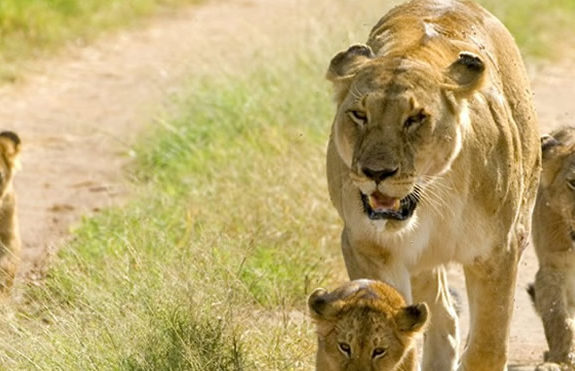
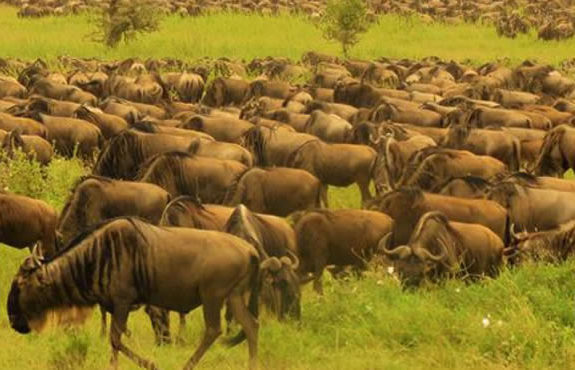
The Masai Mara (1,510 km²) is Kenya’s most celebrated wildlife area and the northern extension of Tanzania’s Serengeti ecosystem. It hosts the Great Wildebeest Migration — approximately 1.5 million wildebeest, 200,000 zebra, and 350,000 Thomson’s gazelle crossing the Mara River between July and October. Year-round, the Mara supports the highest lion density in Africa, with over 850–900 individuals recorded across the ecosystem. Bordering the reserve, private conservancies including Olare Motorogi, Naboisho, Ol Kinyei, and Mara North collectively add over 600 km² of exclusive-use habitat, with a ‘no off-road driving’ rule absent — making them superior for predator sightings and exclusive experiences.
Amboseli National Park
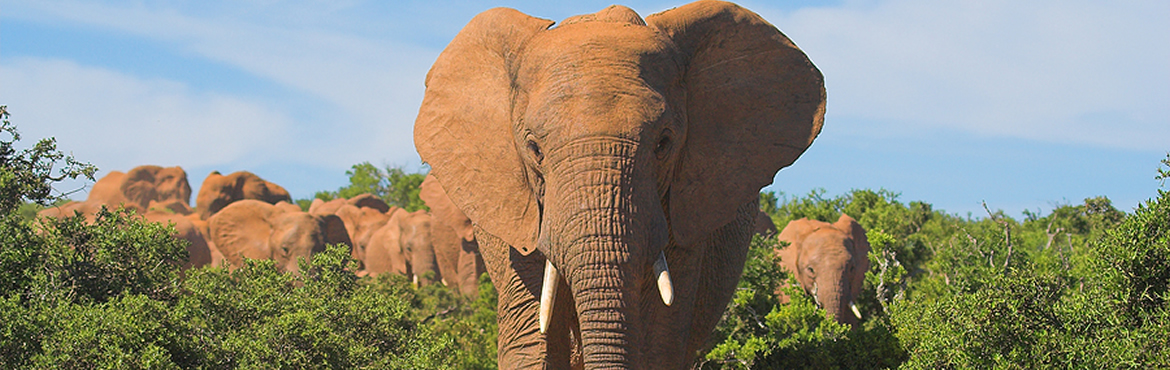
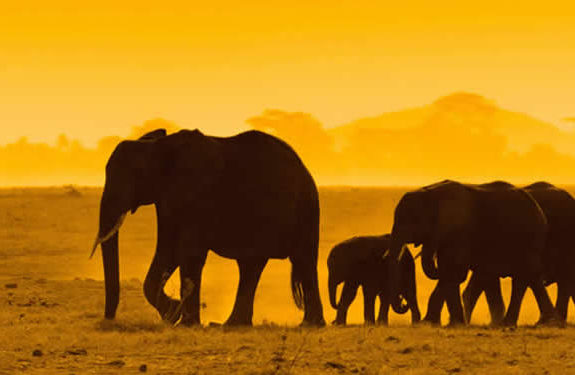
Amboseli (392 km²) offers arguably the most iconic African safari vista: large elephant herds moving across open plains against the backdrop of Mount Kilimanjaro (5,895 m) just across the Tanzanian border. The park is known for large-tusked elephant matriarchs and holds one of Africa’s longest-running elephant research programmes (since 1972). It is a year-round destination due to the swamps fed by Kilimanjaro’s snowmelt, which attract buffalo, hippo, and over 400 bird species. Amboseli is only 240 km from Nairobi — a 4-hour road transfer or 45-minute charter flight.
Samburu–Laikipia Northern Circuit
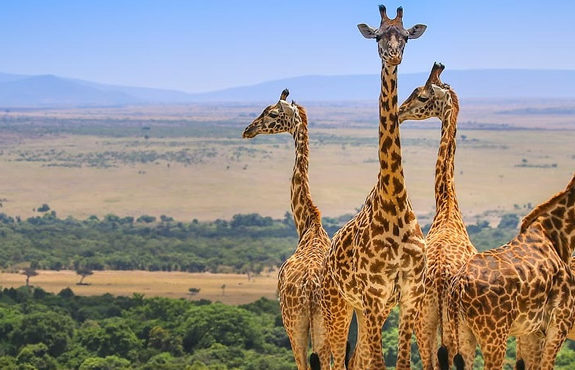
Northern Kenya is the country’s most underrated safari region. The Samburu–Buffalo Springs–Shaba cluster of reserves (300 km² combined) shelters the ‘Samburu Special Five’: reticulated giraffe, Grevy’s zebra, Beisa oryx, gerenuk, and Somali ostrich — species not found elsewhere in Kenya. The wider Laikipia Plateau, encompassing conservancies such as Ol Pejeta, Lewa (a UNESCO World Heritage Site), and Borana, holds the second-largest black rhino population in Africa and offers exceptional night game drives (restricted in national parks). El Karama and Ol Malo are recommended for off-the-beaten-path, walking safari experiences.
Tsavo, Nakuru & Meru
Tsavo East and West together form Kenya’s largest protected area at 20,812 km² — larger than Wales. Red-dusted elephants, giant crocodiles on the Galana River, and the volcanic Chyulu Hills make it a dramatic, less-crowded alternative to the Mara. Lake Nakuru National Park is the premier flamingo and rhino sanctuary: both black and white rhino are well established, and the Colobus monkey population is the second largest in Kenya. Meru National Park (870 km²), in the northeast, was the release site of Elsa the lioness (made famous by the book and film Born Free) and offers exceptional solitude with robust leopard and buffalo populations.
Best Time to Visit Kenya: Month-by-Month Breakdown
Kenya has two distinct dry seasons that define the prime safari calendar:
| Period | Conditions | Best For |
|---|---|---|
| July - October | Long dry season; sparse vegetation, animals concentrate at water sources | Great Migration, Big Five, photography |
| January - March | Short dry season; warm, low humidity, excellent visibility | Calving season in Masai Mara, whale sharks off Diani Beach |
| Nov - December | Short rains; 'green season' — lush scenery, fewer tourists, lower rates | Birdwatching (migratory species arrive), budget travel |
| April - June | Long rains; some roads impassable in parks; lush landscapes | Value pricing; not recommended for first-timers |
2026 – 2027 Inspirational Kenya Safari Packages
Get inspired by our sample trips below.
Types of Kenya Safari: Choosing the Right Experience
Game Drive Safaris
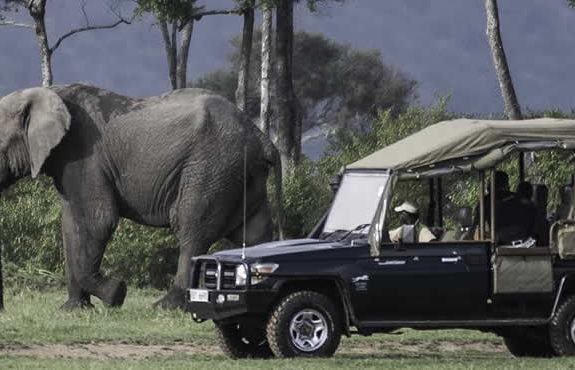
Game drives in Kenya use purpose-built 4WD safari vehicles — typically hatch-roof Land Cruiser vans or open-sided Land Rover Defenders — that allow standing for unobstructed 360° photography. Morning drives depart at 06:30 for peak predator activity; evening drives (in private conservancies) run until after dark for nocturnal species. A typical full-day drive covers 80–120 km within a park at low speeds (15–25 km/h), spending 30–90 minutes at active wildlife sightings.
Fly-In Safaris
Fly-in itineraries use Kenya’s extensive network of bush airstrips — over 200 registered strips countrywide — to eliminate long road transfers and maximise time in wildlife-rich areas. A typical 7-day fly-in safari links Nairobi to Amboseli, the Laikipia Plateau, and Masai Mara conservancies, with each sector taking 45–60 minutes by Cessna Caravan or similar light aircraft. Fly-in packages typically carry a 15–25% premium over road safaris but are strongly recommended for itineraries covering more than two regions.
Bush-and-Beach Combinations
Kenya’s Indian Ocean coastline — particularly the Diani Beach area 40 km south of Mombasa and the historic Swahili town of Lamu — pairs seamlessly with the inland safari circuit. A classic 10-day itinerary combines 5–6 nights in the parks with 3–4 nights on the coast. Diani Beach offers coral reef snorkelling, diving, and kitesurfing; Lamu, a UNESCO World Heritage Site, provides cultural heritage exploration in a car-free island town dating to the 14th century. Coastal resort prices range from $120 to $900 per night.
Kenya Safari Costs: What to Budget in 2026–2027
Safari pricing in Kenya is all-inclusive within the camp or lodge (accommodation, meals, game drives, park fees) but excludes international flights, visas (currently $52 USD online via eTA), and tips.
Below is a realistic per-person-per-night breakdown:
- Budget camping safaris: $150 – $350 pppn. Shared dome or mess tents; communal ablution facilities; self-drive or group game drives.
- Mid-range lodges & tented camps: $350 – $650 pppn. En-suite accommodation, daily laundry, 2 game drives per day, house drinks included at some properties.
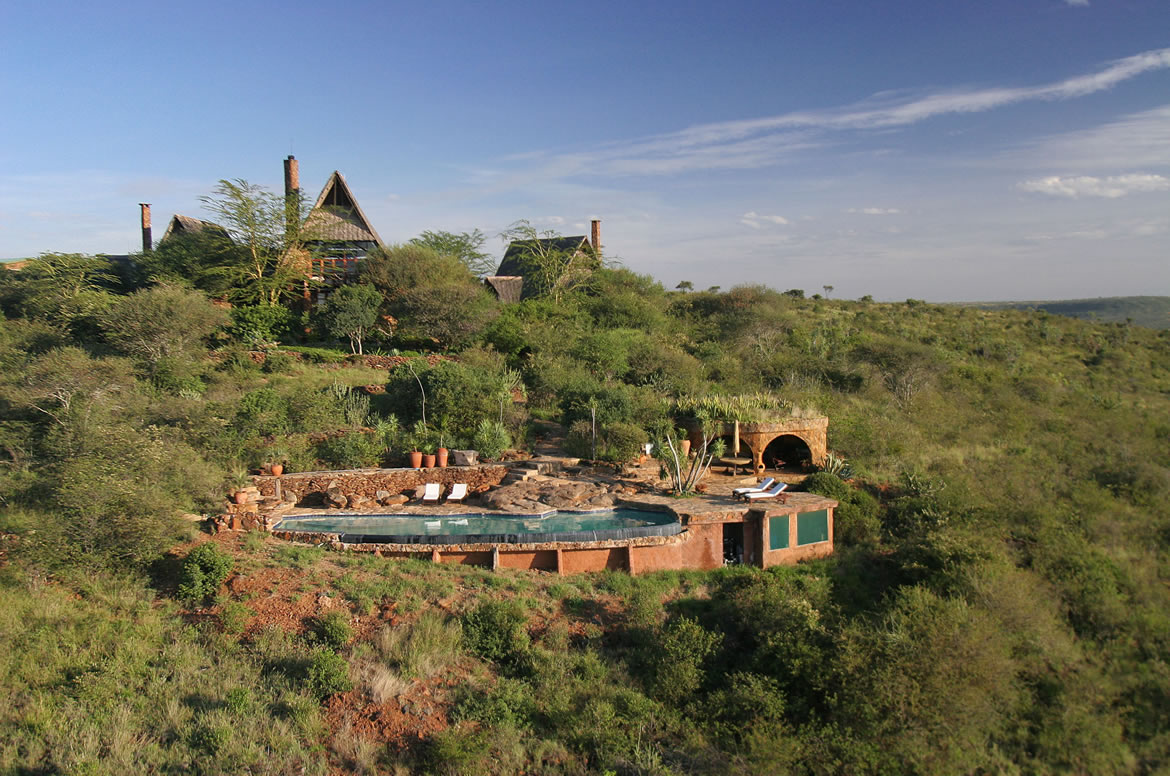
- Luxury safari lodges & camps: $650 – $1,200 pppn. Private plunge pools, personal butler service, private game drives, helicopter excursions available.
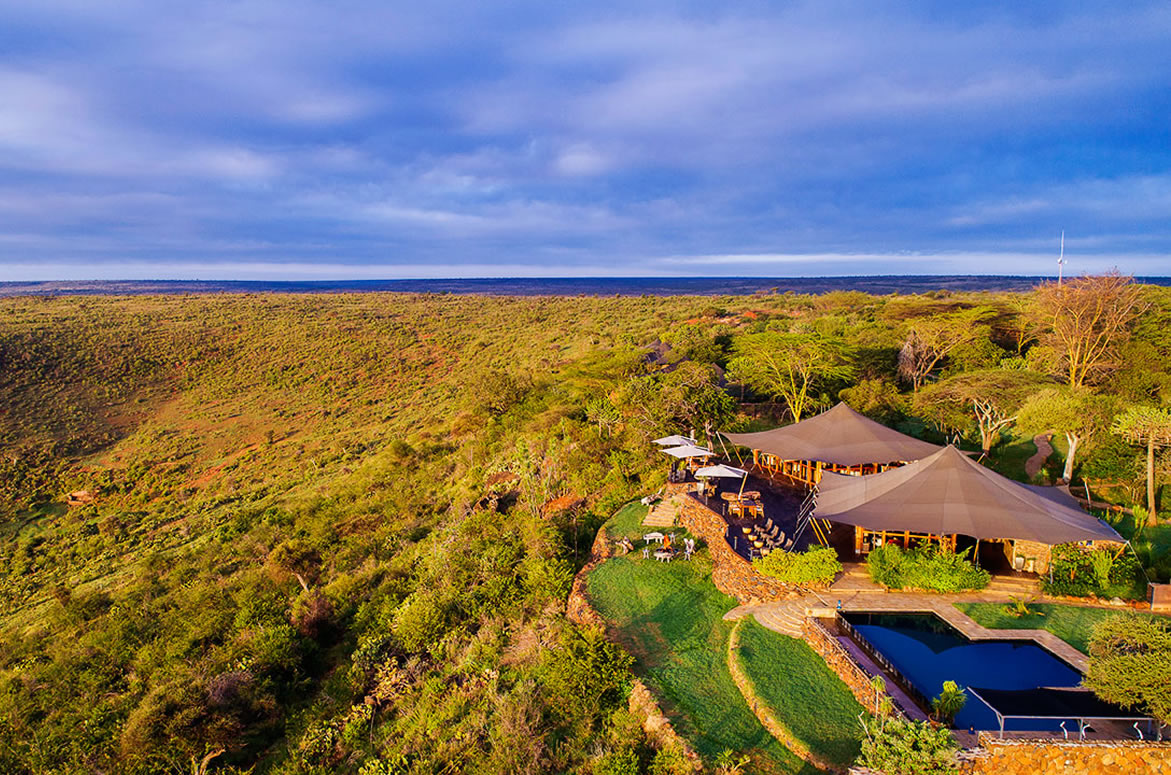
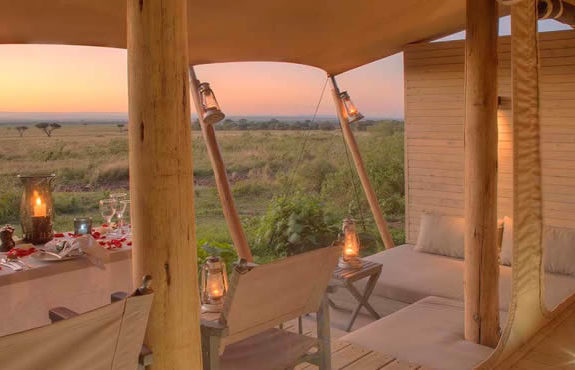
- Ultra-luxury / exclusive-use camps: $1,200 – $2,500+ pppn. Properties such as Angama Mara, Mahali Mzuri, and Segera Retreat. Entire camps bookable for family groups.
- Short-break packages from Nairobi: From $280 for a 2-day Masai Mara road safari; from $380 for a 2-day Amboseli fly-in.
How to Plan a Kenya Safari: Expert Recommendations
The most common planning mistakes made by first-time visitors to Kenya are over-packing the itinerary, underestimating transfer times, and booking during peak Migration season without advance reservations (top Mara camps sell out 12–18 months ahead for July–August).
Ideal Itinerary Lengths
- 2–4 days: Single-park focus. Suitable for Nairobi residents or travellers on connecting stopovers. Best parks: Amboseli, Masai Mara, Nakuru.
- 5–7 days: Two-park combination. The classic Kenya safari; sufficient time to witness reliable wildlife behaviour. Masai Mara + Amboseli or Samburu + Laikipia recommended.
- 8–12 days: Full northern or southern circuit. Covers three to four distinct ecosystems and allows beach extension. Best value for long-haul international travellers.
- 14+ days: Comprehensive Kenya or multi-country. Includes remote destinations (Turkana, Chyulu Hills, Meru) and/or cross-border extensions to Tanzania (Serengeti, Ngorongoro) or Rwanda (mountain gorilla trekking).
Practical Travel Requirements
- Visa: Electronic Travel Authorization — valid 90 days. Apply via ecitizen.go.ke.
- Vaccinations: Yellow fever certificate required if arriving from an endemic country. Malaria prophylaxis strongly recommended for all low-altitude areas (Masai Mara, Tsavo, coast).
- Currency: Kenyan Shilling (KES). US dollars widely accepted in safari camps; exchange rate approx. KES 130 per USD (2025). Gratuities for guides: $10–$20/day; camp staff: $10–$15/day.
- Packing: Neutral colours (khaki, olive, tan) for game drives. Temperatures drop to 10–15°C (50–60°F) on early morning drives at altitude; a fleece layer is essential year-round.
Wildlife You Can Expect to See in Kenya
Kenya’s protected areas support the full African Big Five (lion, leopard, elephant, buffalo, rhino), plus cheetah — which the Masai Mara ecosystem supports at higher densities than anywhere else on the continent. The country has recorded over 1,100 bird species, making it the 9th most bird-rich country in the world and one of Africa’s premier birding destinations. The Rift Valley lakes — Nakuru, Bogoria, and Elementaita (collectively a UNESCO World Heritage Site) — attract up to 1.5 million lesser flamingoes simultaneously in peak periods. Wild African painted dogs, aardvark, pangolin, and honey badger are regularly sighted in low-traffic conservancies on dedicated night drives.
Plan Your Kenya Safari with African Travel Hub
African Travel Hub (trading as Hallmark Travel Planners) is a Nairobi-based, tour operator with over 20 years of in-country experience. All safaris are fully customisable: departure date, group size, duration, and experience level. We operate our own fleet of hatch-roof safari vehicles and work with hand-selected camps across Kenya’s major circuits.
Our sample 2026–2027 Kenya packages start from $280 per person for short-break getaways and extend to $9,900+ for premium 10-day luxury itineraries. Every quote is tailor-made: any number of days, any departure date, any budget tier. Speak directly with one of our Kenya safari specialists via +254 795 891 706 (Kenya), or request a no-obligation quote online.