

Last Updated on April 27, 2026 by African Travel Hub Editorial
Madagascar Visitors Guide
The Complete Expert Briefing Before You Travel
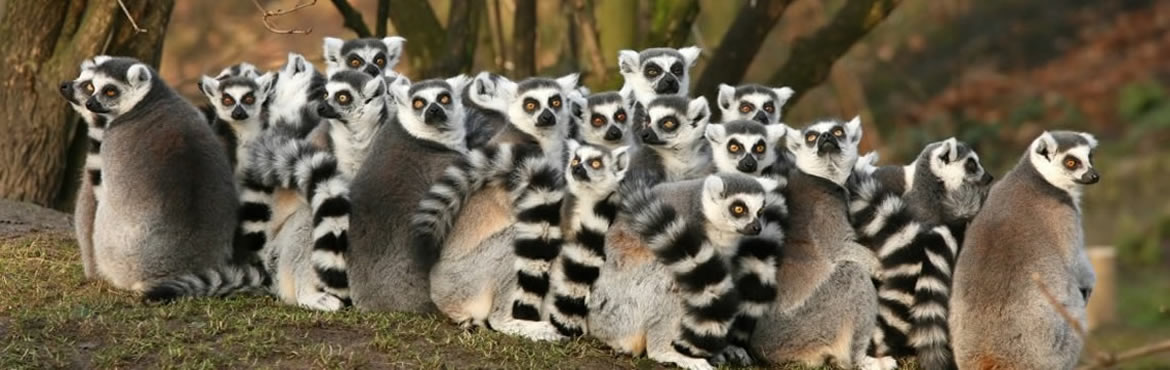
Madagascar is the world’s fourth-largest island and one of its most biologically extraordinary destinations — a place where 90% of all wildlife is found nowhere else on Earth. If you are planning a trip to Madagascar, understand this first: it is not a safari destination in the conventional African sense. It is a wildlife immersion experience unlike anything else on the continent — or the planet. Distances are vast, roads are challenging, and logistics require specialist knowledge. Done well, it is transformative.
What Makes Madagascar Different from Every Other Africa Destination
Madagascar separated from the African continent approximately 165 million years ago, and from India around 88 million years ago. The result of this prolonged isolation is an island that evolved in near-total biological independence. According to the IUCN, over 90% of Madagascar’s reptiles, 90% of its plant life, 99% of its frogs, and all of its lemurs are endemic — found nowhere else in the world.
Key statistics that define Madagascar’s global biodiversity importance:
- Lemurs: Over 100 species documented, all endemic, ranging from the mouse lemur (the world’s smallest primate at under 30g) to the indri (up to 9kg), whose haunting call carries for miles through the rainforest.
- Chameleons: Madagascar hosts over 60% of the world’s total chameleon species, from the giant Parson’s chameleon (the world’s largest) to the Brookesia micra, one of the smallest reptiles on Earth.
- Plants: While Madagascar covers only 2% of Africa’s landmass, it is home to approximately 20% of Africa’s vascular plant species. Over 1,050 orchid species grow here — more than on the entire African mainland. Six of the world’s eight baobab species are unique to Madagascar.
- Birds: Over 280 bird species, with around 108 endemic, including the vangas, couas, and mesites found nowhere else.
- Frogs: More than 300 species of frogs, the vast majority endemic. Andasibe-Mantadia National Park holds a world record for frog species density.
This is the context in which every Madagascar trip must be understood.
Best Time to Visit Madagascar
For most first-time visitors, the optimal window is April to November (dry season), with September being the single best month overall. However, the ideal timing depends entirely on what you prioritize.
Dry Season: April to November (Recommended for Most Visitors)
- Roads are passable, including the remote western routes to Tsingy de Bemaraha and the Avenue of the Baobabs.
- Wildlife is most visible — animals concentrate near water sources and vegetation is lower.
- Humpback whale watching peaks from June to September along both the east coast (Île Sainte-Marie) and west coast (Nosy Be, Antongil Bay).
- Lemur babies are born in August–September, making these months exceptional for family viewing.
- Temperatures in Antananarivo (elevation 1,280m / 4,199ft) can drop to around 8°C (46°F) at night in July — pack accordingly.
September to November is widely regarded as the finest period to visit: spring-season lemur young are present, orchids bloom in profusion in Andasibe (nearly 100 species), reptiles and frogs are at maximum activity, birds are calling and nesting, and beach conditions are excellent.
Wet Season: December to March (Not Recommended for Most Itineraries)
- Cyclone season significantly affects the east coast and northeastern regions.
- Rural roads in western Madagascar become impassable after heavy rain.
- Parks such as Tsingy de Bemaraha and Ankarana are effectively closed or inaccessible December to mid-October.
- However: underwater visibility for diving peaks in December, whale sharks appear off Nosy Be October to December, and the island’s landscapes are at their most lushly photogenic.
Marine Wildlife Calendar at a Glance
| EXPERIENCE | BEST MONTH | LOCATION |
|---|---|---|
| Humpback whale watching | July – September (peak) | Île Sainte-Marie, Nosy Be, Antongil Bay |
| Whale shark encounters | October – December | Nosy Be, Nosy Sakatia, Nosy Iranja |
| Diving & snorkeling visibility | December, May–October | Nosy Be archipelago, Île Sainte-Marie |
| Green & hawksbill turtles | Year-round | Nosy Be, Tanikely Marine Reserve |
| Dolphins | Year-round | Nosy Be channel, Antongil Bay |
Top National Parks and Wildlife Destinations
Madagascar has 25 national parks, 13 special reserves, and 2 Strict Nature Reserves managed by Madagascar National Parks. These are the destinations that define a quality Madagascar itinerary.
1. Andasibe-Mantadia National Park (Eastern Highlands)
Closest major park to Antananarivo (approximately 2.5 hours east) and the most accessible introduction to Madagascar’s eastern rainforest.
This is the best place to encounter the indri — the largest living lemur, whose territorial duets are among the most striking sounds in the natural world. The park protects nearly 300 individual indri. Other species include red-fronted brown lemurs, grey bamboo lemurs, diademed sifakas, and woolly lemurs. The adjoining Analamazaotra Special Reserve adds aye-aye and nocturnal species on guided night walks.
Wildlife highlights:
- Indri lemurs (best heard at dawn, reliably seen in the core zone)
- Parson’s chameleon (the world’s largest chameleon species)
- World-record density of frog species
- Over 100 butterfly species
- Lemur Island (Vakona Private Reserve): ring-tailed lemurs and bamboo lemurs in semi-wild conditions — useful for photography
Best visited: Year-round; orchids peak September–January; September–November for maximum biodiversity activity.
2. Ranomafana National Park (Southeast)
A UNESCO World Heritage Site and one of Madagascar’s premier lemur-watching destinations, with 12 documented lemur species.
Ranomafana — meaning “hot water” in Malagasy — is home to the golden bamboo lemur, a species discovered in the park in 1986 and found almost nowhere else. Night hikes reveal mouse lemurs, fat-tailed dwarf lemurs, and various chameleon species. The park’s thermal hot springs allow a restorative soak after long trail days.
Wildlife highlights:
- Golden bamboo lemur (critically endangered)
- Milne-Edwards’s sifaka
- Red-bellied lemur
- Aye-aye (on night walks with specialist guides)
- Malagasy giant chameleon and numerous frog species
Best visited: May–November for dry-season trail conditions.
3. Tsingy de Bemaraha National Park (Western Madagascar) — UNESCO World Heritage Site
One of Madagascar’s most dramatic and other-worldly landscapes: a forest of razor-sharp limestone pinnacles rising up to 120m, home to 11 lemur species and extraordinary endemic wildlife.
The word tsingy translates as “where one cannot walk barefoot” — an accurate description of these jagged formations carved by millennia of water erosion. Via ferrata-style cables and bridges allow traversal of the “Great Tsingy” circuit. Wildlife includes Madame Berthe’s mouse lemur (the world’s smallest primate), Decken’s sifaka, and the fosa — Madagascar’s apex carnivore — found reliably in nearby Kirindy Forest.
Critical note: Tsingy de Bemaraha is only accessible during the dry season, roughly May to mid-October. The access road from Morondava becomes impassable outside this window. Most itineraries combine Tsingy with the Avenue of the Baobabs near Morondava, one of Madagascar’s most iconic landscapes featuring six endemic baobab species.
4. Masoala National Park (Northeast) — UNESCO World Heritage Site
Madagascar’s largest and least-visited national park, home to an estimated 50% of the island’s total species. Accessible only by private charter flight and boat.
Masoala is the crown jewel of Madagascar’s protected areas for serious wildlife travelers. The rainforest descends directly to pristine beaches and coral reefs, creating one of the rare places on Earth where you can snorkel and rainforest-trek on the same day. The park hosts 11 lemur species including the red-ruffed lemur, white-fronted brown lemur, and aye-aye, alongside Madagascar red owls, serpent eagles, leaf-tailed geckos, and tomato frogs.
The approach crosses Antongil Bay — a prime humpback whale breeding ground from July to early October — typically by boat from Maroantsetra, with regular dolphin sightings en route.
Best for: Experienced wildlife travelers seeking maximum biodiversity with minimal crowds. Plan a minimum of 3 nights inside the park.
5. Ankarana National Park (Northern Madagascar)
Home to the highest density of primates in Madagascar, spectacular tsingy limestone formations, underground caves, and 50 reptile species.
Ankarana holds one of the most accessible populations of crowned lemurs and Sanford’s brown lemurs in the country. The underground cave network harbors hundreds of thousands of Nile crocodiles and roosting bat colonies. The park’s 50 reptile species include panther chameleons, 10 frog species, and several endemic and threatened snake species.
6. Kirindy Forest (Western Madagascar)
The best site in Madagascar for fosa sightings. This dry deciduous forest holds Madagascar’s largest terrestrial carnivore — the fosa (Cryptoprocta ferox), which resembles a cross between a puma and a mongoose. Fosa mating season occurs in the first week of November, when females return reliably to the same tree each year. Kirindy is also home to Madame Berthe’s mouse lemur, the world’s smallest primate, reliably found on night walks.
7. Isalo National Park (South-Central Madagascar)
Madagascar’s most visually dramatic landscape: a canyon system of sandstone formations, natural swimming pools, and hidden oases set against stark, arid terrain.
Isalo is equally rewarding for those combining wildlife with landscape photography. Ring-tailed lemurs and Verreaux’s sifaka (the “dancing lemur,” famous for its lateral hopping gait) are reliably encountered here. The park requires a guide and permits arranged through the ANGAP office in nearby Ranohira.
Marine Madagascar: Beaches, Whales, and Diving
Nosy Be Archipelago (Northwest Coast)
Madagascar’s premier beach and marine destination, Nosy Be (“Big Island”) anchors an archipelago of smaller islands offering world-class diving, snorkeling, whale shark encounters (October–December), humpback whale watching (July–November), sea turtles, and manta rays year-round.
The Nosy Be archipelago includes:
- Nosy Tanikely Marine Reserve: Exceptional snorkeling over pristine coral, with green turtles present throughout the year.
- Nosy Iranja (Turtle Island): Two islets connected by a stunning sandbar at low tide; accessible by day trip. Whale sharks present September–December.
- Nosy Komba: Known for black lemurs and artisan crafts.
- Nosy Sakatia: Prime dive site, excellent for humpback whale viewing August–November.
The Nosy Be dry season runs April–November, with sea temperatures ranging from 22–30°C and low humidity — ideal for all water activities.
Île Sainte-Marie (Nosy Boraha) (East Coast)
The world’s premier humpback whale watching destination, Île Sainte-Marie is a 50km-long island off the northeast coast. Each year from June to September, hundreds of humpback whales use the shallow channel between the island and the mainland as a breeding and calving ground. The annual Festival des Baleines (Whale Festival), held in late July, celebrates the arrival of the whales with cultural events, boat excursions, and conservation programming.
Île Sainte-Marie also features one of the only pirate cemeteries in the world, dating from the 17th and 18th centuries when the island was a major pirate haven.
Antongil Bay (Northeast)
Quieter and less developed than Sainte-Marie, Antongil Bay (adjacent to Masoala National Park) is a breeding ground for humpback whales (July–October) and offers authentic eco-lodge experiences for travelers who prefer off-the-beaten-track whale encounters.
Getting to Madagascar
International Flights
The main entry point is Ivato International Airport (TNR) in Antananarivo, located 16km northwest of the city center. As of 2026, 11 international airlines serve TNR from 18 cities across 8 countries.
Key international routes:
- Paris (CDG) → Antananarivo: Air France (non-stop, approximately 11h 40min) — the only non-stop European service.
- Addis Ababa (ADD) → Antananarivo: Ethiopian Airlines (Star Alliance) — the primary routing for East African travelers and many long-haul connections.
- Nairobi (NBO) → Antananarivo: Kenya Airways — direct service, approximately 3h 15min.
- Dubai (DXB) → Antananarivo: Emirates — via connection.
- Johannesburg (JNB) → Antananarivo: Airlink — direct service.
- Mauritius (MRU) → Antananarivo: Air Mauritius — useful for Indian Ocean island-hopping.
- Istanbul (IST) → Antananarivo: Turkish Airlines — via connection; useful for European connections without a Paris routing.
From the USA: No direct flights exist. Routings via Paris (Air France/Delta), Addis Ababa (Ethiopian Airlines), or Johannesburg (Airlink + United) are standard. Minimum journey time from major US cities is approximately 19.5–25 hours. Economy fares from the US start at approximately $1,084 (Atlanta) to $1,553 (Chicago), depending on season and lead time.
From the UK: Connections via Paris (Air France), Addis Ababa (Ethiopian Airlines), or Dubai (Emirates) are standard.
Second international entry point: Nosy Be Fascene Airport (NOS) receives direct seasonal flights from several European cities (notably LOT Polish Airlines from Warsaw and charter services from Italy), making it possible to fly directly to the beach without routing through Antananarivo.
Domestic Flights
Domestic air travel is essential for efficient Madagascar itineraries. Road conditions across much of the island are extremely challenging — cross-island overland journeys that take 12–24 hours by road are routinely reduced to 1–2 hours by air. Madagascar Airlines (formerly Air Madagascar) serves 12 domestic destinations from Antananarivo, including Nosy Be, Toliara, Antsiranana, Morondava, Île Sainte-Marie (Nosy Boraha), Sambava, Mahajanga, Toamasina, Maroantsetra, and Tôlanaro.
Important: Domestic flights in Madagascar are subject to delays, schedule changes, and last-minute cancellations. Build flexibility into your itinerary — an extra buffer day before international departure connections is strongly advised. Madagascar Airlines’ luggage restrictions for domestic flights are 20kg for checked luggage and 5kg for hand luggage.
Entry Requirements and Visa
A visa is required for most nationalities entering Madagascar. There are three main options:
Visa on Arrival
Available at all international airports including Ivato (Antananarivo), Nosy Be Fascene, and Antsiranana. Valid for stays of up to 90 days; fees are paid on arrival in USD, EUR, or Malagasy Ariary. Stays of under 15 days are fee-exempt per the Embassy of Madagascar. The visa on arrival cannot be extended.
E-Visa (Recommended)
Applications must be submitted at least 7 days before departure (approval typically within 72 hours). The e-visa is valid for single entry only, with stays up to 60 days. An extension of up to 90 days is possible but requires application at the Malagasy immigration office in country. Apply via the official Madagascar e-visa portal.
Long-Stay Visa
For stays exceeding 90 days, a long-stay visa must be obtained in advance from a Malagasy embassy or consulate. Business visas are valid for up to 5 years. For stays longer than 90 days, business visas must be obtained through the Madagascar embassy; once issued, the holder has one month to enter and apply for extension through Madagascar’s Ministry of Interior.
Core Entry Requirements
- Passport valid for at least 6 months from entry date, with 2–3 blank pages for stamps.
- Return or onward travel ticket
- Proof of sufficient funds for the stay
- Yellow fever vaccination certificate if you have been in a yellow fever risk country within the past 6 days prior to arrival
Legal caution: Visa overstays are a violation of local laws and subject to fines and potential prosecution. The Government of Madagascar restricts the export of precious gems and fossils — seek clarification before purchasing gemstones. Cannabis, CBD products, and their derivatives are illegal in Madagascar regardless of prescription.
Health Requirements and Recommendations
This section is advisory only. Consult your own physician or travel health clinic well before departure.
Compulsory:
- Yellow fever vaccination certificate if traveling from or transiting through a yellow fever risk country within 6 days of entry.
Strongly Recommended:
- Malaria prophylaxis: Malaria transmission occurs throughout Madagascar, including urban areas. Consult your physician about the appropriate anti-malarial medication for your specific itinerary and medical history.
- Hepatitis A and B: Recommended for all travelers.
- Typhoid: Recommended, particularly for travelers venturing beyond the main cities.
- Rabies: Rabies is common in Madagascar, and treatment is very limited. Consider a pre-exposure rabies vaccination before traveling.
- Routine vaccinations: Ensure MMR, tetanus, diphtheria, and polio are up to date.
Medical facilities: Facilities outside Antananarivo do not meet international standards. Medical evacuation insurance is strongly recommended for all Madagascar travel. Travel with a comprehensive personal medical kit.
Country Facts and Practical Information
Geography
- Total land area: 587,040 km² (226,660 sq mi) — slightly smaller than Texas, larger than France.
- Highest point: Mount Maromokotro, 2,876m (9,436ft), in the Tsaratanana Massif in the north.
- The island spans five distinct biomes: Eastern rainforest, central highlands, western deciduous dry forest, southwestern spiny desert, and northern transitional forests.
- Madagascar accounts for just 2% of Africa’s landmass but supports approximately 20% of Africa’s total plant species.
Climate
Madagascar has two primary seasons: a warm, wet season (November–April) dominated by the southeastern trade winds from the Indian Ocean, and a cooler, dry season (May–October). The climate varies dramatically by region — the east coast is tropical and wet year-round, the central highlands are temperate and can be cold at altitude, and the south is arid. The north and Nosy Be have their own microclimate, generally warmer and drier than the east.
People and Language
- Population (2024 estimate): Approximately 30 million people across 18 ethnic groups collectively known as the Malagasy.
- Official languages: Malagasy (Austronesian in origin, reflecting Madagascar’s Southeast Asian heritage) and French. Madagascar is a member of the Francophone community. English is spoken at higher-end tourism facilities and increasingly in Antananarivo.
- Religion: A blend of traditional animist beliefs (fomba, or ancestor worship), Christianity, and Islam.
Currency and Money
- Currency: Malagasy Ariary (MGA). Currency code: MGA; symbol: Ar.
- Madagascar is primarily a cash economy. Most shops and restaurants outside major hotels are cash-only. Some high-end restaurants accept credit cards, typically Visa-network only. ATMs are available in large cities and generally accept Visa-network cards only. US $100 bills are frequently refused by banks and businesses.
- Mobile money (particularly MVola and Airtel Money) is widely used for local transactions.
- Money transfers are available via MoneyGram and Western Union.
Electricity
- Standard voltage: 220V / 50Hz
- Socket types: C, D, E, J and K (European-style round-pin plugs are most common). Bring a universal adapter.
Time Zone
- East Africa Time (EAT), UTC+3. Madagascar does not observe daylight saving time.
- Madagascar is 8 hours ahead of Washington D.C. (EST) and 3 hours ahead of London (GMT).
Communications
- SIM cards are available at Ivato Airport and throughout major towns. Telma, Airtel, and MVola are the main operators. A local SIM is strongly recommended — data is affordable and signal coverage is reasonable in towns and along main routes.
- International calling codes: +261 (country code)
- Emergency numbers: Police 119 | Fire 118 | Ambulance 124
Getting Around Madagascar
Madagascar’s internal road network is one of the most challenging on the continent. Route Nationale 7 (Antananarivo to Toliara, approximately 950km) is the country’s best-maintained highway and is often the spine of a classic southern itinerary. Outside this artery, many routes require 4WD vehicles and experienced local drivers.
Ground transport options:
- Private 4WD with driver/guide: The standard and strongly recommended mode for most national park circuits. Allows maximum flexibility and wildlife stops. Road conditions in western and southern Madagascar demand a high-clearance 4WD.
- Domestic flights: Essential for efficient long-distance travel (see Getting There section above).
- Taxi-brousse (bush taxi): Local shared minibus services connect all major towns; extremely low cost but very long journey times and unpredictable schedules. Not recommended for time-sensitive itineraries.
- Boat: Essential for reaching Masoala (from Maroantsetra across Antongil Bay) and useful for island-hopping in the Nosy Be archipelago.
Minimum recommended trip length:
- First-time visitor, highlights itinerary: 10–12 days
- Comprehensive southern circuit + Nosy Be: 14 days
- Full northern circuit including Masoala: 18–21 days
- For travelers who want to see 30+ lemur species across multiple ecosystems, specialist operators recommend 18-day itineraries with domestic charter flights to maximize park time and minimize road time.
Antananarivo: Gateway and First Night
Antananarivo (locally called “Tana”) is Madagascar’s capital and the most likely first night for any Madagascar itinerary. Set across a series of hills at 1,280m above sea level, the city offers the Rova (Queen’s Palace complex, currently under restoration after a 1995 fire), the colonial Haute Ville neighborhood, and the bustling Zoma market district.
Ivato International Airport is located 16km northwest of the city center. Transfer time to central hotels is approximately 30–45 minutes depending on traffic.
Recommended orientation stop: The Peyrieras Nature Farm, approximately 60km from Antananarivo on the route toward Andasibe, offers a well-curated introduction to Madagascar’s reptiles, chameleons, and lemurs in semi-captive conditions — useful for first-time visitors before entering the national parks.
Conservation and Responsible Travel
Madagascar faces serious biodiversity pressures. Deforestation has reduced the island’s original forest cover by approximately 90% over the past 2,000 years, and habitat loss continues to threaten lemur populations — the IUCN classifies 98% of lemur species as threatened with extinction.
Responsible travel choices matter here:
- Choose operators who use local Malagasy guides. This directly funds rural communities adjacent to the protected areas.
- Never participate in direct lemur contact (feeding, selfies, or handling). This is harmful to lemur welfare and facilitates the transmission of disease. The IUCN SSC Primate Specialist Group has published clear guidelines on responsible primate watching.
- Support the national park fee system. Park entry fees go directly to Madagascar National Parks and fund conservation, guard salaries, and community development.
- The Lemur Conservation Network maintains a current directory of responsible Madagascar travel operators whose bookings directly support conservation projects across the island.
Why Plan Your Madagascar Trip with African Travel Hub
Madagascar rewards meticulous planning more than almost any other destination we work with. The combination of challenging logistics, vast distances, seasonal windows, and the sheer diversity of ecosystems means that the difference between a good Madagascar trip and an exceptional one comes down almost entirely to how well the itinerary is designed — which parks, in which order, in which season, with which guides, and with what flight connections between them.
We plan bespoke Madagascar itineraries for individuals, couples, families, and groups — from first-time visitors to experienced wildlife travelers looking for the rarely-visited parks. Every itinerary is built around your specific interests, available time, and budget.
Request a custom Madagascar itinerary →
Sources and further reading: Madagascar National Parks (official) | Lemur Conservation Network | US State Department Madagascar Travel Advisory | IUCN Red List – Lemurs | Madagascar e-Visa Portal