

Last Updated on April 27, 2026 by African Travel Hub Editorial
Rwanda: Pre-Travel Information Package 2026-2027
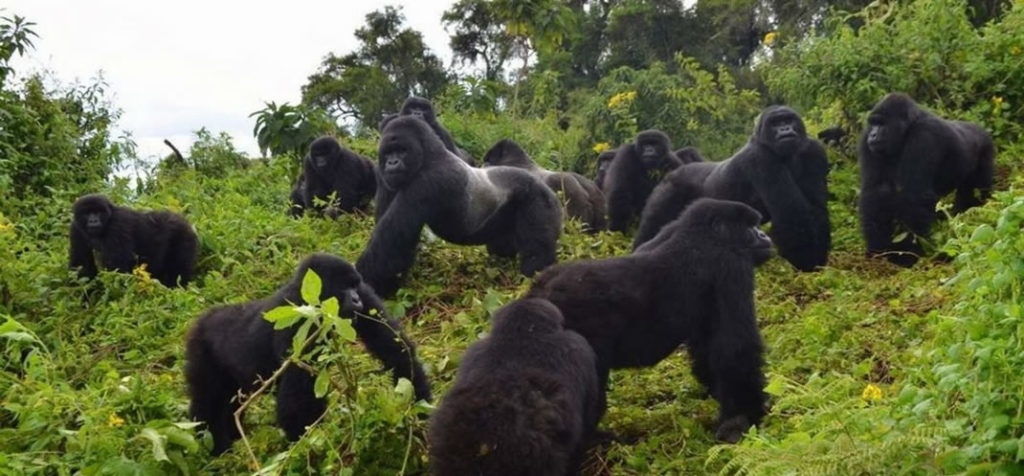
Rwanda is one of Africa’s most rewarding travel destinations — a compact, safe, and strikingly beautiful country where you can track endangered mountain gorillas in the Virunga volcanoes, encounter the Big Five in a restored savannah park, hike through ancient rainforest with chimpanzees, and unwind on the shores of a dramatic highland lake. All of this is accessible from a single modern hub: Kigali, one of the cleanest, most orderly capital cities on the African continent.
This guide gives you everything a first-time or returning visitor needs to plan a Rwanda safari or holiday with confidence.
What Makes Rwanda Worth Visiting?
Rwanda offers something genuinely rare in African travel: three completely different wildlife ecosystems within a country the size of Maryland (26,338 km²), all within a few hours’ drive of the capital.
- Volcanoes National Park (northwest): Home to approximately 350 mountain gorillas in 12 habituated families — the densest concentration of gorillas anywhere on Earth. Also the site of golden monkey tracking and the Dian Fossey Research Centre at Karisoke.
- Akagera National Park (east): Rwanda’s only savannah park and the only place in the country where you can see all of the Big Five: lion, leopard, elephant, buffalo, and both black and white rhino. Managed jointly by the Rwanda Development Board and African Parks since 2010, Akagera is one of conservation’s great comeback stories.
- Nyungwe Forest National Park (southwest): One of Africa’s oldest and most biodiverse rainforests. Home to habituated chimpanzees, 13 primate species including the Angolan colobus, and a canopy walkway suspended 70 metres above the forest floor.
Beyond wildlife, Lake Kivu — one of Africa’s Great Rift Valley lakes, sitting at 1,460 m above sea level — provides a stunning backdrop for relaxation, water sports, and island-hopping along Rwanda’s western border with the DRC.
Gorilla Trekking in Rwanda: The Essential Facts
Is Rwanda the best country for gorilla trekking?
Rwanda, Uganda, and the Democratic Republic of Congo are the only three countries in the world where you can track wild mountain gorillas. Rwanda is widely regarded as the most accessible and logistically straightforward option:
- Volcanoes National Park is a 2.5-hour drive on paved roads from Kigali International Airport — no bush flights or 8-hour road transfers required.
- The park infrastructure, ranger quality, and accommodation options are consistently excellent.
- Rwanda’s high-value, low-impact model limits daily trekking to 96 permits across 12 habituated gorilla families, with a maximum of 8 visitors per family per day.
How much does a gorilla trekking permit cost in 2026?
The standard permit price, set by the Rwanda Development Board (RDB), is USD 1,500 per person for international visitors — a rate unchanged since 2017. This is the single largest fixed cost in any Rwanda gorilla safari. For context:
- Uganda gorilla permits cost USD 800 (effective July 2025)
- DRC/Virunga permits cost USD 400
Rwanda’s higher price reflects its deliberate positioning as a premium, low-volume destination. The permit covers: park entry, a professionally guided trek, a one-hour encounter with a habituated gorilla family, and ranger escort from the start of the hike to the return.
2026 promotional rates are available from the RDB for regional visitors:
- Rwandan nationals and East African Community (EAC) citizens: USD 200
- African nationals and legal African residents: USD 500
- Note: These discounted rates do not apply during peak season (June–October 2026), when standard prices apply to everyone.
What does the permit NOT include?
The permit does not cover: accommodation, transport to/from the park, porter fees (USD 10–15, strongly recommended), tips for guides and trackers, or personal travel insurance. Budget these separately.
Key rules every trekker must know
- Minimum age: 15 years (strictly enforced across Rwanda, Uganda, and DRC by mutual agreement)
- Maximum group time with gorillas: 60 minutes — enforced for conservation reasons
- Minimum distance from gorillas: 7 metres at all times
- Visitors must not trek if they are sick — gorillas share approximately 98% of human DNA and are highly susceptible to respiratory illnesses
- Permits are non-refundable if you cancel; rescheduling requires a minimum of 30 days’ notice through your tour operator
- If gorillas move unexpectedly and cannot be found, you are offered a full refund or a retry the next day
When should you book?
Book permits 3–6 months in advance, especially for June–September and December–February peak seasons. Only 96 permits are available per day in Volcanoes National Park, and they sell out well ahead of popular travel windows. African Travel Hub can secure your permits as part of your itinerary package.
Akagera National Park: Rwanda’s Big Five Safari
Akagera National Park covers 1,122 km² along Rwanda’s eastern border with Tanzania. Established in 1934, it was devastated after the 1994 genocide when returning populations settled within park boundaries and poaching surged. The 2010 co-management partnership between the RDB and African Parks reversed the decline entirely.
Today Akagera is Central Africa’s largest protected wetland and hosts:
- Lions (reintroduced from South Africa in 2015; 20+ individuals today)
- Black and white rhinos (black rhinos reintroduced in 2017; 30 white rhinos relocated from South Africa in 2021, with a further 70 white rhinos transferred in June 2025 — Rwanda now holds one of East Africa’s most significant rhino populations)
- Elephants (100+ savannah elephants)
- Leopards (resident population; best seen on night drives)
- Buffalo (widespread across the park)
- Giraffes (80+), zebras, hippos, Nile crocodiles, topi, waterbuck, impala, eland, roan antelope
- 520+ bird species, including the rare shoebill stork
Akagera is a 2.5-hour drive from Kigali, making it feasible as a day trip, though two to three nights is recommended for a thorough Big Five experience. The park welcomes day visitors from 06:00 to 18:00. Entry for foreign non-residents is USD 100 per adult per day (2025 rates). A boat safari on Lake Ihema — the park’s largest lake — is one of the finest wildlife experiences in East Africa: hippos, crocodiles, fish eagles, and spectacular lakeside elephant sightings.
Best time for Akagera: June–September (dry season) when short grass improves visibility and animals concentrate around the lakes.
Nyungwe Forest National Park: Primates & Canopy
Nyungwe is one of Africa’s oldest montane rainforests — estimated to be between 2,000 and 3,000 years old — and covers 1,015 km² of the Congo-Nile divide in southwest Rwanda. It is home to:
- Habituated chimpanzees (managed daily group treks)
- 13 primate species including Rwenzori colobus, grey-cheeked mangabey, and L’Hoest’s monkey
- Over 300 bird species (75 of which are Albertine Rift endemics)
- The Uwinka Canopy Walkway, suspended 70 m above the forest floor across a 160-metre-long suspension bridge — one of the highest forest canopy walks in Africa
Nyungwe also functions as Rwanda’s primary watershed, feeding rivers that drain into both the Congo and Nile systems. The Nyungwe Forest Lodge (One&Only) sits at the forest’s edge and is one of Rwanda’s finest luxury properties.
Best time for chimpanzees: March–May (long rains) when fruiting trees bring chimps to lower, more visible elevations; and June–September for drier trail conditions.
Lake Kivu: Rwanda’s Highland Riviera
Lake Kivu stretches 90 km along the DRC border and sits 1,460 m above sea level. It is one of Africa’s Great Rift Valley lakes and, unlike most, is free of hippos and crocodiles, making it genuinely safe for swimming and water sports. Key bases on the Rwandan shore include:
- Gisenyi (Rubavu): The most developed beach town, with direct access from Volcanoes National Park — ideal for post-gorilla-trek relaxation
- Kibuye (Karongi): Quieter, with island day trips and kayaking
- Cyangugu (Rusizi): The southernmost town, close to the entrance of Nyungwe Forest
Napoleon Island, accessible by boat from Kibuye, hosts Africa’s largest documented colony of fruit bats — a spectacular sight at dusk.
Kigali: Africa’s Cleanest Capital
Kigali is a required entry and transit point for most Rwanda safaris, and increasingly a destination in its own right. It is consistently ranked among Africa’s safest, cleanest, and most well-organised cities — plastic bags have been banned since 2008 and the city conducts a monthly community clean-up (Umuganda) on the last Saturday of each month.
Key Kigali highlights for visitors:
- Kigali Genocide Memorial (kgm.rw): The most important historical site in Rwanda, housing the remains of more than 250,000 genocide victims and a permanent exhibition on the 1994 genocide. Open daily except Mondays. Admission is free but donations are welcomed.
- Inema Arts Centre (inemaarts.com): Rwanda’s most vibrant contemporary art space, featuring works by local and international artists
- Kimironko Market: The largest open-air market in Kigali, excellent for fabrics, crafts, and fresh produce
- Nyamirambo neighbourhood: Kigali’s most authentic quarter, with street food, mosques, and locally owned guesthouses
- Norrsken Kigali House: East Africa’s largest startup hub — a fascinating window into Rwanda’s ambitious economic transformation
Transfer time: Kigali International Airport (KGL), also known as Kanombe Airport, is approximately 10 km (20 minutes) from the city centre. It is a modern, well-functioning airport with free Wi-Fi in the terminal.
Direct international flights currently operate from Amsterdam, Brussels, London, Dubai, Istanbul, and multiple African hubs. Kigali’s expanded international airport terminal is slated for completion in 2028, which will significantly increase capacity.
When to Visit Rwanda
Rwanda lies just south of the equator and benefits from a tropical highland climate that is broadly pleasant year-round, with temperatures in Kigali typically ranging from 12°C to 27°C. The key variable is rainfall, not temperature.
| SEASON | MONTHS | CONDITIONS | BEST FOR |
|---|---|---|---|
| Long Dry Season | June - September | Minimal rain, shorter grass, clear skies | Gorilla trekking, Big Five safaris, all activities |
| Short Dry Season | December - February | Drier, warm days, cool nights | Gorilla trekking, Kigali, Akagera |
| Long Rains | March - May | Heavy, persistent rain | Birdwatching, chimpanzee trekking (Nyungwe), photography, lower prices |
| Short Rains | October - November | Moderate rain, green landscapes | Birdwatching, photography, fewer crowds |
Our recommendation: Visit during the long dry season (June–September) for the best all-round experience, and book permits at least 6 months in advance. If budget is a priority, the long rains (March–May) offer lower permit costs (30% gorilla permit discount if combining parks) and fewer crowds.
Special event: Rwanda’s annual baby gorilla naming ceremony, Kwita Izina, takes place in September and is one of the most extraordinary conservation events in Africa — open to the public and highly recommended if your timing allows.
Rwanda at a Glance: Country Facts for Travellers
Size: 26,338 km² (roughly the size of Maryland, or slightly smaller than Belgium)
Population: Approximately 14 million (2024 estimate)
Capital: Kigali (central location; population approximately 1.4 million)
Geography: Rwanda sits on the East African plateau at the divide between the Nile and Congo river systems. Almost entirely above 1,000 m, the country is sometimes called “the land of a thousand hills” (Pays des Mille Collines). The highest point is Mt. Karisimbi (4,507 m) in the Virunga volcanic chain.
Languages: Kinyarwanda (national), English, French, and Swahili are all official languages. English is widely spoken in tourism and business.
Currency: Rwandan Franc (RWF). USD is widely accepted at lodges and permit offices. Major credit cards are accepted at Kigali International Airport and most upmarket hotels. Carry cash (RWF or USD) for smaller towns and markets. ATMs in Kigali and major towns dispense RWF.
Time Zone: GMT+2 (no daylight saving)
Electricity: 230V / 50Hz. Plug type C (two round pins). Bring a universal adapter.
Dialling code: +250
Internet & Mobile: Rwanda has one of the highest mobile internet penetration rates in Africa. MTN and Airtel offer reliable 4G coverage across most of the country including national park gateways. SIM cards are available for purchase at Kigali Airport and in all major towns; bring your passport. Free Wi-Fi is available at Kigali Airport and most midrange and upmarket hotels.
Health and safety rating: Rwanda is consistently rated among Africa’s safest destinations for visitors. Violent crime against tourists is rare. Standard urban precautions (don’t display valuables, avoid walking alone at night in unfamiliar areas) apply.
Visa & Entry Requirements (2026/2027)
Rwanda has one of the most liberal visa policies in Africa. Here is the current framework:
Visa-free entry is available to citizens of all African Union, Commonwealth, and La Francophonie member states, who receive a free 30-day visa on arrival. EAC citizens (Kenya, Uganda, Tanzania, Burundi, South Sudan, DRC) may enter visa-free for up to 6 months.
eVisa (recommended for all others): Apply online at irembo.gov.rw before departure. Approval typically arrives within 3–5 working days. Cost: USD 50 (single entry, 30 days) or USD 70 (multiple entry, 90 days). Pay by Visa or Mastercard online. Print the approval letter or save it to your phone.
Visa on arrival (USD 50) is available to all nationalities whose home country does not qualify for visa-free entry. Credit cards are accepted at Kigali Airport; carry USD cash as a backup at land border crossings.
East African Tourist Visa (EATV): A single multi-entry visa valid for Uganda, Rwanda, and Kenya — useful if combining destinations. Cost is USD 100 and can be applied for online or at the border.
Key entry requirements for all visitors:
- Passport valid for at least 6 months beyond arrival date with at least one blank visa page
- Yellow fever vaccination certificate mandatory if arriving from a yellow fever endemic country (most sub-Saharan African nations and parts of South America); check the Rwanda Immigration website for the current list
- Proof of onward travel and accommodation recommended but not always checked
The most up-to-date official visa information is on the Rwanda Directorate General of Immigration & Emigration website.
Health Requirements & Medical Preparation
- Yellow fever vaccination: Mandatory if arriving from an endemic country. Carry your WHO yellow card.
- Malaria: Rwanda is a malaria zone, though risk varies by altitude and region (Kigali and the highlands carry lower risk than lower-altitude border areas). Consult your travel clinic at least 6–8 weeks before departure for prophylaxis advice. Use DEET-based repellent and sleep under a mosquito net or in air-conditioned accommodation.
- Other recommended vaccines: Hepatitis A, Hepatitis B, typhoid, and routine vaccinations. Rabies vaccination is recommended for extended stays or travel in rural areas.
- Medical facilities: Kigali has several well-equipped private clinics and two main hospitals (King Faisal Hospital and Kigali University Teaching Hospital). Medical care outside Kigali is limited. Travel insurance with medical evacuation cover is essential.
- Emergency number in Rwanda: 112
Practical Safari Planning: What to Expect
Getting around: Rwanda’s road network is compact and in better condition than most East African countries. A 4WD is recommended for national park access and during the rainy season, but standard vehicles handle Kigali and most tarmac routes easily. We provide professional driver-guides with dedicated 4WD safari vehicles for all itineraries.
Accommodation range: Rwanda now offers a full spectrum from budget guesthouses and community lodges to genuine luxury properties:
- Ultra-luxury: One&Only Gorilla’s Nest, Bisate Lodge (Wilderness), Nyungwe Forest Lodge (One&Only), Magashi Camp (Wilderness, Akagera)
- Mid-range: Ruzizi Tented Lodge (Akagera), Muhabura Hotel (Musanze/Volcanoes)
- Budget: Kinigi Guesthouse (near Volcanoes), community lodges around Nyungwe
Tipping: Tipping is not mandatory but appreciated. Standard rates: gorilla guides/trackers USD 10–20 per person; safari driver-guides USD 15–20 per day; hotel staff USD 1–3 per day.
What to pack for gorilla trekking: Long-sleeved shirt and trousers (protects against nettles and insects), waterproof jacket, sturdy ankle-support hiking boots (already broken in), gardening/sturdy gloves, gaiters, insect repellent, sunscreen, small daypack, 1–2 litres of water. Hire a porter at the trailhead — this is one of the most meaningful things you can do for local income, and it genuinely improves the experience.
Currency & Banking
Currency: Rwandan Franc (RWF). As of mid-2025, approximately RWF 1,350 = USD 1 (check current rates via XE.com).
Banking hours: Monday–Saturday, 08:00–17:00. Many branches close Saturday afternoon.
ATMs: Widely available in Kigali (Bank of Kigali, Equity Bank, I&M Bank). Less common in rural areas — carry sufficient cash before heading to national parks.
Money transfers: MoneyGram and Western Union are available in Kigali. DHL operates courier services from the capital.
Tipping and small payments: Rwandan Francs preferred. Many lodges and restaurants also accept USD. Credit cards are widely accepted in Kigali and at major lodges; less so in smaller towns.
Working Hours & Public Holidays
Government offices: 07:00–16:00, Monday–Friday
Private sector: 08:00–17:00, Monday–Friday; many also operate Saturday mornings
Public holidays (2025/2026): 1 January — New Year’s Day | 1 February — Heroes’ Day | 7 April — Genocide Memorial Day (Kwibuka) | 1 May — Labour Day | 1 July — Independence Day | 4 July — Liberation Day | 15 August — Assumption Day | 25–26 December — Christmas and Boxing Day. Easter dates vary by year.
Note: 7 April (Genocide Memorial Day) is a solemn national day of mourning. Tourists should behave respectfully and be aware that some entertainment venues close.
Combining Rwanda with Other Destinations
Rwanda’s small size and regional connectivity make it an ideal component of a broader East Africa itinerary:
- Rwanda + Uganda: The classic primate circuit — gorillas in Rwanda or Uganda’s Bwindi, plus chimpanzees in Queen Elizabeth or Kibale. Rwanda’s Volcanoes and Uganda’s Bwindi share the same Virunga ecosystem.
- Rwanda + Kenya/Tanzania: Add a traditional Big Five safari in the Masai Mara, Serengeti, or Amboseli to your gorilla experience. RwandAir and Kenya Airways both operate direct routes.
- Rwanda + DRC (Virunga): For the adventurous traveller, combine Rwandan gorilla trekking with Virunga National Park in the DRC (check current safety advisories; the park has been subject to periodic closures).
Why Book Your Rwanda Trip Through African Travel Hub?
We are an East Africa-based safari specialist with deep local knowledge, established relationships with the Rwanda Development Board and top-tier lodges across Volcanoes, Akagera, and Nyungwe. We handle:
- Gorilla permit procurement and scheduling — we track availability and secure your permits months in advance
- Bespoke itinerary design — whether you have 4 days or 4 weeks
- Professional driver-guides with dedicated 4WD safari vehicles
- Full logistics — airport transfers, accommodation bookings, cross-border arrangements
Request a Rwanda Quote →
USA & Canada (Toll Free): 1 888 885 4580
UK (Toll Free): 0 800 051 4252
Kenya/Africa: +254 795 891 706
Email: info@africantravelhub.com