

Last Updated on April 27, 2026 by African Travel Hub Editorial
Uganda: Pre-Travel Information Package 2026-2027
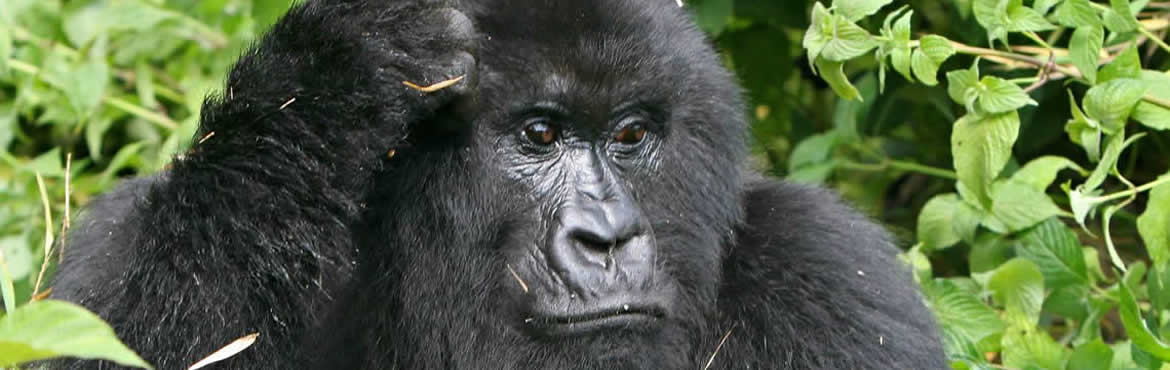
Uganda Is Africa’s Most Complete Safari Destination
Uganda delivers what no other single country in Africa can: mountain gorilla trekking, chimpanzee tracking, Big Five game drives, Nile whitewater rafting, and some of the continent’s finest birdwatching — all within one compact, politically stable, equatorial nation. Winston Churchill called it “the Pearl of Africa” in 1907, and the description has only grown more accurate. If you have time for one destination in East Africa, Uganda earns it.
Why Travel to Uganda in 2026–2027?
- Half the world’s mountain gorillas live here. Of the 1,063 mountain gorillas confirmed in the most recent census, Uganda holds the majority — split between Bwindi Impenetrable National Park (459+ individuals across 27 habituated families) and Mgahinga Gorilla National Park. No other country offers this scale of gorilla access.
- Gorilla permits cost $800 USD — half the price of Rwanda’s $1,500 — making Uganda the most cost-effective place to trek gorillas without compromising on quality or experience.
- 1,073 recorded bird species — more than 50% of all African bird species and 11% of the world’s total — making Uganda the continent’s single richest birdwatching destination by species count.
- 10 national parks managed by the Uganda Wildlife Authority (UWA), covering habitats that range from savanna and wetlands to montane rainforest and glaciated peaks.
- Chimpanzees, tree-climbing lions, shoebill storks, Murchison Falls — each of these alone would justify a safari. Uganda has all of them.
At a Glance: Uganda Travel Facts
| Fact | Detail |
|---|---|
| Capital | Kampala (set across seven hills on the shores of Lake Victoria) |
| Area | 241,551 km² (93,263 sq mi) |
| Population | ~49 million (2024 estimate) |
| Official Languages | English and Swahili; Luganda is the most widely spoken |
| Currency | Ugandan Shilling (UGX). 1 USD ≈ 3,700–3,800 UGX (check live rates) |
| Time Zone | GMT+3 (East Africa Time) — no daylight saving |
| Electricity | 240V / 50Hz; UK-style 3-pin square plugs are standard |
| Gateway Airport | Entebbe International Airport (EBB), 37 km from Kampala on Lake Victoria’s shore |
| Climate | Tropical, moderated by altitude. Two dry seasons: June–August and December–February |
| Highest Peak | Margherita Peak, Rwenzori Mountains — 5,109 m (16,762 ft), Africa’s third highest |
When to Go to Uganda
Peak season (June–August; December–February) is the best time for gorilla trekking and general wildlife viewing. Trails are drier, forest paths are more negotiable, and the weather is most predictable. This is also when permits sell out fastest — book 6 months in advance for these periods.
Green season (March–May; September–November) offers lush scenery, fewer crowds, excellent birdwatching (migratory species are present), and marginally lower accommodation rates. The forest is passable year-round; the trekking is simply muddier. Permits are easier to secure within 3 months of travel during low season.
Key insight: At Bwindi’s altitude (1,160–2,607 m), temperatures average 11°C in the morning and 23°C in the afternoon year-round. Pack layers regardless of season.
Uganda’s Signature Experiences
1. Gorilla Trekking — Bwindi Impenetrable National Park & Mgahinga Gorilla National Park
The headline fact: Uganda is home to more than half the world’s approximately 1,063 remaining mountain gorillas (Gorilla beringei beringei), a species that has rebounded from just 300 individuals in 1980 to over 1,000 today — one of conservation’s great success stories.
Bwindi Impenetrable National Park is the primary trekking destination. A UNESCO World Heritage Site covering 321 km² of ancient montane rainforest, it shelters 27 habituated gorilla families across four trekking sectors: Buhoma (north), Ruhija (east), Rushaga (south), and Nkuringo (south). Each sector has different trek difficulty levels and lodge options, so sector choice matters.
Mgahinga Gorilla National Park, in the Virunga volcanic range, has one habituated gorilla group and the added attraction of golden monkey trekking. It is smaller and less visited — a good choice if you prefer a quieter, more intimate experience.
Gorilla Permit Prices (2025–2026, per person)
| Visitor Category | Permit Cost |
|---|---|
| Foreign non-residents | USD 800 |
| Foreign residents | USD 700 |
| African passport holders | USD 500 |
| East African citizens | UGX 300,000 (~USD 80) |
| Gorilla Habituation Experience (4 hours with gorillas) | USD 1,500 |
Permits are issued by the Uganda Wildlife Authority and cover: park entrance fees, an experienced UWA guide, armed ranger escort, and one hour with the gorilla family. Transportation, accommodation, porters (highly recommended — USD 15–20; life-changing on steep terrain), and tips are not included.
Booking window: Book 3–6 months ahead for dry season; at least 3 months for low season. Each habituated group allows a maximum of 8 visitors per day, creating genuine scarcity in peak months. More than 200 permits are available daily across Bwindi’s groups; Mgahinga offers 8 per day.
Practical trekking notes:
- Minimum age: 15 years
- Trek duration: 2–7 hours depending on where the gorillas have ranged; 1 hour maximum with the group
- Wear long sleeves, long trousers, and sturdy ankle-supporting boots. Bring garden gloves — you will grab vegetation.
- A light daypack with rain jacket, water, snacks, and insect repellent is essential
- Stay at least 7 metres from the gorillas; if you are unwell, you may be asked to stay at camp (gorillas share 98% of human DNA and are susceptible to our pathogens)
2. Chimpanzee Tracking — Kibale National Park
Kibale National Park holds East Africa’s highest concentration of primates, with 13 species in a single forest. Its chimpanzee population of approximately 1,500 individuals is the largest in Uganda and one of the largest in any national park in the world. Chimpanzee tracking permits cost USD 250 per person (foreign non-residents) and are booked through UWA.
Beyond chimpanzees, Kibale offers the “Primate Safari” — a full-day walk encountering red colobus, L’Hoest’s monkey, grey-cheeked mangabey, and others. The park also borders Queen Elizabeth National Park, making a combined itinerary — chimp trekking in the morning, afternoon game drive for the Ishasha tree-climbing lions — one of Uganda’s most compelling wildlife combinations.
Kyambura Gorge, on Queen Elizabeth’s eastern edge, is nicknamed the “Valley of Apes” and offers a more intimate chimpanzee experience in a dramatic canyon setting.
3. Queen Elizabeth National Park — Tree-Climbing Lions & Kazinga Channel
Queen Elizabeth National Park (QENP) is Uganda’s most visited park, covering 1,978 km² of savanna, wetlands, forests, and crater lakes. Key statistics:
- 95 mammal species, including elephant, hippo, buffalo, leopard, and lion
- The Ishasha sector (southern QENP) is famous worldwide for its tree-climbing lions, which spend their days draped across the branches of fig trees — a behaviour unique to a handful of lion populations globally
- The Kazinga Channel, a 40 km natural waterway connecting Lakes George and Edward, hosts one of Africa’s densest hippo concentrations (estimated 5,000+) and is best explored by a 2-hour boat cruise
- 612 recorded bird species within the park, including the African skimmer, pink-backed pelican, and various kingfisher species
4. Murchison Falls National Park — Uganda’s Largest Park
Murchison Falls National Park, covering 3,840 km², is Uganda’s largest protected area and home to East Africa’s most powerful waterfall: the Murchison Falls, where the entire Nile forces itself through a 7-metre-wide cleft in the rock, dropping 43 metres in a thunderous cascade. The hike to the top of the falls is short (45 minutes) and spectacular.
Wildlife highlights:
- Over 1,500 Nile crocodiles and 3,000+ hippos in the Victoria Nile
- Strong populations of Rothschild’s giraffe, one of the world’s most endangered giraffe subspecies
- Lions, elephants, buffalo, and leopard on game drives north of the Nile
- Shoebill stork — the pre-historic-looking bird that tops many birders’ wish lists — is reliably seen in the Murchison delta and in the Mabamba Swamp near Entebbe
Boat cruise on the Victoria Nile from Paraa to the base of the falls is one of Uganda’s unmissable experiences — eye-level hippo encounters, basking crocodiles, and thousands of water birds.
5. Bwindi & Mgahinga — Golden Monkey Trekking
The endangered golden monkey (Cercopithecus kandti), found only in the Virunga volcanic highlands, can be tracked at both Mgahinga Gorilla National Park and the Nkuringo sector of Bwindi. Permits cost USD 60 per person. The trek is shorter and less strenuous than gorilla trekking, making it an excellent add-on for the same day or an accessible alternative for visitors with limited mobility.
6. White-Water Rafting on the Nile
The Source of the Nile at Jinja — where the Nile begins its 6,853 km journey to the Mediterranean — is East Africa’s adventure capital. Class IV and V rapids on the White Nile (Bujagali section) offer full-day rafting experiences operated by several licensed companies. Half-day, multi-day, and kayaking options are also available. This is one of Africa’s most accessible, high-quality rafting experiences.
Beyond rafting, Jinja offers bungee jumping over the Nile, quad biking, and stand-up paddleboarding on the calmer sections of the river.
7. Rwenzori Mountains — “Mountains of the Moon”
The Rwenzori Mountains, straddling the Uganda–DRC border, are Africa’s third-highest range and one of its most mysterious landscapes. Margherita Peak (5,109 m) on Mount Stanley is the highest point. Unlike Kilimanjaro and Kenya, the Rwenzoris are genuinely glaciated — though glaciers have retreated dramatically due to climate change — and draped in otherworldly afro-alpine vegetation: giant lobelias, tree heathers, and everlasting flowers.
Multi-day treks (typically 6–10 days for the Margherita summit route) are operated through the Rwenzori Mountaineering Services and require moderate to high fitness. Day hikes into the lower forest zones are also possible.
8. Lake Bunyonyi — Africa’s Deepest Hirondelle
Lake Bunyonyi, near Kabale in southwestern Uganda, is one of the most scenic bodies of water in Africa. Studded with 29 islands and surrounded by steeply terraced hills, it is a perfect basecamp after gorilla trekking (90 minutes’ drive from Bwindi’s Buhoma sector). Dugout canoe hire, island-hopping, swimming (bilharzia-free), and community visits to Batwa pygmy cultural encounters are the primary activities.
9. Kidepo Valley National Park — Uganda’s Remote Wilderness
Kidepo Valley National Park in the remote northeast is regularly cited by safari veterans as one of Africa’s most underrated parks. It protects 1,442 km² of semi-arid savanna and harbours species absent from Uganda’s other parks: cheetah, African wild dog (occasional), greater kudu, and Besia oryx. The Narus Valley offers concentrations of lion, elephant, and buffalo that rival any park in East Africa. Access is by charter flight from Entebbe (1 hour) or a long (10 hours+) but scenic overland drive.
10. Birdwatching
With 1,073 recorded species — including 24 Albertine Rift endemics — Uganda is the single richest birdwatching destination on the African continent. Key target species and sites:
| Species | Best Site |
|---|---|
| Shoebill stork | Mabamba Swamp (Entebbe); Murchison Falls delta |
| African green broadbill | Bwindi Impenetrable NP |
| Great blue turaco | Kibale NP; Bwindi |
| Grey crowned crane (national bird) | Queen Elizabeth NP; wetlands nationwide |
| Papyrus gonolek | Lake Mburo NP wetlands |
| African finfoot | Kazinga Channel, QENP |
| 600+ species in single park | Queen Elizabeth NP |
Uganda’s National Parks — Complete Reference
| Park | Size | Key Attractions |
|---|---|---|
| Bwindi Impenetrable NP | 321 km² | Mountain gorillas (27 habituated groups), chimps, 350+ birds |
| Mgahinga Gorilla NP | 34 km² | Mountain gorillas, golden monkeys, Virunga volcanoes |
| Queen Elizabeth NP | 1,978 km² | Tree-climbing lions, hippos, Kazinga Channel, 612 birds |
| Murchison Falls NP | 3,840 km² | Murchison Falls, shoebill, Rothschild’s giraffe, elephants |
| Kibale NP | 766 km² | 1,500 chimpanzees, 13 primate species |
| Kidepo Valley NP | 1,442 km² | Cheetah, lions, elephants, remote wilderness |
| Lake Mburo NP | 370 km² | Zebra, eland, impala, hippo, closest park to Kampala |
| Rwenzori Mountains NP | 1,000 km² | Glaciated peaks, afro-alpine flora, Margherita Peak (5,109 m) |
| Mount Elgon NP | 1,145 km² | Caldera hikes, elephant caves, 300+ birds |
| Semuliki NP | 220 km² | Congo Basin species, hot springs, rare lowland forest birds |
Entry Requirements & Visas
eVisa (Most Visitors)
As of 2025, Uganda does not issue visas on arrival for most nationalities. All visitors must apply online before departure via the official Uganda Immigration Portal.
- Single-entry tourist visa: USD 50 | Valid 90 days from approval | Stay up to 90 days
- Multiple-entry visa: USD 100 (6–12 months) | USD 200 (24 months)
- Processing time: 2–3 working days; apply at least 5 working days before travel
- Documents required: Passport bio-data page (valid 6+ months beyond arrival), passport photo, Yellow Fever vaccination certificate (mandatory — see Health section)
- All documents must be submitted in English
East African Tourist Visa (Best Value for Multi-Country Travel)
The East African Tourist Visa (EATV) covers Uganda, Kenya, and Rwanda with one multiple-entry visa for USD 100, valid for 90 days. This is the optimal choice for travellers combining gorilla trekking in Uganda with a Kenya or Rwanda extension. Note: you must enter through the country that issued the visa first; the EATV cannot be extended.
Apply at: visas.immigration.go.ug or through a Rwandan or Kenyan immigration portal.
Visa-Exempt Nationalities
Citizens of EAC countries (Tanzania, Rwanda, Kenya, Burundi, South Sudan), COMESA members, and select Commonwealth nations (Singapore, Malta, Belize, Jamaica, and others) do not require a visa. Check the Uganda Immigration website for the current full list.
Health Requirements
Yellow Fever Vaccination — Mandatory
A Yellow Fever vaccination certificate is required for all travellers entering Uganda. You must upload a digital copy with your eVisa application and carry the physical International Certificate of Vaccination (ICV / “Yellow Card”) for presentation at immigration. The vaccine takes up to 10 days to become effective — allow sufficient time before travel.
Other Recommended Vaccinations & Precautions
- Malaria is present year-round in most of Uganda (except high-altitude areas above 2,500 m). Anti-malarial medication is strongly recommended; consult your travel health provider for the most appropriate prophylaxis.
- Recommended vaccinations typically include: Hepatitis A, Hepatitis B, Typhoid, Tetanus, and Meningococcal meningitis. Rabies vaccination is worth considering for longer stays.
- Bring a good DEET-based insect repellent.
- Water in urban hotels is generally safe from the tap; in remote parks, use bottled or treated water.
For current health guidance, consult TravelHealthPro Uganda (UK) or the CDC Uganda page (US).
Entebbe International Airport (EBB)
Entebbe International Airport is Uganda’s only international airport, located on a peninsula on the northern shore of Lake Victoria, 37 km south of Kampala. Journey time to Kampala is typically 45–75 minutes by road (longer in rush hour).
- Two terminals: Terminal 1 handles most international arrivals; Terminal 2 handles domestic and some regional flights
- Airlines serving Entebbe: Ethiopian Airlines, Kenya Airways, RwandAir, Qatar Airways, Turkish Airlines, Emirates, KLM, Egyptair, British Airways (codeshare), and others
- Direct flights operate from Addis Ababa, Nairobi, Kigali, Dubai, Doha, Amsterdam, Istanbul, London (via connecting hubs), and Johannesburg
- No roadside drop-off or pick-up at the terminal due to security protocols; all arrivals and departures use the designated car park/drop zone outside the building perimeter
- Entebbe town (10 minutes from the airport) is a good first-night base and is conveniently located for early morning departures the following day, with several comfortable guesthouses and lodges overlooking Lake Victoria
Getting Around Uganda
By road: The main highway from Entebbe/Kampala to Fort Portal and the southwest (Bwindi) has improved significantly, but journey times remain long: Kampala to Bwindi (Buhoma) is approximately 8–9 hours; Kampala to Murchison Falls is 5–6 hours; Kampala to Jinja is 2 hours.
Charter flights: Uganda Helicopter Services, Aerolink Uganda, and Eagle Air operate scheduled and charter flights between Entebbe/Kampala and airstrips at Kihihi (Bwindi), Kasese (Queen Elizabeth), Pakuba/Bugungu (Murchison Falls), Kidepo, and Kisoro (Mgahinga). Flying dramatically cuts travel time and is worthwhile for itineraries combining multiple parks, especially Kidepo. Charter costs vary by group size; get quotes in advance.
Safari vehicles: All legitimate safari operators use 4WD pop-top vehicles (Land Cruiser or Safari Van variants) with roof hatches for wildlife photography. Confirm this when booking.
Practical Travel Information
Currency & Money
The Ugandan Shilling (UGX) is the local currency. USD is widely accepted in national parks, lodges, and for gorilla permit payment. Exchange at Forex bureaux in Kampala and Entebbe for the best rates (generally better than bank rates). Stanbic Bank, DFCU, and Centenary Bank have ATMs in major towns; ATMs outside Kampala can be unreliable — carry sufficient cash when travelling to remote parks. Credit cards are accepted at larger lodges but not in smaller guesthouses or markets.
Communication
Uganda has reliable mobile coverage on MTN Uganda and Airtel networks in all towns and most national parks. Purchase a local SIM at Entebbe Airport upon arrival — data is inexpensive (approximately USD 2 for 1GB). International calling is straightforward with a local SIM. WiFi is available at most lodges and hotels; speed varies.
Time Zone
EAT (East Africa Time) — UTC+3. Uganda does not observe daylight saving time. Nairobi, Dar es Salaam, and Kampala all share the same time zone.
Banking Hours
Banks typically operate Monday–Friday, 9:00 AM – 3:30 PM; Saturday 9:00 AM – noon. Forex bureaux keep longer hours. Government offices: Monday–Friday, 8:00 AM – 5:00 PM.
Safety
Uganda is considerably safer for tourists than its regional reputation might suggest. The main tourist circuits — Entebbe, Kampala, Bwindi, Kibale, Queen Elizabeth, Murchison Falls, and Jinja — are well-established and secure. Standard urban precautions apply in Kampala (don’t display valuables, use registered taxis or ride-hailing apps like SafeBoda/Bolt). The Karamoja region (northeast) and areas near the DRC and South Sudan borders carry elevated risk and are best avoided unless travelling with an experienced operator. Always check your government’s current travel advisory before departure: UK FCO Uganda | US State Dept Uganda.
LGBTQ+ travellers: Uganda’s 2023 Anti-Homosexuality Act (AHA) criminalises same-sex relationships with severe penalties. LGBTQ+ travellers should exercise extreme caution, be aware of the legal environment, and consult current government advisories.
Public Holidays
| Date | Holiday |
|---|---|
| 1 January | New Year’s Day |
| 16 February | Archbishop Janani Luwum Day |
| 8 March | International Women’s Day |
| Variable | Good Friday / Easter Monday |
| 1 May | Labour Day |
| 3 June | Martyrs’ Day |
| 9 June | National Heroes’ Day |
| Variable | Eid al-Fitr |
| Variable | Eid al-Adha |
| 9 October | Independence Day |
| 25 December | Christmas Day |
| 26 December | Boxing Day |
Uganda Fast Facts for Safari Travellers
- Topography: The country sits on a plateau at 800–2,000 m above sea level, with mountain ranges rising to the west (Rwenzori) and east (Mount Elgon, 4,321 m). The high altitude moderates temperatures year-round — it never gets oppressively hot.
- The equator passes through Uganda at Kayabwe, 72 km south of Kampala on the Kampala–Masaka highway — a popular photo stop.
- Lake Victoria, shared with Kenya and Tanzania, covers 68,800 km² and is the world’s largest tropical freshwater lake and Africa’s largest. Its northern shore forms Uganda’s southern border.
- The Nile begins at Jinja where Lake Victoria’s overflow begins its journey north — one of the world’s most celebrated river sources.
- Coffee is Uganda’s most important export crop; the country is Africa’s second-largest coffee producer after Ethiopia. Robusta coffee is native to the Lake Victoria basin — Uganda is one of very few places where coffee grows wild.
- Over 350 mammal species are found in Uganda, including the Big Five (lion, leopard, elephant, buffalo, and rhino — the latter at Ziwa Rhino Sanctuary, where 50+ white rhinos have been reintroduced).
- Language: English is the language of government and education; Luganda is the most widely spoken local language. Swahili is spoken in border areas and among traders. Most tourism staff speak excellent English.
Planning Your Uganda Trip
Suggested Itineraries
6 days — Gorillas & Chimps Entebbe → Kibale (chimpanzee trekking) → Queen Elizabeth NP (boat cruise, game drive, Ishasha tree-climbing lions) → Bwindi (gorilla trekking) → Entebbe
8 days — Classic Uganda Safari Entebbe → Murchison Falls (2 nights: game drives, Nile boat cruise, falls hike) → Kibale (chimpanzee trekking) → Queen Elizabeth NP → Bwindi (gorilla trekking) → Lake Bunyonyi → Entebbe
10–12 days — Uganda Complete Adds: Kidepo Valley (fly-in recommended), golden monkey trekking at Mgahinga or Bwindi Nkuringo, Ziwa Rhino Sanctuary, Jinja (Source of the Nile)
Budget planning notes:
- A 3-night/3-day gorilla + chimp package with mid-range accommodation typically costs USD 2,500–3,500 per person (excluding international flights)
- Luxury all-inclusive packages (Bwindi eco-lodges, fly-in transfers) run USD 5,000–12,000+ per person for 7–10 days
- The gorilla permit ($800) is the largest single fixed cost — it is non-negotiable and the same regardless of operator
Conservation & Responsible Tourism
Uganda’s wildlife tourism model is a genuine conservation success. Revenue from gorilla permits funds approximately 80% of wildlife conservation efforts in Uganda. The Uganda Wildlife Authority allocates 20% of park revenues directly to communities bordering protected areas — funding schools, clinics, and infrastructure.
UWA launched a 2025 Mountain Gorilla and Chimpanzee Census in Bwindi-Sarambwe (the first joint gorilla-chimp census of its kind), with results expected to show continued population growth. Over 103 gorilla births have been recorded in Bwindi since 2019.
When booking, choose operators certified by the Uganda Tourism Board (UTB) and members of the Association of Uganda Tour Operators (AUTO). These operators are vetted for responsible practices and financial transparency.
Ready to plan your Uganda trip? Request a custom quote → | View Uganda Tour Packages →
Last updated: April 2026. All permit prices and visa fees subject to change — verify with Uganda Wildlife Authority and Uganda Immigration before booking.