
Last Updated on August 8, 2026 by African Travel Hub Editorial
Safaris and Tours from Kisumu City
Kisumu is Kenya’s premier lakeside city and western Kenya’s most rewarding base for day trips. Within 60 km of the city centre you have Kenya’s only tropical rainforest, a UNESCO-associated sacred rock site, the ancestral home of the world’s most famous Luo son, a living island national park accessible only by boat, and one of East Africa’s most accessible wildlife sanctuaries on the shores of Lake Victoria. From Kisumu, the road to the Masai Mara passes through the world’s finest tea-growing country. No city in Kenya packs this density of distinct experiences into a single day-trip radius.
The port was founded in 1901 as the main inland terminal of the Uganda Railway named “Port Florence”. Although trade stagnated in the 1980s and 1990s, it is again growing around oil exports.
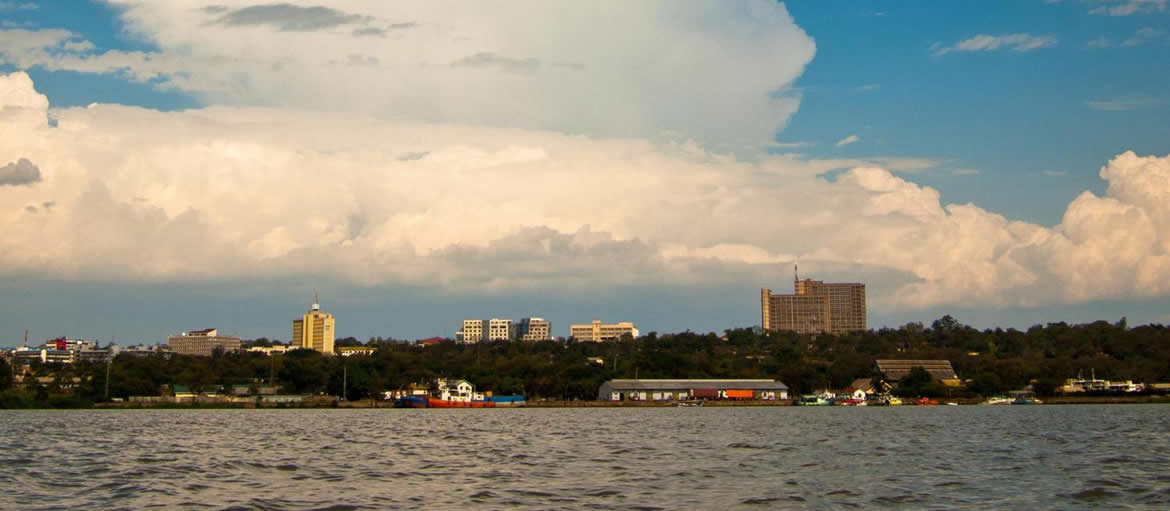
Kisumu at a Glance
| FACT | DETAIL |
|---|---|
| Location | Northeastern shore of Lake Victoria, at the northernmost tip of the Winam Gulf; western Kenya |
| Distance from Nairobi | 355 km northwest; 5–6 hours by road via Nakuru and Kericho |
| City rank | Kenya’s 3rd-largest city (after Nairobi and Mombasa); 2nd most important city in the Lake Victoria Basin after Kampala |
| Elevation | 1,131 m (3,711 ft) above sea level — 24 km south of the equator |
| City status | Granted in 2001; celebrating its Silver Jubilee in 2026 |
| Population | ~545,000 city (2026 estimate); Kisumu County: 1,155,574 (2019 census) |
| Name meaning | “A place of barter trade” in Dholuo (the Luo language) |
| History | Founded 1901 as “Port Florence” — the original inland terminal of the Uganda Railway |
| Governance | Capital of Kisumu County and headquarters of the Lake Region Economic Block (15 of Kenya’s 47 counties) |
| Lake | Lake Victoria: Africa’s largest lake (~69,000 km²); world’s second-largest freshwater lake; shared by Kenya, Uganda, and Tanzania |
Why Choose Kisumu for Day Tours?
Three things set Kisumu day tours apart from Nairobi’s or Mombasa’s:
Diversity in a small radius. The experiences within 60 km of Kisumu span forest ecology (Kakamega), open-water island safari (Ndere), lakeside wildlife (Impala Sanctuary), sacred cultural landscape (Kit Mikayi), and heritage tourism (Kogelo). Most day tours from the city return by 17:00 with time for a lakeside dinner.
Authenticity. Kisumu’s attractions receive a fraction of the visitors of Nairobi’s parks or Mombasa’s beaches. You are unlikely to share the walking trails of Ndere Island with more than a handful of other visitors. The Chouara-level immersion of Kisumu Museum’s Ber-gi-dala exhibit sees no crowds.
Gateway value. Kisumu sits on the natural route between Nairobi and the Masai Mara. A 3-day itinerary — fly Nairobi to Kisumu, do a day tour, then drive to the Mara through Kericho’s tea country — is one of Kenya’s finest combined itineraries and significantly richer than the standard direct-drive approach.
Select Tours and Safaris from Kisumu City
Safaris and Tours from Kisumu — At a Glance
| TOUR | DISTANCE FROM KISUMU | DRIVE TIME | HALF OR FULL DAY | FROM PRICE | BEST FOR |
|---|---|---|---|---|---|
| Kisumu Impala Sanctuary | 3 km | 10 min | Half day | USD 55 | Families; wildlife; birdwatching |
| Kisumu Museum & City | 1 km (museum) | 5 min | Half day | Included in city tour | Culture; history; Luo heritage |
| Hippo Point & Dunga Beach | 6 km | 15 min | Half day | From city tour | Sunset; lake views; boat rides |
| Kit Mikayi Sacred Rock | 29 km | 45 min | Half day | USD 65–85 | Culture; geology; spiritual sites |
| Ndere Island NP | 30 km + 20 min boat | 1 hr total | Full day | USD 95 | Adventure; island escape; birdwatching |
| Kogelo (Obama Village) | 60 km | 1.5 hrs | Full day | USD 85 | Heritage; history; community visits |
| Kakamega Rainforest | 50 km | 1.5–2 hrs | Full day | USD 95 | Birdwatching; forest walks; rare primates |
| Ruma National Park | 120 km | 2.5 hrs | Full day | On request | Roan antelope; Rothschild’s giraffe |
| Masai Mara (overnight) | 230 km | 3.5–4 hrs | 3-day minimum | USD 350+ | Big 5; wildebeest migration |
All tours depart from your Kisumu hotel and include a private vehicle with an English-speaking driver-guide. Park entry fees listed separately below.
1. Kisumu Impala Sanctuary
The most accessible wildlife experience in western Kenya — 3 km from the city centre on the shores of Lake Victoria.
Kisumu Impala Sanctuary is managed by the Kenya Wildlife Service (KWS) and was gazetted in 1992 specifically to protect the local impala population threatened by encroachment. At just 1.5 km², it is compact — but deceptively rich.
What You Will See
The sanctuary combines free-ranging wildlife, a captive animal orphanage, and one of the finest lakeside settings of any urban wildlife area in East Africa. Its landscape includes savanna grassland, indigenous forest patches, papyrus swamp, and rocky lake viewpoints — all within walking distance.
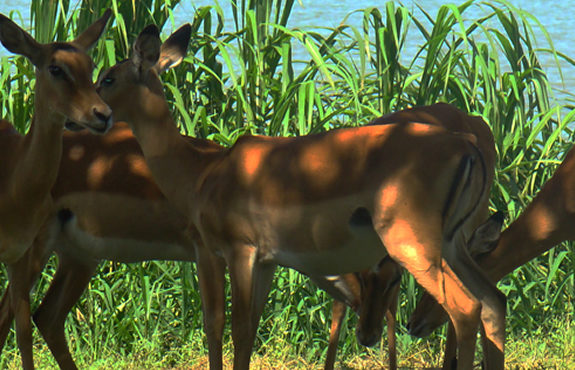
Free-ranging wildlife: Impala, hippo, zebra, sitatunga (a rare semi-aquatic antelope; one of the sanctuary’s conservation highlights), and warthog move freely through the grassland sections.
Animal orphanage: Houses four of the Big Five — lion, leopard, buffalo, and white rhino — alongside cheetah, spotted hyena, baboon, vervet monkey, ostrich, jackals, serval cat, bushbuck, and guineafowl. Animals here were either orphaned, injured, or unable to survive in the wild.
Birdlife: Over 115 bird species have been recorded, making the sanctuary a genuine birdwatching destination. The Lake Victoria shoreline and papyrus fringe attract kingfishers, herons, cormorants, African fish eagles, and weavers in high density.
Activities
- Nature walks: Well-maintained trails run through the grassland and along the lake edge; guides available at the gate
- Glass-bottomed boat rides: Explore the shallow Lake Victoria bay adjacent to the sanctuary; see the underwater papyrus root system and fish below
- Birdwatching: Bring binoculars; early morning (before 10:00) is peak activity
- Picnicking: Five lake-view picnic sites with benches; no food sold inside — bring your own
- Camping: Five campsites named Impala, Sunset, Albizia, Baboon, and Simba offer dramatic Lake Victoria views; book through KWS
Practical Information
- Location: Along Harambee Road, 3 km from Kisumu CBD; near Hippo Point. GPS: 0°6’27.0″S, 34°44’18.0″E
- Gates: Sitatunga Gate (vehicle entry); Main Gate (pedestrian entry)
- Opening hours: 06:00–18:00 daily
- Payment: All entry via eCitizen/KWSPay (kwspay.ecitizen.go.ke); M-Pesa or Visa card; cash not accepted at gate
2025/2026 KWS Entry Fees (Effective October 1, 2025):
| VISITOR CATEGORY | ADULT | CHILD (2–17 years) |
|---|---|---|
| Non-Resident (international) | USD 40 | USD 20 |
| African Citizen (non-EAC) | USD 25 | USD 15 |
| East African Citizen | KES 500 | KES 300 |
| Kenya Resident | KES 675 | KES 500 |
Source: KWS Wildlife Conservation and Management (Access and Conservation) (Fees) Regulations, 2025, gazetted September 2025.
Book the 1-Day Impala Park Tour from Kisumu →
2. Ndere Island National Park
Kenya’s most remote — and most undervisited — national park. An island in Lake Victoria, accessible only by boat, and one of western Kenya’s most peaceful natural experiences.
Ndere Island National Park was established by Legal Notice 368 on 3 November 1986 to protect its unique ecological position within the Lake Victoria ecosystem. The island covers 4.2 km² in the Winam Gulf — small in area, but exceptionally rich in atmosphere and wildlife.
The Name and the Lore
“Ndere” means “meeting place” in Dholuo, the Luo language — reflecting the island’s historical role as a gathering point for the Luo people’s Nilotic ancestors during their southward migration from the Nile Valley. The island is also known as “Chula Rabour” (Red Island) for its Themeda grass, which turns a striking reddish-brown when it matures and flowers.
Before gazettement, Ndere was traditionally managed by the local Luo community for subsistence farming and building materials under customary governance. Today it is a KWS-managed national park with no permanent human habitation.
Wildlife and Birdlife
The island’s wildlife includes animals placed here by the government as part of the island’s protected-area stocking, alongside naturally occurring species:
Mammals: Zebra, impala, sitatunga, waterbuck, hippo (along the shoreline), crocodile, monitor lizard, olive baboon, vervet monkey, python, and warthog.
Birds (100+ species recorded): African fish eagle, hammerkop, goliath heron, African darter, reed cormorant, pied kingfisher, malachite kingfisher, black-headed heron, and numerous migrant species during the October–April season.
Activities
- Guided island walks: KWS rangers lead walks across the island’s rolling grassland hills; the views of Lake Victoria from the hilltops are exceptional
- Boat safari to the island: The 20–45-minute crossing itself provides wildlife viewing — hippos, crocodile, and lake birds are commonly spotted from the boat
- Camping: A basic campsite with lake views and occasional hippo visits at night is a highlight for adventurous travellers
- Photography: The combination of Themeda grassland, lake backdrop, and wildlife makes Ndere one of Kenya’s finest photography landscapes
Getting There
Option 1 (most common): Drive from Kisumu to Kaloka Beach on the Kisumu-Bondo road (approximately 30 km; turn left after Holo market or at Kombewa Shopping Centre toward park headquarters). Boat from Kaloka/Bao Beach to the island: approximately 20 minutes.
Option 2 (quicker): Speedboat directly from Kisumu city or Dunga Beach: approximately 45 minutes to the island.
The park headquarters (between Asat and Bao beaches) is 12 km off the tarmac road on a murram track; 4WD is recommended.
Book the 1-Day Ndere Island Tour from Kisumu →
3. Kakamega Forest National Reserve
Kenya’s only tropical rainforest — and the rarest ecosystem on the continent available to visit within a 2-hour drive of a city.
Kakamega Forest is the easternmost remnant of the ancient Guineo-Congolian rainforest that once stretched in an unbroken band from the Atlantic coast of West Africa to the Indian Ocean shore of East Africa. The Kakamega fragment — located approximately 50 km north of Kisumu in Kakamega County — is what remains after millennia of deforestation. The wider ecosystem spans approximately 238 km², of which less than half remains as intact indigenous forest today.
On UNESCO’s World Heritage Tentative List since 2010, Kakamega Forest is also a designated Important Bird Area (IBA) by BirdLife International. Kenya Wildlife Service manages the National Reserve section.
Why Kakamega Matters
This is not a standard safari. There are no lions or elephants. What Kakamega offers is something equally rare: a truly intact equatorial forest ecosystem — towering trees with canopy 30+ metres above the forest floor, bird calls so numerous they overlap into a constant chorus, and species found nowhere else in Kenya.
The forest’s isolation has produced species that are ecologically marooned here — stranded eastern outposts of West African and Central African wildlife that have nowhere else to go in Kenya.
Biodiversity Highlights
| CATEGORY | COUNT | KEY SPECIES |
|---|---|---|
| Bird species | 367 (36 found ONLY in this forest in Kenya) | Great Blue Turaco, Black-and-White Casqued Hornbill, Blue-headed Bee-eater, Yellow-bellied Wattle-eye, African Shrike-flycatcher, Hartlaub’s Turaco |
| Primate species | 7 | De Brazza’s monkey (East African stronghold), Blue monkey, Black-and-white Colobus, Olive Baboon, Vervet, Galago |
| Butterfly species | 400+ | Goliath beetle, Charaxes spp., Acraea spp. |
| Plant species | 380 (80% with traditional medicinal uses) | Elgon teak (Olea welwitschii), Red stinkwood (Prunus africana), White stinkwood, Pouteria altissima |
The Great Blue Turaco
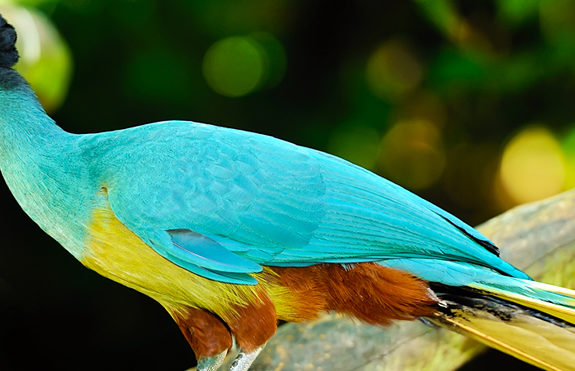
The Great Blue Turaco (Corythaeola cristata) is Kakamega’s iconic bird and the primary reason specialist ornithologists travel from Europe and North America specifically to this forest. It is the only place in Kenya where this species occurs — a large (75 cm), electric-blue and yellow bird that moves through the high canopy in pairs. Most birding guides rate Kakamega’s Buyangu Hill at dawn as one of Africa’s top 10 birding experiences.
Activities
- Guided forest walks: Isecheno and Buyangu trails; early morning (06:00–09:00) is essential for birding; guides mandatory for the deeper trails
- Canopy walks: Available at select points; views across the forest top
- Night walks: With a KWS ranger; excellent for bush babies (galagos), owls, and large moths; must be pre-arranged
- De Brazza’s monkey tracking: The forest’s most unusual primate; found along river trails and at forest edges
Getting There from Kisumu
- Road: 50 km north of Kisumu on the Kisumu–Kakamega road; approximately 1.5–2 hours by road
- Main entrance points: Buyangu Gate (north sector; best for birding); Isecheno Gate (south sector; best for primates and trails)
- From Nairobi direct: 418–420 km; 6–7 hours via Nakuru and Kapsabet
Entry Fees (2025 KWS Rates)
| VISITOR CATEGORY | ADULT (PER DAY) |
|---|---|
| Non-Resident | USD 50 |
| East African Citizen | KES 750 |
| Kenya Resident | KES 900 |
Child rates: 50% of adult fee. Pay via eCitizen/KWSPay (kwspay.ecitizen.go.ke).
Accommodation Near Kakamega Forest
- Rondo Retreat Centre (inside the forest): Historic ecumenical retreat house; full-board accommodation in the heart of the reserve; the best birding base. Book in advance — it fills quickly.
- KWS Forest Rest Houses: Basic self-catering; functional; excellent location.
- Golf Hotel, Kakamega town: Standard hotel 5 km from the forest; comfortable; good base for a day visit from Kisumu.
Book the 1-Day Kakamega Rainforest Tour from Kisumu →
4. Nyang’oma Kogelo — Obama Village
The ancestral home of Barack Obama Sr., and by extension one of the world’s most symbolically significant small villages.
Nyang’oma Kogelo (commonly called Kogelo) is a rural village in Siaya County, Kenya, located approximately 60 km west-northwest of Kisumu in the South East Alego location of Alego-Usonga Constituency. Population: 3,648. It is one of the most unremarkable-looking villages in western Kenya — and simultaneously one of the most visited.
The Obama Connection
Kogelo is the ancestral home of Barack Obama, Senior (1936–1982), the Luo economist who was the father of Barack Hussein Obama II — the 44th President of the United States (2009–2017). Obama Sr. was born here, studied briefly in Kenya, then went to the United States on a scholarship to the University of Hawaii, where he met Ann Dunham (Barack Obama’s mother). He returned to Kenya after his studies and is buried in the family compound in Kogelo.
What drew the world’s attention to Kogelo: In his 2009 inauguration speech, Barack Obama described Kogelo as “the small village where my father was born” — a sentence that placed a previously unknown Kenyan village permanently on the international tourism map.
Visiting the homestead: Most visitors come to see:
- The family compound and homestead of Barack Obama Sr.
- The graves of Barack Obama Sr. and his father Hussein Onyango Obama, within the compound
- Senator Barack Obama Primary School — formerly Nyangoma Primary School; the name was changed in honour of the then-Senator Obama after his 2006 visit to Kenya
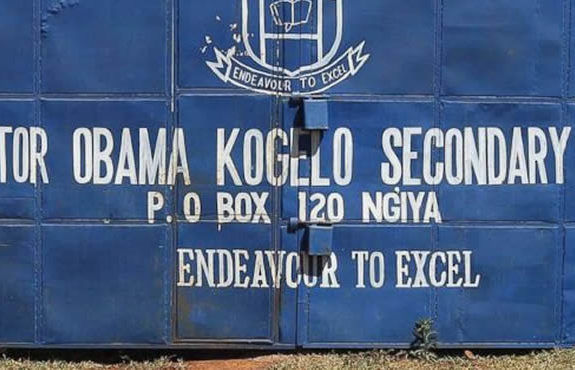
- Senator Barack Obama Secondary School — adjacent to the primary school; on land donated by the Obama family
- Kogelo market and village dispensary — the development in Kogelo is visibly more advanced than surrounding villages (piped water, electricity) due to both government attention and Obama-era donor support
Protection Status
The Kenyan government has gazetted Nyang’oma Kogelo as a protected area under the National Museums and Heritage Act. A government-planned cultural centre and museum honouring the Obama family legacy — with facilities including a library, cottages, an amphitheatre, and a restaurant — is in development.
Route from Kisumu
Depart Kisumu on the Kisumu–Bondo road (passing close to Kit Mikayi rock formation at distance), through Ndori toward Siaya County. Turn onto the Ndori–Ng’iya road (recently tarmacked) and proceed to Nyang’oma Kogelo. The route passes through typical Luo village landscapes with papyrus wetlands, subsistence farms, and fishing communities.
Full-day trip: Depart Kisumu after breakfast; visit Kogelo (2–3 hours); continue to Siaya town; cross the River Yala and enter Bondo district; return to Kisumu. Approximately 130 km return.
Book the 1-Day Kogelo Village Day Visit from Kisumu →
5. Kit Mikayi Sacred Rock
One of Kenya’s most significant cultural sites — and the most underrated stop in western Kenya for any visitor interested in Luo culture or geological spectacle.
Kit Mikayi (also spelled Kit-Mikayi, Kitmikayi, or Kitmikaye) is a dramatic rock formation located 29 km west of Kisumu City in Seme, Kisumu County — approximately 1 km from the Kisumu–Bondo road. Rising approximately 120 metres from the surrounding plains, it consists of asymmetrical twin granite towers with internal caves, distinctive rock arches, and large precariously-balanced boulders.
The Name and the Meaning
In Dholuo (the Luo language), “Kit Mikayi” means “The Stone of the First Wife.” The name comes from a legend about an elder named Ngeso, who became so devoted to the rock that he spent his days inside its caves — forcing his wife to bring him food there daily. His wife began calling the rock “Mikayi” (the first wife in a traditional Luo polygamous household), as her husband seemed to love it more than her.
The Family in Stone
The rock formation is interpreted by the Luo community as a representation of a traditional polygamous Luo homestead:
- Ngeso — the central, tallest rock; the patriarch
- Mikayi — the bulkiest rock; the first wife
- Nyachira — the right-side formation; the second wife
- Reru — the left-side formation; the third wife
- Simba — the smaller front rock; the first-born son (the “simba” is the traditional house of the first-born boy in a Luo homestead)
Cultural and Spiritual Significance
Kit Mikayi is far more than a geological curiosity. For the Luo Seme sub-clan, it is a sacred shrine — a dwelling place of ancestral spirits, a venue for prayers in times of drought or famine, a site for the Otenga ceremony (conducted by newly married Seme women to pledge allegiance to the land), and a location for oath-taking.
The site has been declared a UNESCO cultural heritage site (announced by Kisumu Governor Anyang’ Nyong’o on Kenya’s Jamhuri Day) and is protected under the National Museums and Heritage Act of Kenya. The National Museums of Kenya maintains information on the site at nmk.go.ke/kit-mikayi.
Visitor Experience
- Guided climb: Local guides lead visitors through the rock system, explaining the cultural significance of each formation; the climb involves some light scrambling but is accessible to most physically active visitors
- Panoramic views: The elevated rock position offers views across the surrounding plains toward Lake Victoria
- Local performers: Community members (often a group of Luo widows) perform traditional dances and songs; a small donation is customary
- Sunset views: Kit Mikayi is one of the finest sunset-viewing points in the Kisumu region; the sky over Lake Victoria behind the rock at golden hour is exceptional for photography
Entry fee: KES 200–500 per person (community-managed; paid at the site). Guided tours from Kisumu including transport: USD 65–85 per person.
Access: Matatu from Kisumu Bus Stage toward Bondo (alight at Kit Mikayi junction, about 40 minutes); or private vehicle. The entry point is near Kit Mikayi Primary School and N’gop-Ngeso Primary School. GPS coordinates: approximately 0°9’N, 34°32’E.
Half-day combination tip: Kit Mikayi combines naturally with the Kogelo tour (both are on the Kisumu–Bondo road corridor) for a full-day western circuit. Depart Kisumu, stop at Kit Mikayi (2 hours), continue to Kogelo (2 hours), return via Seme and Bondo.
6. Kisumu Museum & City Tour
The finest Luo cultural museum in Kenya — and one of the most intelligently designed community museums in East Africa.
Kisumu Museum was established in 1980 by the National Museums of Kenya and is designed in the physical layout of a traditional Luo homestead — a series of circular pavilions arranged around a central space, mirroring the spatial organisation of a typical Luo family compound.
Key Exhibits
Aquarium pavilion: A collection of aquaria displaying the remarkable diversity of Lake Victoria’s native fish fauna, with explanatory panels on ecology, fishing techniques, and the devastating impact of the Nile perch introduction in the 1950s (which caused the extinction of an estimated 200+ endemic cichlid species).
Reptile pavilion: Live terrariums housing active venomous snakes including black mambas, spitting cobras, puff adders, and gaboon vipers; outdoor snake pit and crocodile enclosure. Not for the faint-hearted; genuinely educational.
Ethnography pavilions: Weapons, jewellery, musical instruments, and farm tools from the various peoples of the former Nyanza Province — Luo, Kisii, Kuria, and others. The depth of comparative material culture here is unique in western Kenya.
TARA rock art: The prehistoric Tara rock art, originally from its outdoor location but removed to the museum after vandalism damaged it — preserved here for study and public education.
Ber-gi-dala: The museum’s most important and most visited exhibition. UNESCO-sponsored and full-scale: a complete recreation of a traditional Luo homestead, including the home of the fictional patriarch, the granaries, livestock corrals, the homes of each of his three wives, and the house of the eldest son. Bilingual interpretive materials (Dholuo and English) explain Luo migration history, oral traditions, traditional healing plants, and the process of establishing a new home. There is nothing equivalent to this exhibit anywhere else in Kenya.
Kisumu City Highlights
A morning or afternoon city tour from the museum includes:
- Kibuye Market — the largest open-air market in western Kenya; fresh produce, dried fish, textiles, and traditional crafts in a genuinely local setting
- Kisumu Port — the historic harbour established in 1901; still operational; ferry services to Kendu Bay, Homa Bay, and Mbita depart from here
- Dunga Beach and Hippo Point — see Section 7 below
- Kisumu CBD architecture — colonial-era buildings including the railway station and early commercial structures
Museum entry fee: approximately KES 500 for non-residents; confirm at NMK.
7. Hippo Point, Dunga Beach & Wetlands
The most accessible Lake Victoria experience from Kisumu — and the finest sunset in western Kenya.
Hippo Point is a 240-hectare area on the southern shores of Lake Victoria, approximately 6 km from Kisumu’s CBD near Dunga village. Despite its name, the principal attraction is not the hippos (though they are occasionally spotted in the shallower papyrus areas) but the extraordinary sunset views across the lake — the water turns from blue to gold to rose to deep copper as the sun drops behind the horizon, and on clear evenings the silhouettes of papyrus reeds frame the entire sky.
Dunga Beach and Wetland
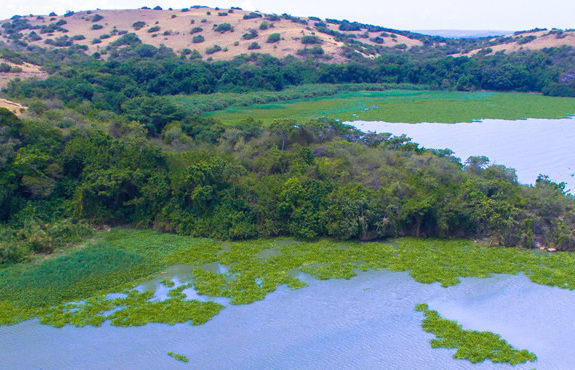
Dunga Wetland is a papyrus-dominated lakeside ecosystem managed for ecotourism by the local community through the Eco-finder Kenya Dunga Wetland Pedagogical Centre. The wetland is one of the most biodiverse papyrus ecosystems in the Lake Victoria basin and supports:
- Sitatunga antelope (semi-aquatic; feeds in the papyrus stands)
- Hippos (resident in the deeper channels)
- Dense birdlife including the Papyrus Gonolek (a restricted-range species), malachite kingfisher, African jacana, and goliath heron
Activities at Dunga Beach:
- Sunset boat rides from Dunga pier (KES 1,000–2,000 per person depending on boat type and duration)
- Birdwatching walks along the wetland edge
- Fishing village walk and fresh-catch lunch at local restaurants
- Kayaking (available from some operators)
- Dunga Wetland guided nature walk (community guides; supports the local conservation programme)
Kiboko Bay Beach Resort (approximately 5 km from Dunga) offers a more formal lakeside experience with a restaurant, accommodation, and organised boat trips for those wanting comfort alongside the lake views.
8. Kisumu as a Gateway to the Masai Mara
The most enjoyable road to the Masai Mara in Kenya runs through Kericho’s tea plantations — and it starts in Kisumu.
The route from Kisumu to the Masai Mara (approximately 230 km via Kericho and Narok) takes 3.5–4.5 hours through some of the most visually striking driving countryside in Kenya:
- Kisumu → Kericho (~70 km, 1 hour): The road climbs from the lake basin into the western highlands through small Luo market towns, then ascending into the green tea-growing belt. The KTDA (Kenya Tea Development Agency) tea estates around Kericho are the finest in Kenya; the road passes through millions of manicured tea bushes in rolling hills, with picking women in colourful clothing in the rows.
- Kericho Town: A recommended refreshment stop at any of the lakeside hotels or the Kericho Tea Hotel; famous for fresh Kericho tea served in traditional pots. Allow 30–45 minutes.
- Kericho → Narok (~100 km, 1.5 hours): The road crosses the Mara River watershed and begins the descent into the Rift Valley margin. Giraffes are commonly spotted on the plains approaching Narok.
- Narok → Masai Mara (~80 km, 1 hour): After Narok, the landscape opens dramatically and game begins before you reach the official park gates. Giraffe, zebra, and Thomson’s gazelle are standard on this stretch.
African Travel Hub offers a 3-day Masai Mara Safari from Kisumu incorporating this route, with a Kericho tea stop and two full days of game drives in the Mara. For visitors combining a Kisumu city stay with the Mara, this is a significantly richer itinerary than the standard Nairobi-direct approach.
9. Ruma National Park (Extended Day Trip)
The only mainland habitat for Kenya’s roan antelope — and one of the country’s most undervisited parks.
Ruma National Park covers 120 km² of riverine woodland, floodplain, and montane forest in the Lambwe Valley, approximately 120 km south of Kisumu (2.5 hours by road via Homa Bay). It was established in 1966 primarily to protect the roan antelope (Hippotragus equinus) — a large, rare antelope with distinctive curved horns and a tawny-red coat that has been lost from most of Kenya except here.
Wildlife: Roan antelope (the primary conservation target), Rothschild’s giraffe (an endangered subspecies), eastern black rhinoceros (present in small numbers), oribi, Kenya’s only population of eastern mongalla gazelle (Eudorcas albonotata), Burchell’s zebra, topi, hippo, and crocodile along the Lambwe River.
Birdlife: 180+ species recorded; the montane forest edge habitats and riverine thickets hold species uncommon elsewhere in western Kenya.
This is a full-day trip from Kisumu — an early start (06:00 departure) allows 4–5 hours of game driving and a return to Kisumu by early evening. Contact African Travel Hub for custom Ruma day-trip arrangements.
10. Best Time to Visit Kisumu for Day Tours
Kisumu’s equatorial location (24 km south of the equator at 1,131 m) gives it a moderate, year-round climate without extremes. Day tours operate throughout the year, but two seasons affect conditions:
| PERIOD | CONDITIONS | IMPACT ON DAY TOURS |
|---|---|---|
| Jan – Feb (Dry) | Warm; 24–30°C; low rainfall; clear skies | Excellent for all tours; Ndere Island and Impala Sanctuary at their best for wildlife viewing |
| Mar – May (Long Rains) | Regular afternoon rains; 20–28°C; green landscapes | Kakamega Forest at its most lush; Ndere boat crossings can be choppy; roads generally good on main routes |
| Jun – Sep (Dry Season) | Cooler; 18–26°C; minimal rain; clear lake views | Finest conditions for all day tours; Hippo Point sunsets exceptional; Kakamega birding at peak |
| Oct – Dec (Short Rains) | Intermittent rain; 22–28°C; can be heavy at times | Most tours run normally; lake levels higher after rains; Kakamega forest floor trails can be muddy |
Note on Kakamega Forest birding: The long rains (March–May) and the transition to dry season (June–July) bring the highest bird activity. The Great Blue Turaco is present year-round.
11. Park Entry Fees — Quick Reference (2025/2026)
All KWS fees effective October 1, 2025. Payment exclusively through eCitizen/KWSPay (kwspay.ecitizen.go.ke) via M-Pesa or Visa card. Cash not accepted at KWS gates.
| SITE | NON-RESIDENT ADULT | EAST AFRICAN ADULT | KENYA RESIDENT | NOTES |
|---|---|---|---|---|
| Kisumu Impala Sanctuary | USD 40 | KES 500 | KES 675 | Urban park category |
| Ndere Island NP | Check kws.go.ke | KES 500 | KES 675 | Ferry/boat cost separate |
| Kakamega Forest NR | USD 50 | KES 750 | KES 900 | Scenic/IBA category |
| Ruma National Park | Check kws.go.ke | — | — | Wilderness category |
| Kit Mikayi | KES 200–500 | KES 200–500 | KES 200–500 | Community-managed; not KWS |
| Kisumu Museum | ~USD 10 | — | KES 200 | National Museums of Kenya |
Child rates: 50% of adult fee at all KWS parks. Fees change — verify current rates at kws.go.ke before departure. African Travel Hub includes all applicable park fees in quoted tour prices unless otherwise stated.
12. Practical Information for Kisumu Day Tours
Accommodation in Kisumu
Kisumu offers accommodation across all price brackets, concentrated around the CBD and lakefront:
| PROPERTY | TIER | LOCATION | NOTES |
|---|---|---|---|
| Acacia Premier Hotel | Luxury | City centre | Kisumu’s top property; pool; lake views; business facilities |
| Sarova Imperial Hotel | Mid-upper | CBD | Long-established; reliable; conference facilities |
| Sovereign Hotel | Mid-range | City centre | Good location; comfortable; value for money |
| Kiboko Bay Resort | Mid-range | Lake Victoria | Lakeside resort; 5 km from CBD; beach access; boat trips |
| Kisumu Hotel | Budget | CBD | Central; basic; reliable |
Transport Around Kisumu
- Boda-boda (motorcycle taxi): The fastest way to get around the city; negotiate the fare before boarding; typically KES 50–200 within the city
- Tuk-tuk: Three-wheeled motorised rickshaw; common for short city trips; KES 100–300
- Taxi/private hire: Available through hotels or apps; pre-negotiated fare
- Matatu (shared minibus): Connect Kisumu to surrounding towns including Kakamega, Bondo, Siaya, and Homa Bay; depart from the main bus stage in the CBD; inexpensive but slower
Money
- Kisumu has ATMs at all major banks (KCB, Equity Bank, Co-operative, Stanbic, NCBA) in the CBD; they dispense Kenyan Shillings
- M-Pesa is accepted almost everywhere, including KWS parks
- Most mid-range and upscale hotels accept Visa/Mastercard
- USD, GBP, and EUR can be exchanged at forex bureaux in the CBD; rates are generally reasonable
Health
- Malaria: Kisumu is a malaria-risk area. Take appropriate antimalarial prophylaxis (consult your physician); use DEET repellent; sleep under a net. For current guidance: CDC Travellers’ Health — Kenya
- Water: Drink bottled water. Bottled water is available throughout the city.
- Medical: Aga Khan Hospital Kisumu and Kisumu County Referral Hospital serve the city; Aga Khan is the preferred option for international visitors.
13. Book Your Kisumu Day Tour
African Travel Hub has operated day tours from Kisumu since 2006. All tours are:
- Private (no shared vehicles with strangers)
- Led by English-speaking, licensed driver-guides with local knowledge
- Priced with all fuel, guide fees, and park entry included
- Flexible — itineraries can be adjusted on request
- Bookable with a simple quote request
| OUR KISUMU TOURS | STARTING FROM |
|---|---|
| 1-Day Impala Sanctuary Tour | USD 55 |
| 1-Day Kakamega Rainforest Tour | USD 95 |
| 1-Day Ndere Island National Park Tour | USD 95 |
| 1-Day Kogelo (Obama Village) Tour | USD 85 |
| 3-Day Masai Mara Safari from Kisumu | USD 350 per person sharing |
Request a Custom Kisumu Day Tour Quote →
Last Updated: August 2026 by African Travel Hub Editorial. KWS park fees and practical information subject to change — verify current rates at kws.go.ke and ecitizen.go.ke before travel.