
The Ultimate Q&A Resource for Planning Mountain Gorilla Trekking Safari in Uganda & Rwanda in 2026
Table of Contents
Are you dreaming of coming face-to-face with majestic mountain gorillas in their natural habitat? Uganda and Rwanda offer two of the world’s most extraordinary wildlife experiences, but choosing between them can feel overwhelming. This comprehensive guide answers every question you need to make the perfect decision for your once-in-a-lifetime gorilla trekking adventure.
Whether you’re a budget traveler trying to maximize value, a luxury seeker wanting seamless experiences, a photographer needing extended time with gorillas, or simply someone who wants to understand all the options before committing thousands of dollars—this guide has you covered.
What is Gorilla Trekking and Why is it Special?
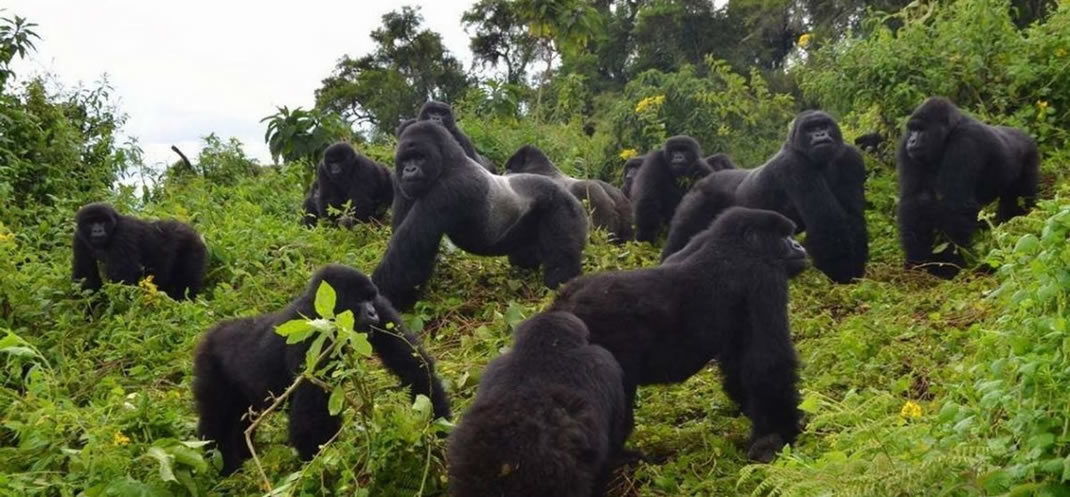
Gorilla trekking is a guided wilderness experience where you hike through dense montane forests to observe habituated wild mountain gorillas in their natural environment. Unlike viewing animals in a zoo or from a safari vehicle, gorilla trekking is an intimate, on-foot encounter where you spend up to one hour sitting quietly just meters away from one of humanity’s closest genetic relatives.
What makes this experience truly special is its rarity and emotional impact. Mountain gorillas exist nowhere else on Earth except in the wild forests of Uganda, Rwanda, and the Democratic Republic of Congo. When you lock eyes with a 400-pound silver-back or watch infant gorillas tumble playfully through the undergrowth, you’re witnessing behaviors that remained hidden from humans until the 1960s.
Many visitors describe it as a life-changing, almost spiritual experience that deepens their connection to wildlife conservation. The exclusivity adds to the ‘specialness’: each gorilla family can only be visited by a maximum of eight people per day, for just one hour, to minimize stress on the animals. This means only a tiny fraction of the world’s population will ever have this privilege.
Where Can You See Mountain Gorillas in the Wild?
Mountain gorillas exist in only two locations on Earth: the Virunga Massif (a chain of volcanic mountains spanning Rwanda, Uganda, and DRC) and Uganda’s Bwindi Impenetrable Forest.
In Rwanda: Gorilla trekking takes place exclusively in Volcanoes National Park, located in the northwestern part of the country about 2-3 hours from Kigali. The park encompasses five of the eight volcanoes in the Virunga Mountains, creating a dramatic backdrop of volcanic peaks.
In Uganda: Gorilla trekking occurs in two locations:
- Bwindi Impenetrable National Park – The most popular destination, hosting about 50% of the world’s mountain gorilla population across four different sectors (Buhoma, Ruhija, Rushaga, and Nkuringo)
- Mgahinga Gorilla National Park – Shares the Virunga Massif with Rwanda and hosts one habituated gorilla family that sometimes crosses into Rwanda
The Democratic Republic of Congo also offers gorilla trekking in Virunga National Park, but ongoing security concerns make Uganda and Rwanda the safer, more accessible choices for most travelers.
Why is Uganda and Rwanda the Top Destinations for Gorilla Trekking?
Uganda and Rwanda have emerged as the premier gorilla trekking destinations due to a perfect combination of factors:
Conservation Success: Both countries have made tremendous strides in gorilla conservation. The mountain gorilla population has grown from approximately 680 individuals in 2008 to over 1,000 today—a remarkable conservation success story. This population recovery is directly linked to tourism revenue: gorilla permits generate millions of dollars annually, providing both governments with a powerful financial incentive to protect these endangered animals and their habitats.
Political Stability: Uganda and Rwanda have maintained relative peace and security for decades, making them safe for international tourists. Rwanda, in particular, has transformed itself from the devastation of the 1994 genocide into one of Africa’s most stable, clean, and efficiently run nations.
Infrastructure Excellence: Rwanda’s road network means you can drive from Kigali International Airport to Volcanoes National Park in just 2-3 hours on well-maintained paved roads. Uganda requires longer travel times (8-9 hours from Kampala to Bwindi by road, or shorter domestic flights), but has significantly improved its infrastructure in recent years.
Professional Management: Both countries have invested heavily in professional guide training, anti-poaching efforts, and sustainable tourism practices, creating a well-organized, safe, and deeply rewarding experience.
How Many Mountain Gorillas are left in the world?
As of the most recent census data from 2023, there are approximately 1,063 mountain gorillas remaining in the wild, making them one of the world’s most endangered great apes.
The population of mountain gorillas is distributed across two main areas:
- Virunga Massif (Rwanda, Uganda, DRC): approximately 604 individual gorillas
- Bwindi Impenetrable Forest (Uganda): approximately 459 individual gorillas
This represents a conservation success story, as the population has been steadily increasing over the past two decades from around 680 gorillas in 2008. The growth is attributed to intensive conservation efforts, including anti-poaching patrols, veterinary interventions, habitat protection, and ecotourism revenue that makes gorillas worth more alive than dead.
Despite this progress, mountain gorillas remain critically endangered, facing ongoing threats from habitat loss, human-wildlife conflict, disease transmission from humans, climate change, and political instability in some regions.
What is the Gorilla Trekking Experience Like?
The gorilla trekking experience begins early in the morning (typically 7-8 AM) at the park headquarters for a comprehensive briefing. Rangers explain the rules, assign you to a specific gorilla family based on your fitness level, and answer questions.
The Trek: Highly variable and unpredictable. You might find your gorilla family after just 30 minutes of gentle hiking, or you could trek for 6-8 hours through steep, muddy, thick vegetation. Gorillas are wild animals that move daily to feed, so the duration depends entirely on where they spent the previous night.
The Terrain: Expect to hike through dense jungle, scramble up muddy slopes, push through thick undergrowth, and navigate slippery paths. In Uganda’s Bwindi, the vegetation can be particularly thick (“Impenetrable Forest” isn’t just marketing). Rwanda’s Volcanoes National Park often involves steep volcano slopes but sometimes more open bamboo forests.
The Encounter: When you find the gorillas, the experience becomes magical. You’ll spend one precious hour observing them from as close as 5-7 meters. You might watch a silver-back beat his chest, see mothers nursing infants, observe juveniles playing, or witness the family eating, grooming, or simply resting.
Total Duration: The entire experience typically takes 4-8 hours from start to finish. You’ll return muddy, exhausted, and emotionally overwhelmed in the best possible way.
 Is Mountain Gorilla Trekking Safe?
Yes, gorilla trekking is very safe when conducted through official parks with trained guides. Both Uganda and Rwanda have excellent safety records.
Gorilla Safety: Mountain gorillas are habituated to human presence and are naturally shy, gentle herbivores. While a silver-back can weigh up to 400 pounds and display intimidating chest-beating, actual attacks are extraordinarily rare. Professional guides are trained to read gorilla behavior and position your group safely.
Trek Safety: The main considerations relate to the trek itself—steep slopes, slippery mud, thick vegetation, and high altitude (2,000-4,000 meters). Most injuries are minor (twisted ankles, cuts from thorns, general exhaustion). Hiring a porter not only supports local communities but gives you assistance navigating difficult sections.
Health Precautions: Gorillas share about 98% of human DNA and are susceptible to human diseases. If you have any symptoms of illness, you cannot trek, as you could transmit potentially fatal diseases to the gorillas.
Security: Both Uganda and Rwanda are stable countries with dedicated tourism police and armed rangers who accompany all treks.
What’s The Difference Between Gorilla Trekking in Uganda & Rwanda?
The fundamental difference comes down to cost, accessibility, and terrain:
Trekking in Rwanda = Convenience + Luxury:
- Volcanoes National Park sits just 2-3 hours from Kigali Airport on excellent paved roads
- Positioned as a premium destination with high-end lodges and immaculate infrastructure
- Often more open bamboo forests and clearer trails
- Perfect for time-constrained travelers
Trekking in Uganda = Value + Adventure:
- Bwindi Impenetrable Forest truly lives up to its name with dense jungle
- Remote location (8-9 hours by road from Kampala, or 1-2 hours by domestic flight)
- More habituated gorilla families (15+ vs 10-12) = better availability
- Significantly lower permit cost ($800 vs $1,500)
- More raw, wilderness feel
The Core Experience: The actual hour you spend with gorillas is essentially identical in both countries—same conservation rules, same profound emotional connection, same magnificent wildlife encounter.
How Much Does Gorilla Trekking cost in Uganda vs Rwanda?
Permit Costs:
- Rwanda: $1,500 per person per trek
- Uganda: $800 per person per trek
- Savings: $700 per person by choosing Uganda
Total Trip Costs (3-day safari, mid-range):
Rwanda:
- Permit: $1,500
- Accommodation (2 nights): $300-600
- Transport from Kigali: $200-300
- Meals: $100-150
- Tips/extras: $100
- Total: $2,200-2,650 per person
Uganda:
- Permit: $800
- Accommodation (2 nights): $200-400
- Transport (road): $250-400
- Meals: $80-120
- Tips/extras: $100
- Total: $1,430-1,820 per person
Cost Savings: $770-830 per person for Uganda
Additional considerations:
- Uganda’s Gorilla Habituation Experience: $1,500 (4 hours with gorillas vs 1 hour)
- Flying domestically in Uganda adds $250-400 per person but saves time
- Rwanda’s helicopter transfers: $2,500-3,500 total (optional luxury)
Which Country Between Uganda & Rwanda Offers Better Value for money?
Uganda seems to offer substantially better value for most travelers, particularly those on moderate budgets.
Why Uganda Wins on Value:
- $700 permit savings is significant
- Wider accommodation range ($50-$1,000+ per night) vs Rwanda’s narrower, pricier options
- Better safari combinations – easily add chimps ($250), Queen Elizabeth NP, cultural experiences
- Same core experience – the hour with gorillas is identical, so paying $700 less for the same encounter is exceptional value
- Habituation Experience – $1,500 for 4 hours vs Rwanda’s $1,500 for 1 hour
When Does Rwanda Offer Better Value:
- Time-value: If you only have 2-3 days, Rwanda’s efficiency maximizes vacation time
- Convenience-value: For travelers who strongly prefer polished infrastructure and minimal logistics stress
- All-inclusive luxury: Rwanda’s ultra-luxury lodges offer experiences that justify premium pricing for some travelers
Bottom Line: Uganda wins on pure financial value. Rwanda wins on time-efficiency value for short stays.
Is Gorilla Trekking Easier in Uganda or Rwanda?
Rwanda generally offers slightly easier trekking conditions on average, but individual experiences vary dramatically.
Rwanda (Volcanoes National Park):
- Terrain: Volcanic mountain slopes with bamboo forests and more open vegetation
- Trails: Often better defined, easier movement through bamboo vs thick jungle
- Challenges: Steep uphill climbs at high altitude (2,500-4,000 meters)
- Average difficulty: Moderate to challenging
Uganda (Bwindi Impenetrable Forest):
- Terrain: Extremely dense jungle, thick undergrowth, steep valleys
- Trails: Often requires pushing through vegetation like a “green wall”
- Challenges: Slippery mud, scrambling over roots, true “impenetrable” conditions
- Average difficulty: Challenging to very challenging
Important Variables:
- Gorilla location varies daily – You might find them after 30 minutes or 6+ hours
- Family assignments – Rangers try to match families to your fitness level
- Sector differences – Bwindi’s four sectors vary in difficulty
- Weather conditions – Rain makes both locations significantly harder
Fitness Preparation: Reasonable fitness with mental determination is sufficient for either country. Neither requires athlete-level conditioning, but both demand respect for challenging mountain/jungle hiking.
Which Has Better Accessibility to Gorillas – Uganda or Rwanda?
Rwanda wins decisively on accessibility.
Rwanda:
- Kigali Airport → Volcanoes National Park : 2-3 hours on excellent paved roads
- Same-day arrival and trekking theoretically possible (though not recommended)
- Easy 2-3 day gorilla-only trips
- Exceptional road infrastructure throughout the country
- Self-drive safaris viable
Uganda:
- Entebbe Airport → Bwindi Park: 8-10 hours by road (mixed quality roads)
- OR 1.5-2 hour domestic flight + ground transfer ($250-400 extra)
- Requires more planning and travel time
- 4×4 vehicle essential, especially in rainy season
The Game-Changer: Kigali → Bwindi (Uganda) = 4-5 hours
Many smart travelers fly into Kigali and drive to Uganda, getting Rwanda’s accessibility with Uganda’s pricing.
Verdict: For pure accessibility, Rwanda is unmatched. But the Kigali-to-Bwindi route offers an excellent compromise.
How Do the Landscapes Differ Between Uganda and Rwanda?
Rwanda – Dramatic Volcanic Mountains:
- Five volcanic peaks (Karisimbi 4,507m, Bisoke 3,711m, Sabyinyo 3,669m, Gahinga 3,474m, Muhabura 4,127m)
- Iconic mountain silhouettes often shrouded in mist
- Bamboo forests and hagenia-hypericum woodlands
- More open visibility, sweeping panoramas
- Alpine meadows at higher elevations
- Mystical, dramatic mountain wilderness feel
Uganda – Ancient Rain-forest:
- Bwindi is one of Africa’s oldest forests (25,000+ years)
- Dense multilayered vegetation – ferns, vines, towering hardwoods
- Truly “impenetrable” jungle in many areas
- Limited visibility through thick undergrowth
- Complex maze of steep valleys and ridge tops
- Intimate forest immersion, primeval jungle atmosphere
Photography Perspective:
- Rwanda: Stunning volcanic backdrops, dramatic landscapes
- Uganda: Deep jungle mystique, intimate forest scenes
Both Uganda and Rwanda are beautiful countries — so it is a matter of preference: expansive volcanic vistas vs enclosed jungle immersion.
Which Country Has More Gorilla Families to visit? Rwanda or Uganda?
Uganda has significantly more habituated families:
- Uganda: 15-19 habituated families (across Bwindi + Mgahinga)
- Rwanda: 10-12 habituated families
Implications:
- Uganda: ~120-152 trekkers per day capacity = easier permit availability
- Rwanda: ~80-96 trekkers per day = faster sellouts
Practical Impact: Uganda’s greater capacity means permits are generally easier to obtain, especially for last-minute bookings (3-6 months out). Rwanda requires 8-12 months advance booking for peak season.
Quality Consideration: Each family has unique composition and personality, but all provide the same magical encounter. More families = more booking flexibility, not better experiences.
Check Out Some of our Customizable Big 5 Safaris and Gorilla Tours?
1. 10 Days Bwindi Gorillas and Kenya Big 5 Safari
2. 10 Days Rwanda Gorillas and Tanzania Safari
3. 12 Days Kenya Elephant Safari , Big 5 Safari and Rwanda Gorillas
4. 12 Days Bwindi Gorillas, Masai Mara and Serengeti Big 5 Safari5
5. 14 Days Masai Mara, Serengeti and Rwanda Gorillas
6. 16 Days Victoria Falls, Masai Mara and Serengeti safari and Gorillas
Can You See the Same Gorillas in both countries?
Not exactly, though some families cross borders.
Mountain gorillas roam freely, and the Uganda-Rwanda border means nothing to them. In the shared Virunga Massif, families occasionally cross between countries.
The Nyakagezi Family in Uganda’s Mgahinga is famous for crossing between Uganda and Rwanda. For years this family spent extended periods in Rwanda, sometimes leaving Mgahinga without habituated gorillas for tourism.
However: The vast majority of families stay within their habituated ranges. Bwindi’s 15+ families are geographically separate from Rwanda and never cross borders—they’re entirely distinct populations.
Bottom Line: You’ll see different gorilla families in each country, offering distinct encounters and justifying visits to both destinations for serious enthusiasts.
Which one, between Rwanda & Rwanda is better for luxury Gorilla Trekkers?
Rwanda is unquestionably better for luxury gorilla travelers.
Rwanda’s Luxury Advantages:
- Ultra-luxury lodges: Singita Kwitonda, Bisate Lodge, One&Only Gorilla’s Nest ($800-2,500+ per night)
- Seamless logistics: Excellent roads, professional service, Swiss-like efficiency
- Premium touches: Helicopter transfers ($2,500-3,500), private gorilla treks, sophisticated design
- Polished infrastructure: Modern, clean, safe throughout
- High service standards: Consistently exceptional
Uganda’s Luxury Options:
- Excellent high-end lodges: Sanctuary Gorilla Forest Camp, Clouds Mountain Gorilla Lodge, Bwindi Lodge ($500-1,200+ per night)
- More adventurous feel: Authentic wilderness with luxury amenities
- Trade-offs: 8-10 hour drives, rougher access roads
Verdict: For absolute highest-end luxury with zero compromises, choose Rwanda. For luxury adventurers who want authentic wilderness with creature comforts, Uganda provides excellent options at slightly lower prices.
Which Country is Better for Budget Gorilla Trekking Travelers?
Uganda is significantly better for budget travelers.
Budget Advantages:
- $700 permit savings is the foundation
- Accommodation: Roughly $30-80 per night options vs Rwanda’s $100-150 minimum
- Better value combinations: Add chimps ($250), safaris, cultural experiences affordably
- Group tours: More budget operators, shared-cost options
- DIY flexibility: Can drive to Bwindi and stay budget guesthouses
Minimum Budget Trip:
- Uganda: ~$1,500-1,800 per person (3 days, basic lodging, shared transport, permit)
- Rwanda: ~$2,200-2,500 per person (same duration, basic options)
Multi-Experience Value: Uganda allows comprehensive 10-day safaris (gorillas + chimps + game drives) for $2,500-3,500 total—less than Rwanda’s gorilla-only trip cost.
Important Note: “Budget” for gorilla trekking is relative—even Uganda remains an expensive, once-in-a-lifetime experience. But Uganda makes it significantly more accessible.
How Much do Gorilla Trekking Permits cost in Each Country?
Permit Prices (2026):
Uganda:
- Standard gorilla trekking permit: $800 per person (foreign non-residents)
- Gorilla Habituation Experience: $1,500 per person (4 hours instead of 1 hour)
- Foreign residents (with work permits): $700
- East African citizens: ~$80
Rwanda:
- Standard gorilla trekking permit: $1,500 per person (foreign non-residents)
- No resident discounts
- Rwandan citizens: ~$200
What’s Included:
- One hour with one habituated gorilla family
- Park ranger and tracker services
- Park entrance fees for trek day
- Security (armed rangers)
- Certificate of participation
Not Included: Accommodation, transportation, meals, porter fees, tips, gear, insurance
How Far in Advance Should You Book Gorilla Trekking Permits?
Rwanda: 8-12 months in advance
- Essential for high season (June-September, December-February)
- Rwanda’s limited families (10-12) sell out quickly
- Low season (March-May, November): 4-6 months may suffice
Uganda: 4-6 months in advance
- High season recommended timeline
- More families (15+) = better availability
- Low season: Sometimes available 2-3 months out (risky)
Why Book Early:
- Limited daily permits: Only 8 people per family per day
- Popular dates fill up: Peak seasons especially competitive
- Flight/accommodation planning: Secure permits first, then book everything else
- Group coordination: Ensure everyone gets same-day permits
Booking Process:
- Most travelers book through tour operators who handle everything
- Direct booking possible through Uganda Wildlife Authority or Rwanda Development Board
- Requires passport details, exact dates, full payment (generally non-refundable)
What’s included in Your Gorilla Trekking Permit?
Included:
✅ One hour with one habituated gorilla family on one specific date
✅ Experienced park rangers and trackers
✅ Park entrance fees for trek day
✅ Armed security
✅ Certificate of participation
NOT Included:
❌ Accommodation before/after trek
❌ Transportation to/from park
❌ Meals and drinks
❌ Porter services ($15-20, highly recommended)
❌ Tips for guides/trackers/porters
❌ Photography equipment
❌ Travel/medical insurance
❌ Any additional park activities
❌ Trekking gear (boots, rain jackets, etc.)
Important Clarifications:
- Permit grants one hour of observation once you find the family
- Trek to locate gorillas can take 30 minutes to 8 hours (all included)
- Doesn’t guarantee you’ll see gorillas (though success rates exceed 95%)
- No second attempt if gorillas aren’t found (extremely rare scenario)
Can You Book Permits Directly or Do You Need a Tour Operator?
You can do either, but most travelers use tour operators.
Direct Booking (through wildlife authorities):
Advantages:
- No tour operator markup fees
- Direct control over dates/sectors
- Potential slight savings
Disadvantages:
- Must arrange all logistics yourself (accommodation, transport, meals, guides)
- Requires significant research and local knowledge
- Payment can be complicated for international travelers
- No support if things go wrong
- Must understand different sectors and suitability
Tour Operator Booking:
Advantages:
- Complete package: permits, lodging, transport, meals, guides all arranged
- Expert advice on best sectors, timing, lodge choices
- Local relationships can secure permits when individuals cannot
- Seamless logistics—you just show up
- Support throughout your trip
- Professional drivers familiar with routes
Disadvantages:
- Cost markup (typically 15-25% on permits plus margins on services)
- Less control over exact details
- Dependent on operator reliability
Recommendation:
- First-time visitors, international travelers: Use tour operators like Hallmark Travel Planners (stress-free, worth the premium)
- Experienced Africa travelers with time and local knowledge: Direct booking can work
- Middle ground: Book permits directly, hire local driver/guide for trek days, arrange accommodation independently
- This comprehensive Q&A guide was created to answer every question travelers have about Uganda and Rwanda gorilla trekking. It provides every traveler looking at gorilla trekking tours – budget backpacker or luxury traveler, first-time safari-goer or experienced wildlife enthusiast. The guide provides the depth and detail needed to make informed decisions and plan the perfect gorilla trekking adventure.
- The information is current as of February 2026 and based on extensive research of both countries’ gorilla trekking programs, conservation efforts, tourism infrastructure, and traveler experiences.
Happy trekking, and may your gorilla encounter be everything you’ve dreamed!
About the Author


Thanks for the blog